Here is something the safari industry does not always want you to hear: you do not need to spend R50,000 a night to have a life-changing encounter with African wildlife.
Do not misunderstand me — luxury safaris are extraordinary, and if the budget allows, they are worth every cent. But some of the most powerful safari moments I have ever witnessed happened on self-drive roads in Kruger rest camps, on guided walks that cost less than a restaurant dinner in Johannesburg, and in community lodges where the only soundtrack was the bush itself.
At Bakubung Safaris & Tours, we believe that the wild belongs to everyone. We design safaris across every price range, and we take as much pride in a perfectly planned R5,000 Pilanesberg day trip as we do in a five-night Sabi Sand experience. The bush does not check your bank balance before it shows you something magnificent.
This is our honest, field-tested guide to experiencing Africa's greatest wildlife on a budget in 2026 — where to go, how to save, and where cutting corners is genuinely a bad idea.
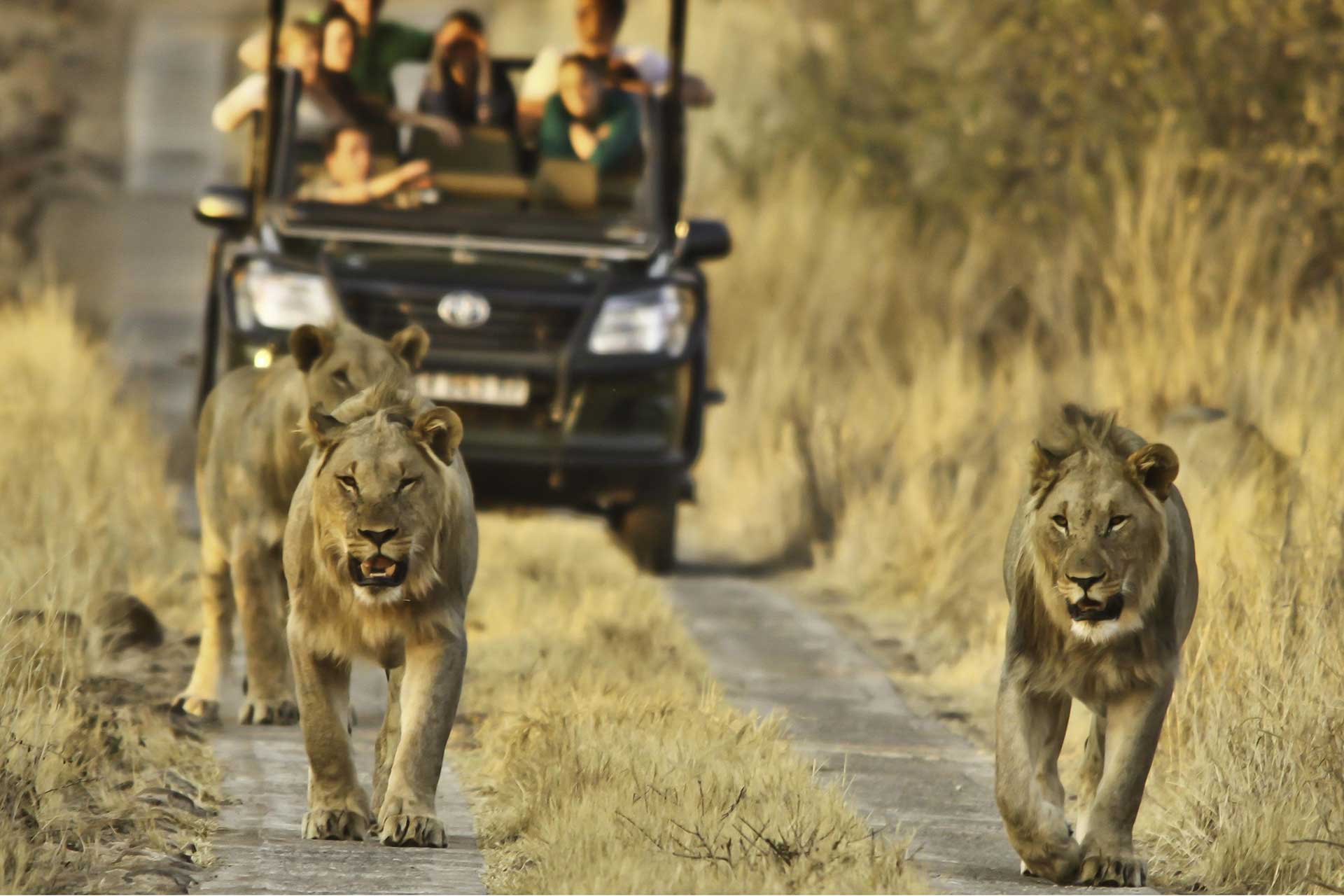
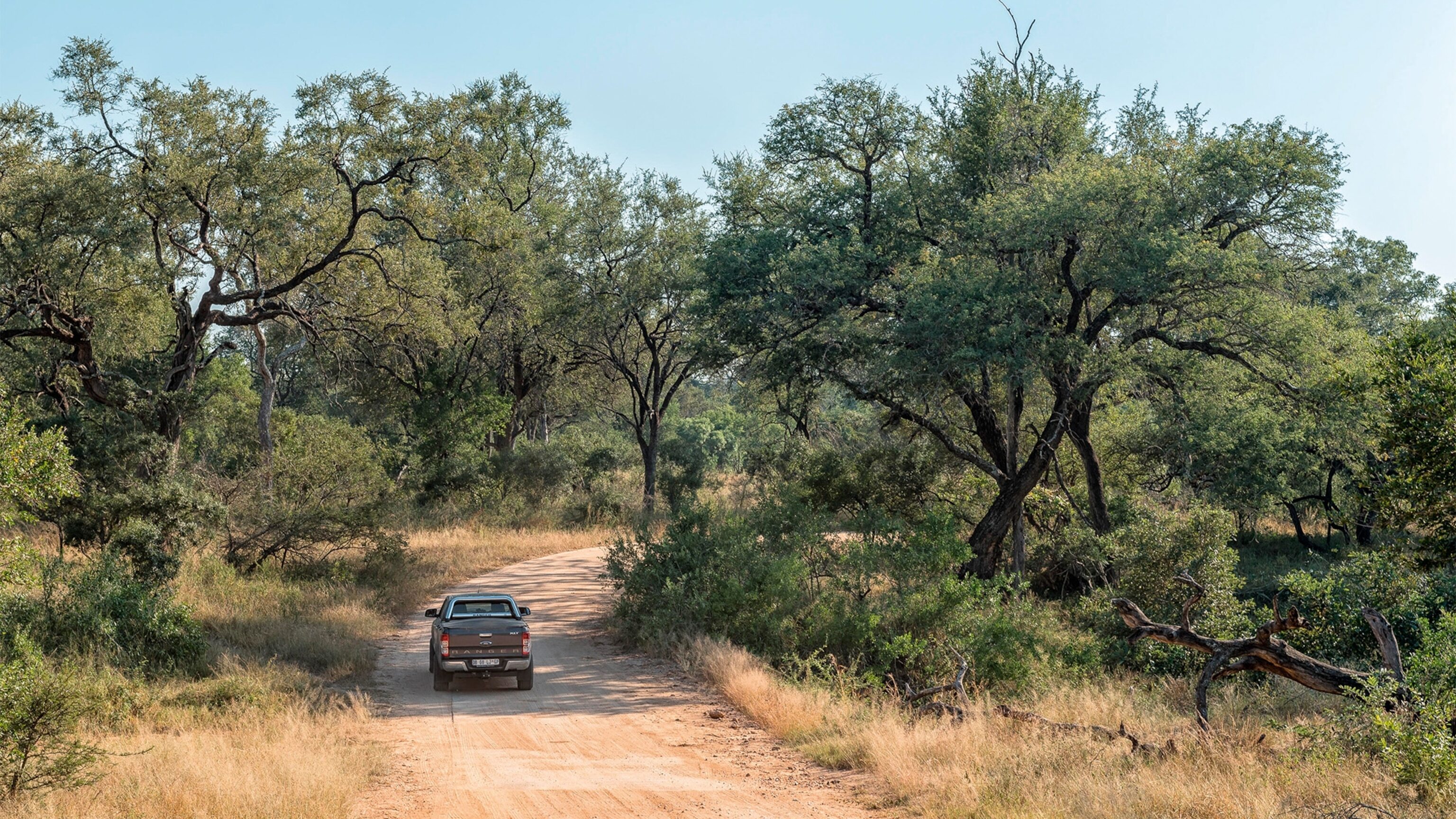 A self-drive vehicle on a dirt road through the African bush in Kruger National Park
What a Budget Safari Actually Looks Like
Let us clear up a misconception: a budget safari is not a lesser safari. It is a different safari.
On a luxury safari, everything is orchestrated for you — the guiding, the meals, the sundowners, the logistics. On a budget safari, you trade some of that orchestration for independence. You drive yourself, you pack your own cooler box, you braai your own boerewors at the rest camp while hippos grunt from the river below. And for many people, that self-reliance is part of the magic.
A well-planned budget safari in South Africa can include:
- Self-drive game viewing in world-class reserves
- Affordable SANParks or provincial rest camp accommodation
- Guided bush walks and night drives booked as add-ons
- Big Five sightings that are every bit as thrilling as those in private concessions
- Some of the most spectacular landscapes on the continent
The wildlife does not know whether you paid R2,000 or R20,000 for your accommodation. A leopard draped over a marula branch is just as breathtaking from a dusty sedan as it is from a R3-million Land Cruiser.
The Best Budget Safari Destinations in 2026
Kruger National Park — South Africa
The Kruger is, quite simply, the greatest value-for-money safari destination on the planet. Nearly two million hectares of Big Five bushveld, over 800 kilometres of tarred and gravel roads, and a network of twelve main rest camps with accommodation starting from under R1,000 per night.
Self-driving in Kruger is straightforward — the roads are well-maintained, the camps are signposted, and the animals are so abundant that first-time visitors often see more in a day than they expected in a week. The southern section (Lower Sabie, Skukuza, Satara) tends to have the densest game, while the northern camps (Letaba, Olifants, Shingwedzi) offer solitude and spectacular birding.
Budget tip: Book a self-catering bungalow or safari tent rather than a guesthouse. Bring your own food and braai at camp. The savings are substantial, and a Kruger braai with the sounds of the bush is one of life's great pleasures.
Cost guide: From R900 per night (two-bed safari tent) to R2,500 per night (family cottage). Conservation fees: R460 per adult per day (international), R110 per adult per day (South African residents).
Pilanesberg National Park — South Africa
Pilanesberg is our go-to recommendation for budget-conscious travellers based in Johannesburg. It is two hours from the city, Big Five, malaria-free, and offers both self-drive and guided options at a fraction of Kruger's cost. The park sits in an ancient volcanic crater, which gives it a dramatic landscape unlike anywhere else in South Africa.
Bakubung Bush Lodge and Manyane Resort offer affordable accommodation inside the park, while the town of Sun City next door provides budget hotel options.
Budget tip: A Pilanesberg day trip from Johannesburg with a professional guide costs from R2,500 per person. It is the most affordable Big Five safari experience in South Africa, and you are back in the city by dinner.
Cost guide: Day entry: R120 per adult. Self-catering chalet from R1,200 per night.
Addo Elephant National Park — South Africa
Addo is the Eastern Cape's crown jewel — a malaria-free, Big Five park that is home to over 600 elephants, the densest concentration on the planet. The main camp has self-catering chalets, a pool, a restaurant, and a floodlit waterhole where elephants come to drink at night. You can watch them from the viewing platform with a glass of wine and spend nothing extra.
Addo combines beautifully with the Garden Route for a bush-and-coast holiday that does not require a single flight.
Cost guide: Self-catering cottage from R1,100 per night. Conservation fees: R376 per adult per day (international), R96 (SA residents).
Hluhluwe-iMfolozi Park — South Africa
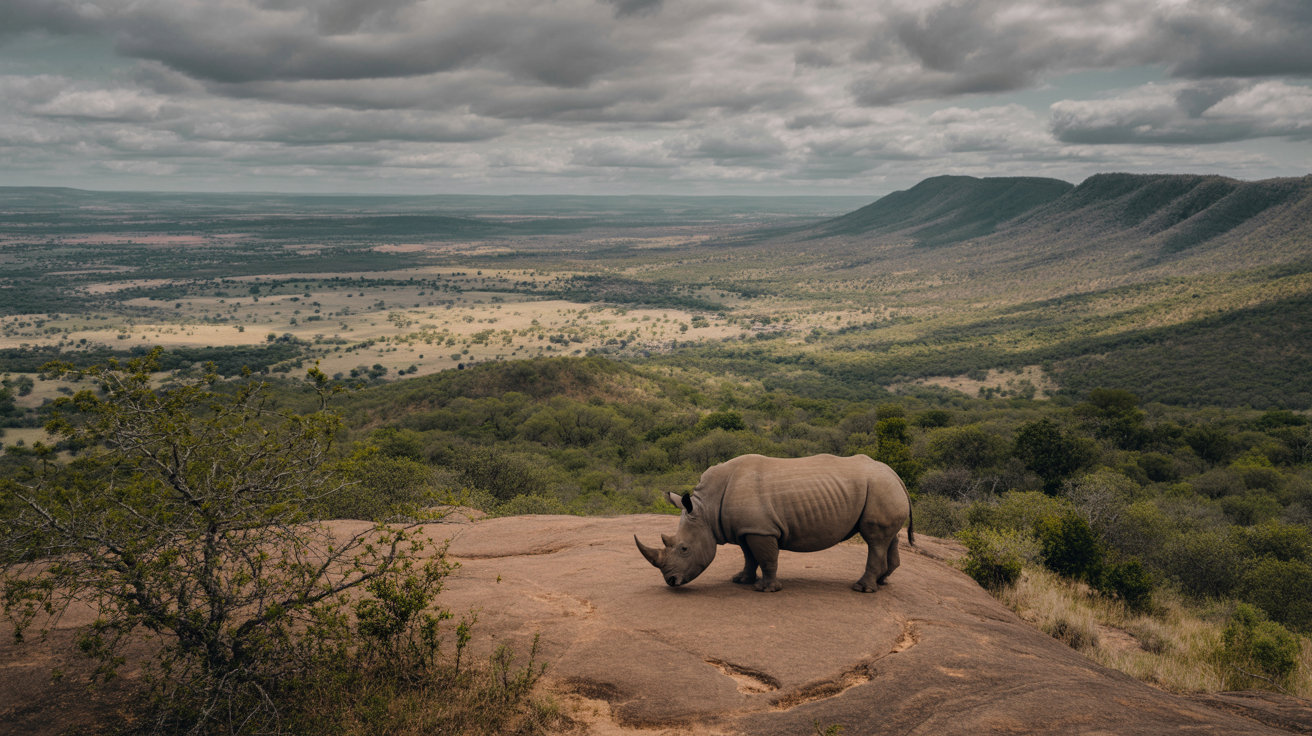
The oldest proclaimed reserve in Africa and the place that saved the white rhino from extinction. Hluhluwe-iMfolozi in KwaZulu-Natal is one of the best-kept secrets in South African safari. The game viewing is superb — Big Five plus cheetah and wild dog — and the self-guided wilderness trails are legendary. Hilltop Camp has panoramic views that rival anything on the continent.
Cost guide: Two-bed chalet from R1,300 per night. Three-day wilderness trail from R4,500 per person (all-inclusive, guided, on foot).
Etosha National Park — Namibia
Etosha is Namibia's premier wildlife destination, and its budget-friendliness surprises many travellers. The three main NWR rest camps — Namutoni, Halali and Okaukuejo — offer self-catering chalets and campsites, and the floodlit waterholes attract extraordinary nighttime wildlife. Sitting at Okaukuejo's waterhole at 2 AM, watching black rhinos drink by floodlight, is one of Africa's great free shows.
Cost guide: Self-catering bush chalet from N$1,500 (~R1,500) per night. Park entry: N$150 per adult per day.
Chobe Day Trips — Botswana
Botswana is famous for high-end fly-in safaris, but there is a brilliant budget hack: day trips to Chobe National Park from Kasane. A river cruise on the Chobe River costs from R800 per person and delivers some of the most spectacular elephant sightings in Africa — herds of fifty or more crossing the river, spray catching the golden light. Combine it with a half-day game drive for under R2,500 total.
Cost guide: Chobe boat cruise: R800–R1,200 per person. Half-day game drive: R1,200–R1,800 per person.
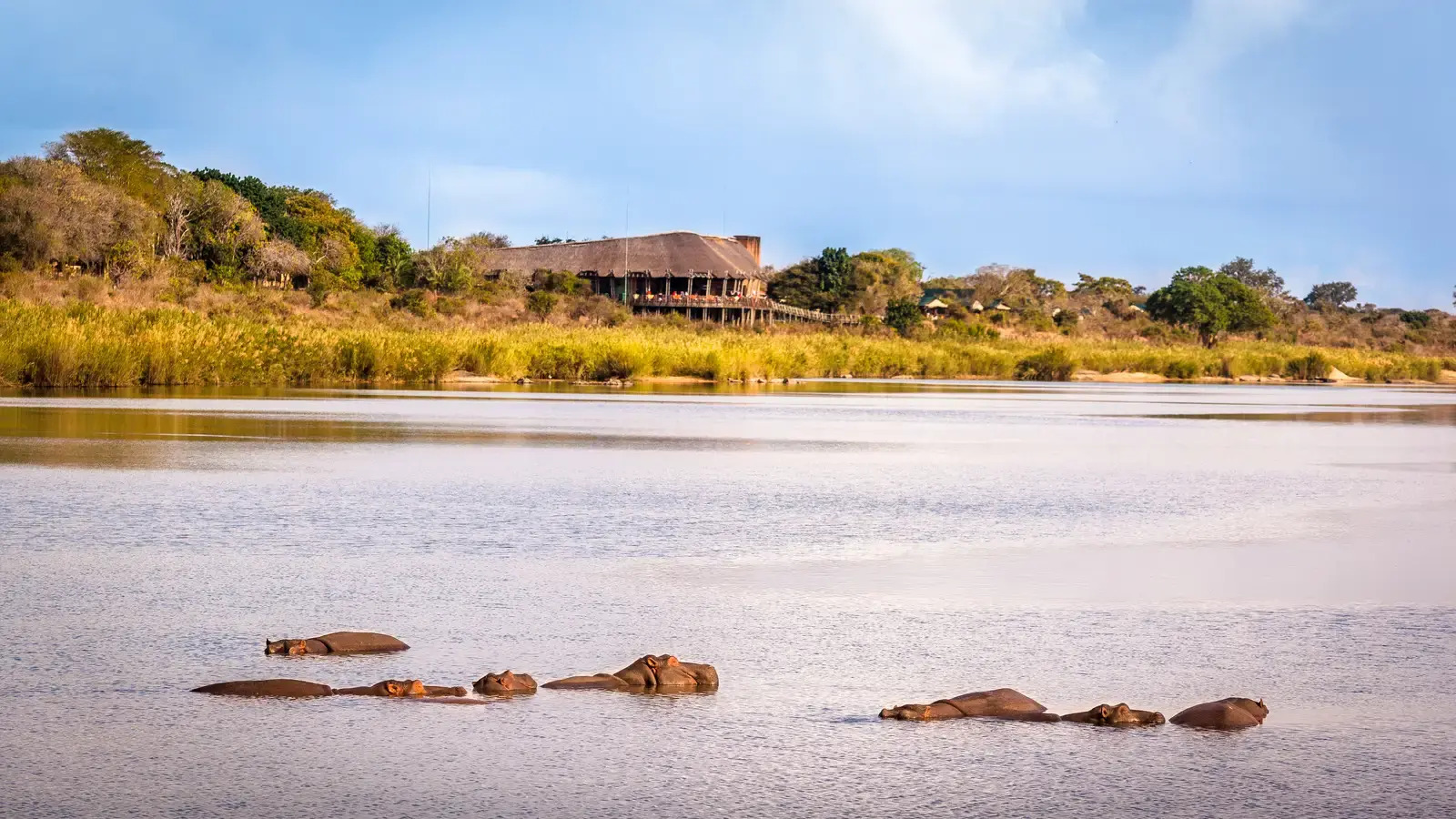 A charming SANParks rest camp with thatched rondavels overlooking the bush and river
Smart Ways to Cut Costs Without Cutting Quality
Travel in Green Season (November–March)
Lodge rates drop by 30–50% in the green season, and many rest camps offer mid-week specials. The bush is lush, the birdlife is extraordinary (migratory species arrive), and the afternoon thunderstorms create the most dramatic photographic skies you will ever see. Yes, the grass is longer and some animals are harder to spot, but the overall experience is often more beautiful, not less.
Self-Drive + Guided Combo
Self-driving is the most affordable way to explore reserves like Kruger and Pilanesberg. But the best budget hack is to combine self-driving with one or two professionally guided activities. Book a guided sunrise drive (R500–R1,200 per person) or a bush walk (R350–R600 per person) through the camp. The guide's knowledge transforms what you see for the rest of the day.
Cook at Your Own Camp
SANParks rest camps have excellent braai facilities, and most chalets have full kitchens. A week of self-catering in Kruger saves thousands compared to eating at camp restaurants. Pack a cooler box in Johannesburg: boerewors, steak, salads, rusks, coffee. Your braai at Satara, with jackals calling and the Southern Cross overhead, will be the best meal of the trip.
Book Early (or Very Late)
SANParks releases bookings twelve months in advance, and the most popular camps (Lower Sabie, Satara) sell out fast for peak season. Book early for the best selection. Alternatively, check for last-minute cancellations two to four weeks before travel — there are often bargains.
Use Wild Cards
The SANParks Wild Card costs R3,085 per couple per year and gives unlimited access to all SANParks reserves, including Kruger, Addo, and dozens of others. If you plan even two or three trips a year, it pays for itself many times over. It is the single best investment a budget safari enthusiast in South Africa can make.
Where NOT to Cut Corners
Being honest here, because this matters:
Guide quality. If you book a guided drive or a walking safari, do not shop purely on price. A cheap guide with no qualifications will show you less wildlife in a day than a FGASA-qualified guide shows you in an hour. The guide is the experience. Pay the difference.
Vehicle condition. If you are renting a car for a self-drive safari, do not take the cheapest compact. You need ground clearance for gravel roads (a compact SUV is fine — you do not need a 4x4 for Kruger's main roads), and you need air conditioning. A breakdown in the bush with no mobile signal is not an adventure; it is a safety risk.
Travel insurance. Non-negotiable. A medical evacuation from a remote reserve can cost hundreds of thousands of rand. Good travel insurance costs a few hundred. It is the most important line item in any safari budget.
Malaria prophylaxis. If you are visiting a malaria zone (Kruger lowveld, northern Botswana, East Africa), take your medication. The cost is trivial compared to the consequences of not taking it.
How Bakubung Offers Value-for-Money Safaris
We believe in meeting people where they are. Not every guest wants or needs a luxury private safari — and not every budget traveller wants to be entirely self-reliant.
Our value-range offerings include:
- Guided day trips from Johannesburg to Pilanesberg and Kruger — from R2,500 per person, all-inclusive with transport, guide, park fees and lunch
- Self-drive itinerary planning — we design your route, book your SANParks accommodation, provide wildlife checklists and GPS waypoints, and brief you on the best waterholes and loops. You drive; we plan.
- Budget group departures — our small-group safaris cap at six guests and split the guide and vehicle cost. All the benefits of professional guiding at a shared price.
- Multi-day budget packages — three nights in Kruger rest camps with guided sunrise drives and a bush walk, from R8,500 per person sharing.
Every one of our guides is FGASA-qualified, regardless of the price point. The bush gets the same respect whether the trip costs R2,500 or R50,000.
Honest Pricing: What Can You Get for Your Budget?
| Budget (per person) | What You Can Expect |
|---|---|
| R2,500–R5,000 | A guided day trip to Pilanesberg or Kruger from Johannesburg. Big Five possible. Back by evening. |
| R5,000–R10,000 | Two–three nights self-catering in Kruger or Addo. Self-drive with one guided activity. Outstanding game viewing. |
| R10,000–R20,000 | Three–four nights in a mid-range lodge with guided game drives. Excellent guiding, comfortable rooms, all meals. |
| R20,000–R35,000 | Four nights in a premium lodge or private concession. Luxury experience territory. |
The sweet spot for most budget-conscious travellers is the R5,000–R10,000 range. At this level you are spending multiple days in world-class reserves with comfortable accommodation and at least one guided experience to sharpen your eye. It is more than enough for an unforgettable trip.
Frequently Asked Questions
Is a budget safari safe? Absolutely. South Africa's national parks have excellent infrastructure, well-maintained roads, and clear safety guidelines. Stay in your vehicle, follow the speed limits, do not feed animals, and you will be perfectly safe. For reserves outside South Africa, always travel with a reputable operator or guide.
Can I see the Big Five on a budget safari? Yes. Kruger, Pilanesberg, Addo, Hluhluwe-iMfolozi and Madikwe are all Big Five reserves accessible on a budget. Sightings are never guaranteed regardless of price — that is part of what makes them thrilling.
Is self-driving in Kruger difficult? Not at all. The main roads are tarred, the secondary roads are well-graded gravel, and the camps are clearly signposted. A standard rental car with decent ground clearance handles everything comfortably. The speed limit is 50 km/h on tar and 40 km/h on gravel, which is ideal for game viewing.
Should I book a guide even on a budget? We strongly recommend at least one guided activity during your trip. The difference in what you see — and understand — is transformative. A single guided sunrise drive or bush walk costs R350–R1,200 and is worth every cent.
Can I combine a budget safari with Cape Town or the Garden Route? Absolutely. A self-drive Addo safari combines perfectly with a Garden Route road trip, and both are very affordable. Kruger can be paired with the Panorama Route (Blyde River Canyon, God's Window) for a spectacular overland journey.
The wild does not belong to the wealthy. It belongs to anyone willing to get up before dawn, sit quietly, and pay attention. If you are ready to experience Africa at a price that makes sense for your life, let us help you plan it. The bush is waiting.
— Thabo Makate, Founder & Lead Guide, Bakubung Safaris & Tours