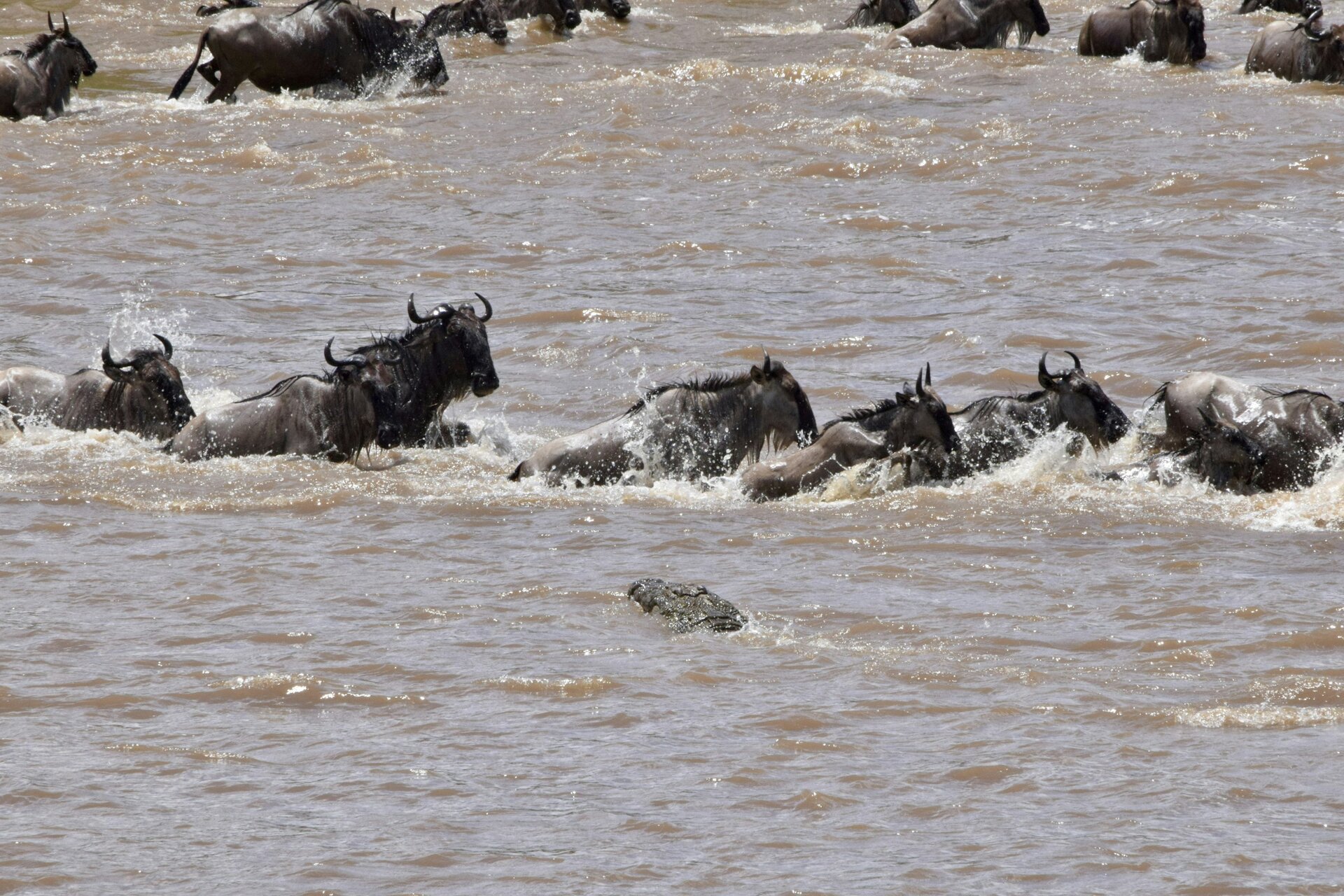
 Wildebeest surging across the Mara River during the Great Migration — the Maasai Mara’s most dramatic spectacle
The Maasai Mara is the name that launched a thousand safari dreams. This is the Kenyan stage of the Great Wildebeest Migration, the landscape of a hundred wildlife documentaries, and arguably the single best place on Earth to see big cats in action. From July to October, over a million wildebeest and hundreds of thousands of zebra pour across the Mara River from the Serengeti, running a gauntlet of crocodiles while lion prides and cheetah families patrol the golden grasslands above. It is, quite simply, the greatest wildlife show on the planet.
But the Mara is far more than the Migration. At just 1,510 km² for the core reserve (plus surrounding conservancies), it packs an astonishing density of predators year-round. The Mara’s open plains, dotted with acacia woodland and cut by the winding Mara and Talek rivers, create a landscape where big-cat sightings are almost guaranteed on every game drive — lion prides, cheetah mothers hunting with cubs, and leopards draped in riverine fig trees.
As a Johannesburg-based operator with trusted Kenyan partners, Bakubung Safaris arranges Mara journeys year-round. This is our honest, insider guide to planning your 2026 Maasai Mara safari.
Why Choose the Maasai Mara?
The Mara delivers on every front:
- The Great Migration river crossings — the most dramatic wildlife event on Earth, right here between July and October
- Big-cat capital — the highest density of lions and cheetahs in Africa; leopard sightings are excellent along the rivers
- Year-round game viewing — resident wildlife is superb even outside Migration season; the Mara never disappoints
- Community conservancies — surrounding the reserve, these private conservancies offer off-road driving, night drives, walking safaris, and far fewer vehicles
- Maasai culture — visit a Maasai village and experience one of the world’s most iconic warrior cultures
- Balloon safaris — float over the Mara at dawn for a perspective you’ll never forget
- Compact and accessible — a short flight from Nairobi gets you straight into the action
- Easy to combine — pairs beautifully with Amboseli (Kilimanjaro views), Lake Nakuru (flamingos), and the Kenya coast
Understanding the Mara: Reserve vs Conservancies
This is the most important decision when planning your Mara safari:
The Maasai Mara National Reserve
The core 1,510 km² reserve managed by Narok County. This is where the Mara River crossings happen and where the highest concentration of Migration herds can be found. Rules are similar to a national park: vehicles must stay on designated tracks, no night drives, and it can get busy during peak Migration months (August–September).
Best for: Migration river crossings, big-cat density, budget-conscious visitors
The Private Conservancies
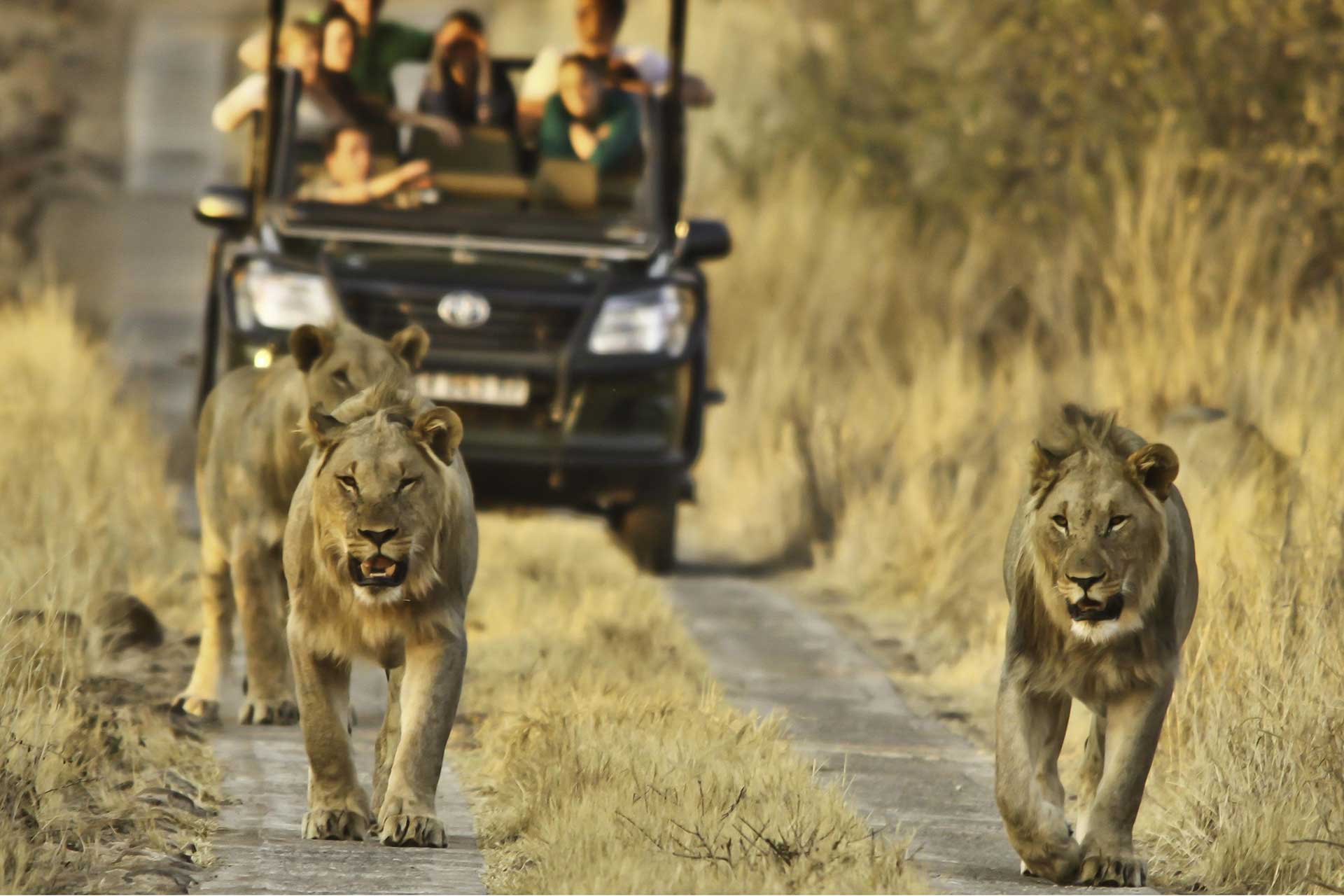
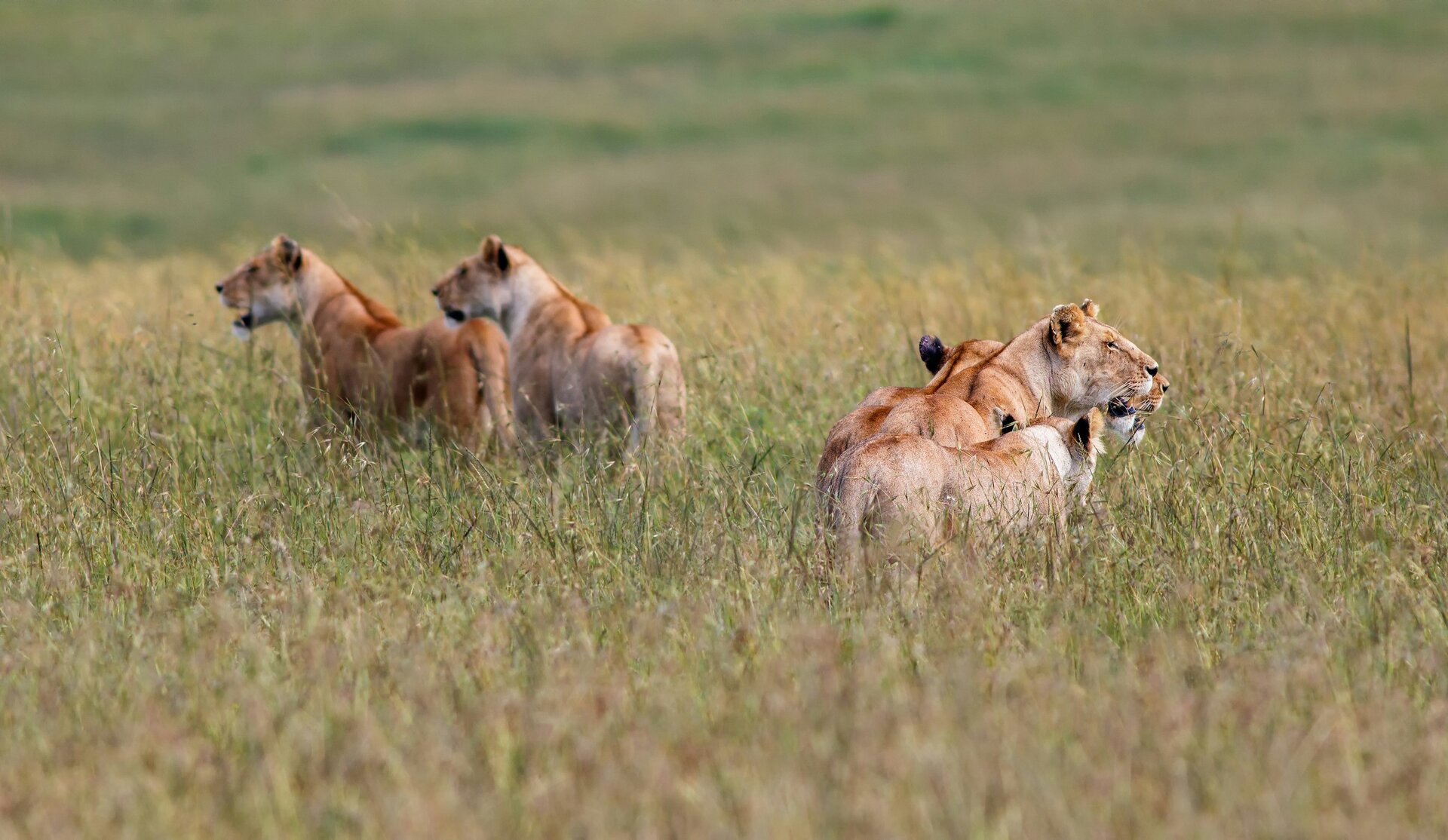 A lion and lioness on the golden Mara grasslands — the Maasai Mara has the highest density of big cats in Africa
Surrounding the reserve, community-owned conservancies like Mara North, Olare Motorogi, Naboisho, Mara Naboisho, and Ol Kinyei have transformed the Mara experience. Only camps within a conservancy may use it, so vehicle numbers are strictly limited. The perks:
- Off-road driving — follow predators through the grass, not just from the road
- Night drives — spot leopards, hyenas, and nocturnal species after dark
- Walking safaris — guided bush walks with Maasai guides
- Far fewer vehicles — a fraction of the traffic compared to the reserve
- Community benefit — fees go directly to Maasai landowners, funding conservation and livelihoods
Best for: Exclusive experience, off-road game viewing, photography, night drives, walking safaris, eco-conscious travellers
Our honest advice: If your budget allows, stay in a conservancy for the off-road access, fewer crowds, and richer experience, with a day trip into the reserve for the river crossings during Migration. This combination is the gold standard for a Mara safari.
The Great Migration in the Mara: When & Where
The Migration herds typically occupy the Mara ecosystem from July to October, though timing varies with the rains:
| Period | What’s Happening |
|---|---|
| July | First herds cross the Mara River from the Serengeti; crossings begin, building in frequency |
| August | Peak crossing month; huge herds and multiple crossings daily; predator action at its highest |
| September | Continued crossings; herds spread across the Mara; lion activity intense |
| October | Herds begin drifting south; late crossings; calmer atmosphere, fewer crowds |
| November – June | No Migration herds, but the Mara’s resident wildlife — big cats, elephants, hippos — delivers superb game viewing year-round |
Our recommendation: For the dramatic river crossings, visit in August or September. For excellent big-cat viewing without the crowds (and better rates), the green season (January–March) is a superb secret.
Best Time to Visit the Maasai Mara
| Season | Months | What to Expect |
|---|---|---|
| Dry / Migration (peak) | July – October | Migration herds, river crossings, best game viewing, peak prices |
| Short dry (excellent value) | January – February | Lush, green, superb big-cat viewing, low crowds, baby animals, great rates |
| Long rains | March – May | Some tracks muddy, dramatic skies, lush, excellent birding, lowest rates, some camps close |
| Short rains | November – December | Brief showers, green flush, resident game, good value |
What Does a Maasai Mara Safari Cost?
We believe in honest, transparent pricing. Here’s what to budget in South African Rands:
| Package | Duration | Price (ZAR) | Includes |
|---|---|---|---|
| Mara Explorer | 3 nights | From R34,999/pp | Mara camp/lodge, game drives, park fees, internal flight from Nairobi |
| Migration Safari | 4 nights | From R54,999/pp | Conservancy camp, game drives, river-crossing excursion, all meals, flight |
| Luxury Conservancy | 4 nights | From R79,999/pp | Premium conservancy camp, off-road & night drives, walking safari, all-inclusive |
| Mara + Amboseli Combo | 7 nights | From R89,999/pp | Mara + Amboseli (Kilimanjaro views), camps, game drives, flights |
| Ultimate Kenya Safari | 9 nights | From R129,999/pp | Mara + Samburu + Laikipia, luxury camps, private guide, all flights |
All prices per person sharing. Include accommodation, meals, game drives, park/conservancy fees, and internal flights as specified. International flights excluded. Prices valid for the 2026 season.
Getting to the Maasai Mara from South Africa
- By air: Fly from Johannesburg to Jomo Kenyatta International Airport, Nairobi (≈4 hours direct with Kenya Airways or SAA). From Nairobi, a 45-minute light-aircraft flight lands at Mara airstrips (Keekorok, Musiara, Ol Kiombo, Angama)
- By road: It’s possible to drive from Nairobi (≈5–6 hours via Narok), but the flight is highly recommended for comfort
- Combine with the Serengeti: A cross-border Mara–Serengeti itinerary is possible via light aircraft or an overland transfer through Isebania border
Visa: Most nationalities need a Kenya e-visa (apply online in advance, ~US$50). The East Africa Tourist Visa (US$100) covers Kenya, Uganda, and Rwanda — great for multi-country trips.
Insider Tips for Your Maasai Mara Safari
- Stay in a conservancy — off-road access and fewer vehicles transform the experience; arrange a day trip to the river for crossings
- Be patient at the river — crossings happen on the herds’ schedule; they may build up for hours, then surge across in minutes
- Fly, don’t drive — the scenic flight from Nairobi is quick and spectacular; road transfers are long and bumpy
- Visit outside Migration too — the Mara’s resident big cats are among the best in Africa year-round; green season is a bargain
- Book a balloon safari — floating over the Mara at sunrise is one of the all-time great travel experiences
- Visit a Maasai village — a genuine cultural exchange; ask your camp to arrange a community visit
- Book early for July–September — the best conservancy camps are small and peak Migration dates sell out 12+ months ahead
Frequently Asked Questions
When is the best time to see the Mara River crossings? August and September offer the most frequent crossings. July sees the first crossings, and October has late ones. The exact timing varies year to year with the rains.
How does the Maasai Mara compare to the Serengeti? They’re part of the same ecosystem. The Serengeti is far larger and holds the herds for more of the year. The Mara is compact with the most concentrated river crossings and the highest big-cat density. Both are world-class — many of our clients visit both.
Can I see the Big Five in the Mara? Yes. Lion, leopard, elephant, and buffalo are abundant; rhino are present but rare. The Mara is particularly outstanding for lion and cheetah.
Are the conservancies worth the higher price? For most travellers, emphatically yes. Off-road driving, night drives, walking safaris, and far fewer vehicles deliver a qualitatively different experience. The extra cost buys exclusivity and directly supports Maasai communities.
Is Kenya safe for tourists? Yes. Kenya is one of Africa’s most visited countries and the tourism areas (Mara, coast, Amboseli) are safe and well-managed. Standard travel precautions apply.
Is Kenya welcoming to LGBTQ+ travellers? Kenya’s laws are conservative, so discretion in public is advised. However, the international-standard camps and lodges we work with, especially in the conservancies, are professional and welcoming. We’ve sent many LGBTQ+ clients to Kenya with wonderful experiences — read our honest LGBTQ+ safari guide for candid advice.
The Maasai Mara is where the African safari reaches its crescendo. Whether you’re watching a million wildebeest brave the crocodile-filled Mara River, sitting metres from a cheetah and her cubs on the open plains, or floating silently above the grasslands in a hot-air balloon, the Mara delivers moments that define a lifetime.
Ready to experience the Maasai Mara? Get in touch with our team and let’s build your dream Mara safari.
Bakubung Safaris & Tours — Born in Johannesburg, made for Africa.