I remember the exact moment I stopped being a safari guide and became a photography addict.
We were parked in the Sabi Sand at dawn. A female leopard had draped herself over a fallen marula trunk, her rosettes glowing copper in the first light. I had a guest beside me — a quiet woman from Tokyo who had barely spoken all morning. She lifted her camera, steadied her breathing, and fired a burst. When she lowered the lens and looked at the screen, tears were running down her cheeks.
"I have wanted this photograph for twenty years," she said.
That is the power of a photography safari: it turns a safari into a quest. You are not merely watching wildlife; you are hunting the perfect frame, chasing light, waiting for the moment when nature offers you something so extraordinary that your shutter finger moves before your brain catches up.
At Bakubung Safaris & Tours, we have designed photography safaris for amateurs who have never shot outside automatic mode and for professionals who have spent their careers behind a lens. The wild does not care about your skill level — it serves up masterpieces to anyone patient enough to look. This is our honest, field-tested guide to planning a photography safari in Africa for 2026.
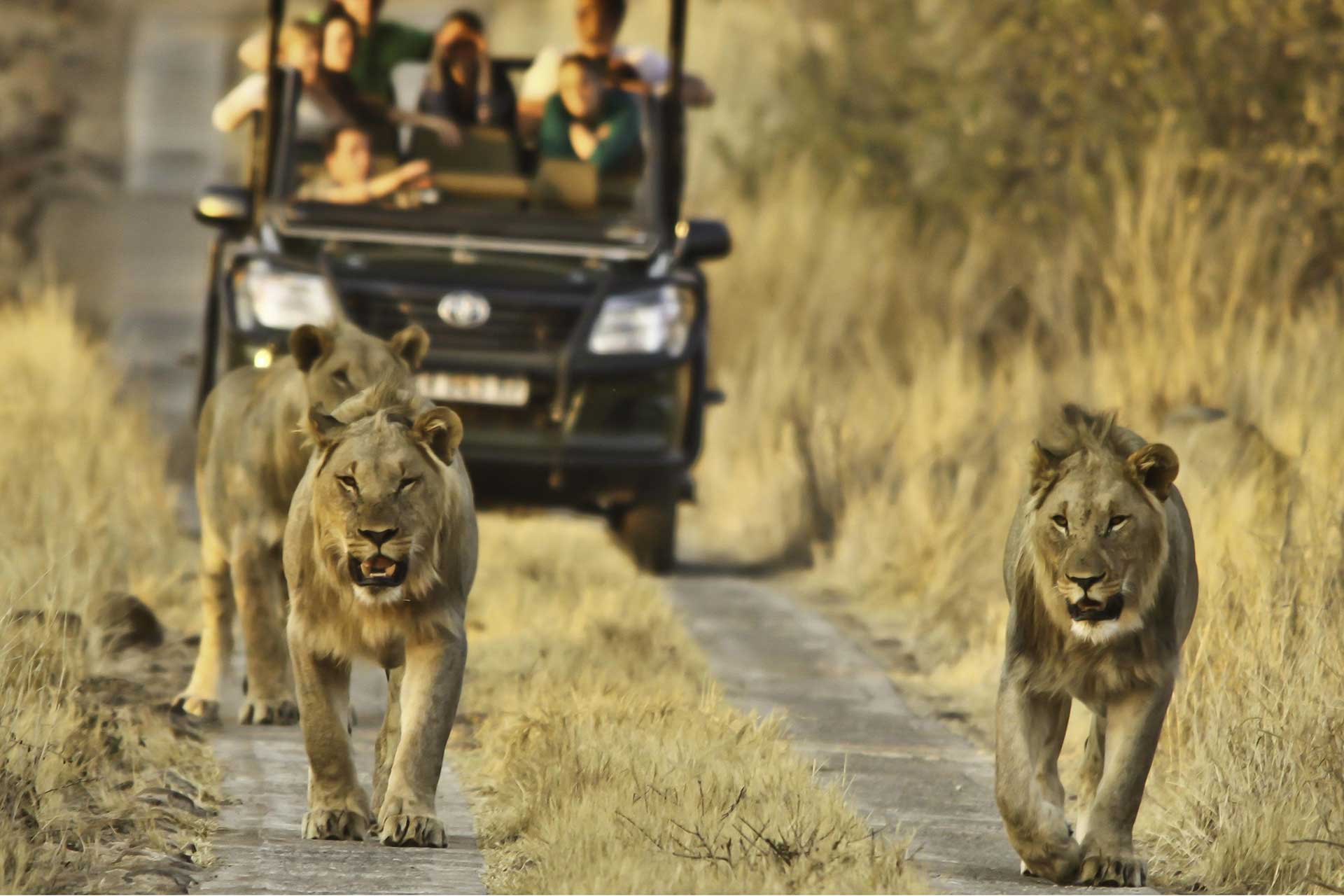
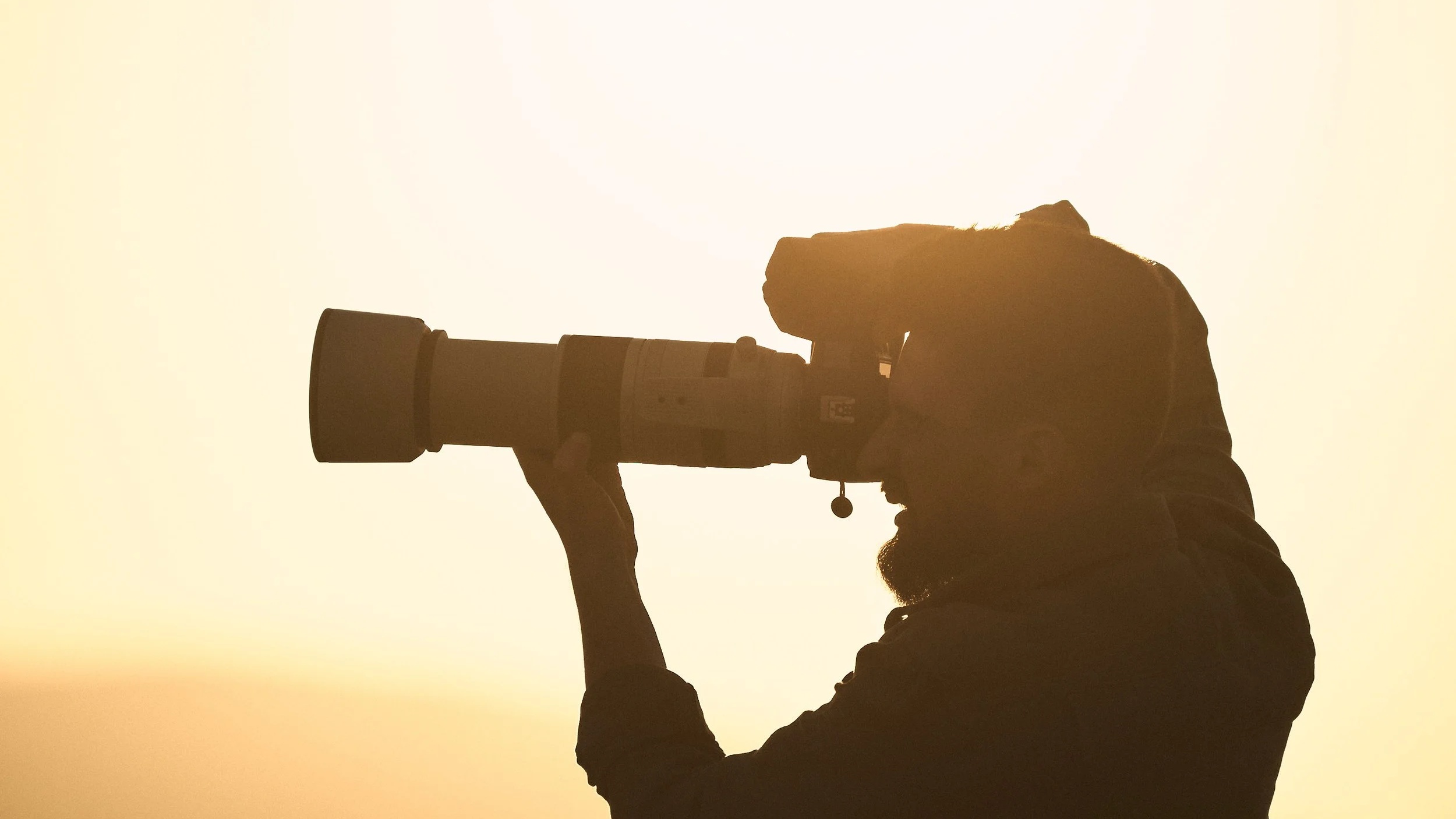 Photographers with long lenses on a safari vehicle capturing wildlife at golden hour in the African bush
Why Africa Is the World's Greatest Photography Destination
Photographers travel from every continent to shoot in Africa, and the reason is simple: nowhere else on earth combines this quality of light, this density of subjects, and this sheer visual drama.
The light is otherworldly. African golden hour does not last for twenty minutes — it stretches for nearly an hour, pouring warm amber across the savanna, wrapping every animal in a halo of backlit fur. The contrast between sunrise gold and midday blue, between stormy green-season skies and the bleached minimalism of the dry season, gives you a different canvas every hour of every day.
The subjects are extraordinary. In a single morning drive you can photograph a lion yawning, a lilac-breasted roller mid-flight, a herd of elephants dusting themselves at a waterhole, and a dung beetle rolling its prize across the road. The range of scale, texture, colour and behaviour is unmatched.
The landscapes are cinematic. From the rust-red dunes of Sossusvlei to the flooded channels of the Okavango, from Kruger's granite koppies to the spray of Victoria Falls — Africa's scenery is so photogenic it almost feels like cheating.
The stories write themselves. The best wildlife photographs are not just technically perfect — they tell a story. A mother cheetah teaching her cubs to hunt. A battle-scarred buffalo staring down the lens. A fish eagle frozen mid-strike. Africa delivers these narratives daily.
The Best Photography Safari Destinations
Not every reserve is equally suited to serious photography. Here are the destinations I recommend most often to photographers — from first-timers to professionals.
Kruger's Private Concessions, South Africa
The Greater Kruger region remains the finest all-round photography destination in Southern Africa. The private concessions — Sabi Sand, Timbavati, Klaserie — offer three critical advantages for photographers:
- Off-road driving. Unlike the national park, private concessions allow vehicles to leave the road, letting your guide position you for the best angle and light.
- Habituated wildlife. Animals in private concessions are remarkably relaxed around vehicles, allowing close-up portraits that would be impossible elsewhere.
- Expert guides. Many concession guides are passionate photographers themselves and understand how to read light, anticipate behaviour and position the vehicle for the kill shot (photographically speaking).
The Big Five density here is exceptional, and the Sabi Sand in particular is arguably the best place on the continent for leopard photography.
The Okavango Delta, Botswana
Botswana's Okavango Delta offers a photographic experience unlike anywhere else: water-based safari. Shooting from a mokoro (dugout canoe) or a small boat at water level gives you extraordinary low-angle perspectives — elephants reflected in mirror-still channels, red lechwe leaping through the shallows, African fish eagles framed against papyrus.
The low-volume, high-value model means fewer vehicles in your frame and a genuine sense of wilderness. The light over the delta — particularly the way it catches the mist at dawn — is the stuff of award-winning portfolios.
Pilanesberg Game Reserve, South Africa
Do not underestimate Pilanesberg. Just two hours from Johannesburg, this reserve sits in an ancient volcanic crater, giving you a dramatic landscape backdrop that most reserves cannot match. The alkaline lake at its centre attracts massive herds, and the elevated hides around the waterholes are purpose-built for photography.
For photographers based in or passing through Gauteng, a dedicated Pilanesberg photo day trip is one of the best-value wildlife photography experiences in Africa.
Namibia — Landscapes That Defy Belief
If your photography leans towards landscapes and graphic composition, Namibia is a dream. The towering dunes of Sossusvlei — some of the tallest in the world — create abstract patterns of light and shadow that belong in a gallery. The Etosha salt pan offers surreal, minimalist compositions: a single oryx silhouetted against a white horizon.
Namibia is also exceptional for desert-adapted wildlife — elephants, lions and giraffes that have evolved to survive in one of the harshest environments on earth. These animals against Namibia's stark landscapes produce photographs that are instantly recognisable.
Victoria Falls, Zimbabwe
For dramatic water photography, Victoria Falls is unmatched. The sheer volume of spray creates permanent rainbows, and the gorge below offers vertigo-inducing compositions. Combine it with a Zambezi sunset cruise — where silhouetted birds and hippos against a burning orange sky are practically guaranteed — and you have a portfolio highlight in a single afternoon.
What Makes a Dedicated Photography Safari Different
A photography safari is not just a regular game drive with a camera. Here is what sets a specialist photo safari apart:
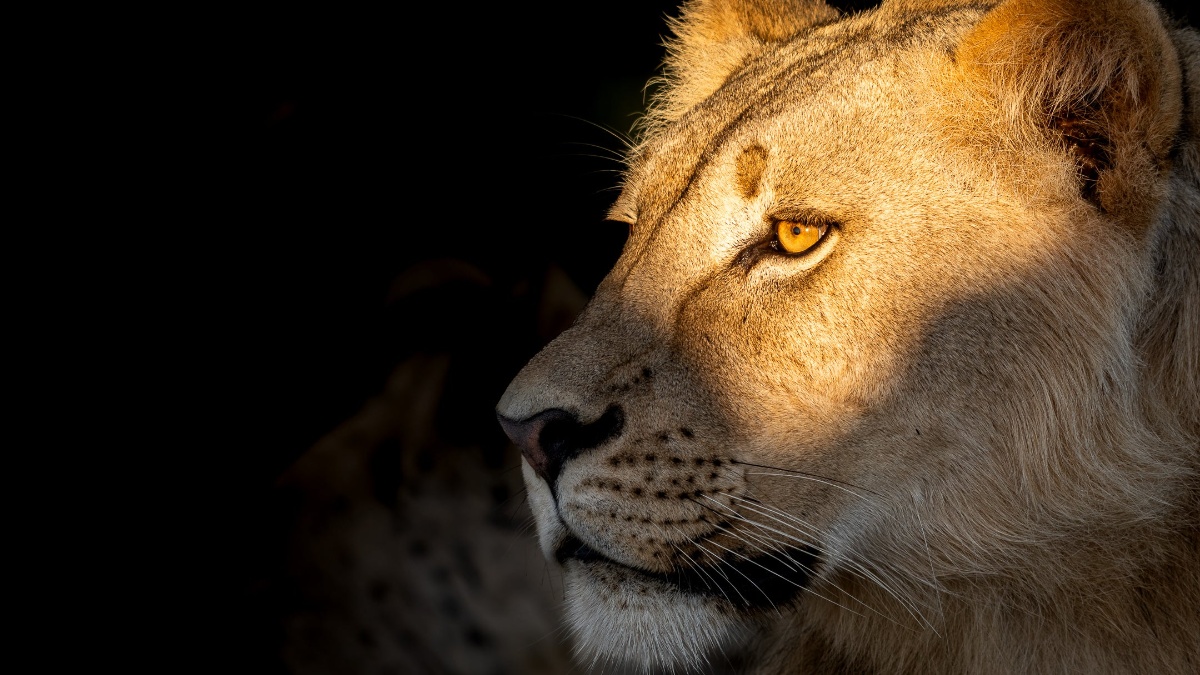 A stunning male lion portrait in warm golden light — the kind of photograph that inspires a photography safari
Specialist photography vehicles. Purpose-built vehicles with no roof, lowered sides, beanbag mounts on every rail, and charging ports for batteries. Some even have gimbal mounts bolted to the frame for super-telephoto lenses.
Photography-trained guides. Your guide understands not just animal behaviour but light direction, composition, and camera settings. They will position the vehicle so the light falls on the subject's face, not its back. They know when a yawn is coming before the lion opens its mouth.
Flexible schedules. On a standard safari, you head back to the lodge for breakfast at 09:00. On a photography safari, if the light is perfect and the subject is performing, you stay out. The schedule follows the light, not the kitchen.
Small groups. Typically two to four photographers per vehicle, not eight. Everyone has space, everyone has a clear line of sight, and nobody is bumping your elbow at the critical moment.
Dedicated hides. Many photography lodges have sunken hides at waterholes — partially underground bunkers with viewing slots at water level, giving you eye-level shots of animals as they drink. The perspective is extraordinary.
Post-processing support. Some specialist photo safaris include evening editing sessions where a professional photographer reviews your day's work and helps you process your best images.
Essential Gear and Tips from the Field
You do not need R200,000 of camera gear to take stunning safari photographs. Here is my honest gear advice after years of guiding photographers.
For Serious Photographers
- Camera body: Any modern mirrorless or DSLR with decent autofocus and at least 10 fps burst. Full-frame is ideal but not essential.
- Primary lens: A 100-400mm or 200-600mm zoom is the workhorse of safari photography. It covers everything from full-body portraits to tight headshots.
- Secondary lens: A 70-200mm f/2.8 for closer subjects, vehicles, and landscapes.
- Wide-angle: A 16-35mm for landscapes, star trails, and dramatic environmental shots.
- Support: A beanbag (the lodge will usually provide one, but bring your own to be safe). Tripods are rarely useful on a vehicle.
- Extras: Spare batteries (cold mornings drain them fast), memory cards, a sensor-cleaning kit, and a dust cover.
For Phone Photographers
Modern smartphones are remarkable, and I have seen guests capture stunning images on an iPhone. The key is understanding your phone's strengths: wide-angle environmental shots, portraits of your travel companion against the bush, and atmospheric sunrise/sunset scenes. For wildlife close-ups, consider a clip-on telephoto lens — they are inexpensive and surprisingly effective.
Tips That Actually Matter
- Shoot at eye level. The single biggest improvement you can make is getting your lens at the animal's eye level. Ask your guide to lower the vehicle's side panel or find a low angle.
- Focus on the eyes. If the eyes are sharp, the photograph works. If the eyes are soft, nothing else matters.
- Wait for behaviour. The difference between a snapshot and a portfolio image is usually patience. Wait for the yawn, the shake, the pounce, the moment of connection between mother and calf.
- Use the light. Backlit fur, rim-lit manes, side-lit textures — learn to see how light sculpts your subject and position yourself accordingly.
- Tell a story. The best safari photographs are not just sharp — they make the viewer feel something. Look for emotion, interaction, tension, tenderness.
Sample Itineraries with Real 2026 Pricing
Every photography safari we plan is tailor-made, but these three itineraries show what is possible. Prices are per person in South African Rand.
5-Day Kruger Photo Safari
- Days 1–5: Based in a private concession in the Greater Kruger (Sabi Sand or Timbavati). Two extended game drives daily in a dedicated photography vehicle with a specialist guide. Afternoon editing sessions. Private bush dinner with night photography opportunity.
This intensive photo safari ranges from R15,000 to R35,000 per person depending on concession and lodge tier — from well-equipped mid-range to the most luxurious lodges in the region.
8-Day Namibia Landscapes & Wildlife
- Days 1–3: Sossusvlei and Deadvlei — sunrise shoots at the dunes, star photography at night.
- Days 4–6: Etosha National Park — waterhole hides, salt-pan minimalism, desert-adapted wildlife.
- Days 7–8: Damaraland — desert elephants and dramatic rocky landscapes.
This landscape-focused itinerary ranges from R40,000 to R70,000 per person including internal flights and specialist guiding.
10-Day Botswana Ultimate Photo Expedition
- Days 1–5: Okavango Delta water camp — mokoro photography, boat-based drives, waterbird paradise.
- Days 6–8: Chobe River — enormous elephant herds, boat-based sunset shoots, predator action.
- Days 9–10: Makgadikgadi Pans — surreal salt flats, meerkat colonies, star photography.
This flagship expedition ranges from R80,000 to R130,000 per person, reflecting Botswana's exclusive model and the quality of guiding. It is the kind of trip that wins awards — and it is worth considering alongside our private safari tours for the ultimate exclusive experience.
When Is the Best Time to Photograph
May to September (dry season): Vegetation is sparse, animals concentrate at water, and the light is consistently golden. This is peak photography season and the time most specialists choose.
October to November: Building heat produces dramatic thunderclouds and extraordinary skies. Animals are stressed by the heat, which produces intense behaviour — kills, competition, desperation at shrinking waterholes.
December to April (green season): Lush landscapes, newborn animals, spectacular birdlife (migrants arrive), and dramatic storm light. Rates are lower, lodges quieter, and the photography — while more challenging — can be extraordinarily rewarding. Our best safari tours guide covers seasonal detail across all destinations.
How Bakubung Makes It Happen
We do not just book you into a lodge and wish you luck. Our photography safaris are built by people who understand both the bush and the craft:
- We partner with specialist photography guides who have decades of field experience and published portfolios.
- We select lodges with dedicated photography hides, custom vehicles and flexible schedules.
- We plan itineraries around the light — not the other way around.
- We carry the beanbags, charge the batteries, and make sure the only thing you have to worry about is what is in your viewfinder.
Whether you are a first-timer who wants to learn the basics or a professional chasing a specific shot, we will build a trip that matches your ambition.
The Wild Is Waiting to Be Seen Through Your Lens
There is a photograph waiting for you somewhere in the African bush. Maybe it is a leopard in the Sabi Sand, backlit by the last light of the day. Maybe it is a lone oryx on a Namibian dune, its shadow stretching to the horizon. Maybe it is a moment you cannot predict — because the best photographs never are.
All you have to do is be there, with your camera ready and your eyes open.
When you are ready to plan the shoot of a lifetime, reach out to our team and let us put you in front of the frame. The light is already perfect — we just need you behind the lens.
See you in the golden hour.