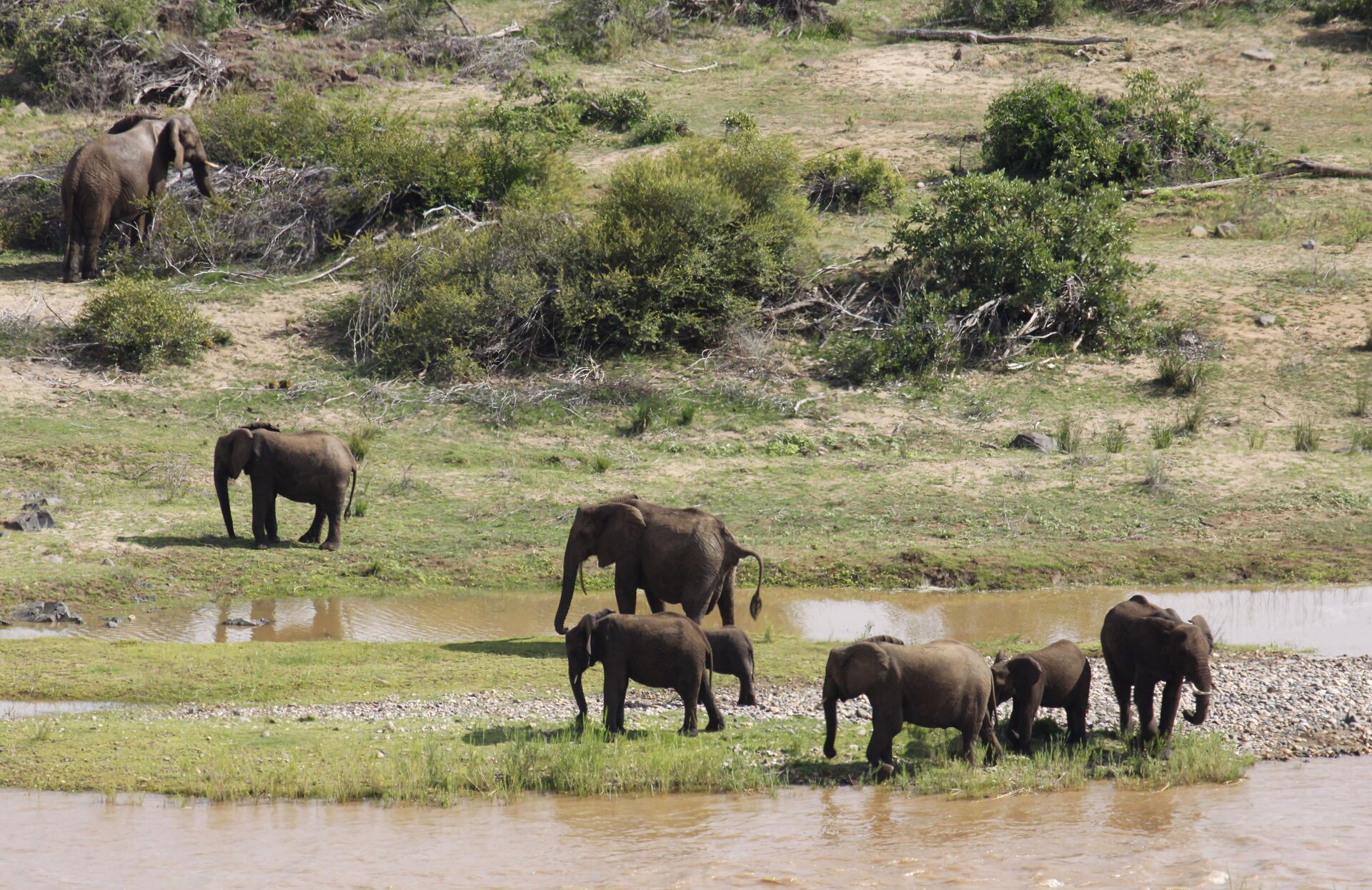
 A herd of African elephants gathered at a waterhole in Addo Elephant National Park, Eastern Cape
In the malaria-free heart of South Africa’s Eastern Cape, just 45 minutes from the coastal city of Gqeberha (Port Elizabeth), lies one of the country’s great conservation triumphs: Addo Elephant National Park. Proclaimed in 1931 to save the last 11 elephants left in the region, Addo today protects more than 600 elephants across a mosaic of dense valley bushveld, semi-arid Karoo, forested mountains and even a stretch of wild coastline. It is now the third-largest national park in South Africa.
What makes Addo truly special is its ambition. This is the only park on Earth that can lay claim to the “Big 7” — the classic Big Five (elephant, lion, leopard, rhino, buffalo) on land, plus the southern right whale and great white shark in its protected marine section off the coast. Few places pack such extraordinary diversity into one reserve.
As a Johannesburg-based operator, Bakubung Safaris pairs Addo with Garden Route road trips and Eastern Cape getaways all year round — and it is one of our favourite recommendations for families and self-drive travellers. This is our honest, insider guide to planning your 2026 Addo safari.
Why Choose Addo Elephant National Park?
Addo stands out for reasons that matter to real travellers:
- Completely malaria-free — no prophylaxis needed, ideal for families with young children and anyone who prefers to skip anti-malarials
- World-class elephant viewing — with 600+ elephants in a relatively compact area, sightings of large, relaxed herds are almost guaranteed
- The only Big 7 destination on Earth — Big Five on land plus whales and great white sharks in the marine section
- Superb for self-drive — good tarred and gravel roads let you explore in your own car at your own pace, one of the most affordable ways to safari
- Just 45 minutes from Gqeberha (PE) airport — fly in from Johannesburg or Cape Town and be on safari the same morning
- The perfect Garden Route add-on — Addo sits at the eastern end of the classic Garden Route road trip
- Year-round destination — the Eastern Cape’s mild climate means good game viewing in every season
The Wildlife of Addo
The Elephants
Addo’s elephants are the stars, and rightly so. Once hunted to near-extinction, they now thrive here — you’ll often see multi-generational herds of 30, 50 or more crowding the waterholes at Hapoor Dam and Domkrag, calves splashing and dust-bathing while the matriarchs keep watch. Because the population is so dense and habituated to vehicles, Addo offers some of the most intimate, reliable elephant encounters anywhere in Africa.
The Rest of the Big Five (and Big 7)
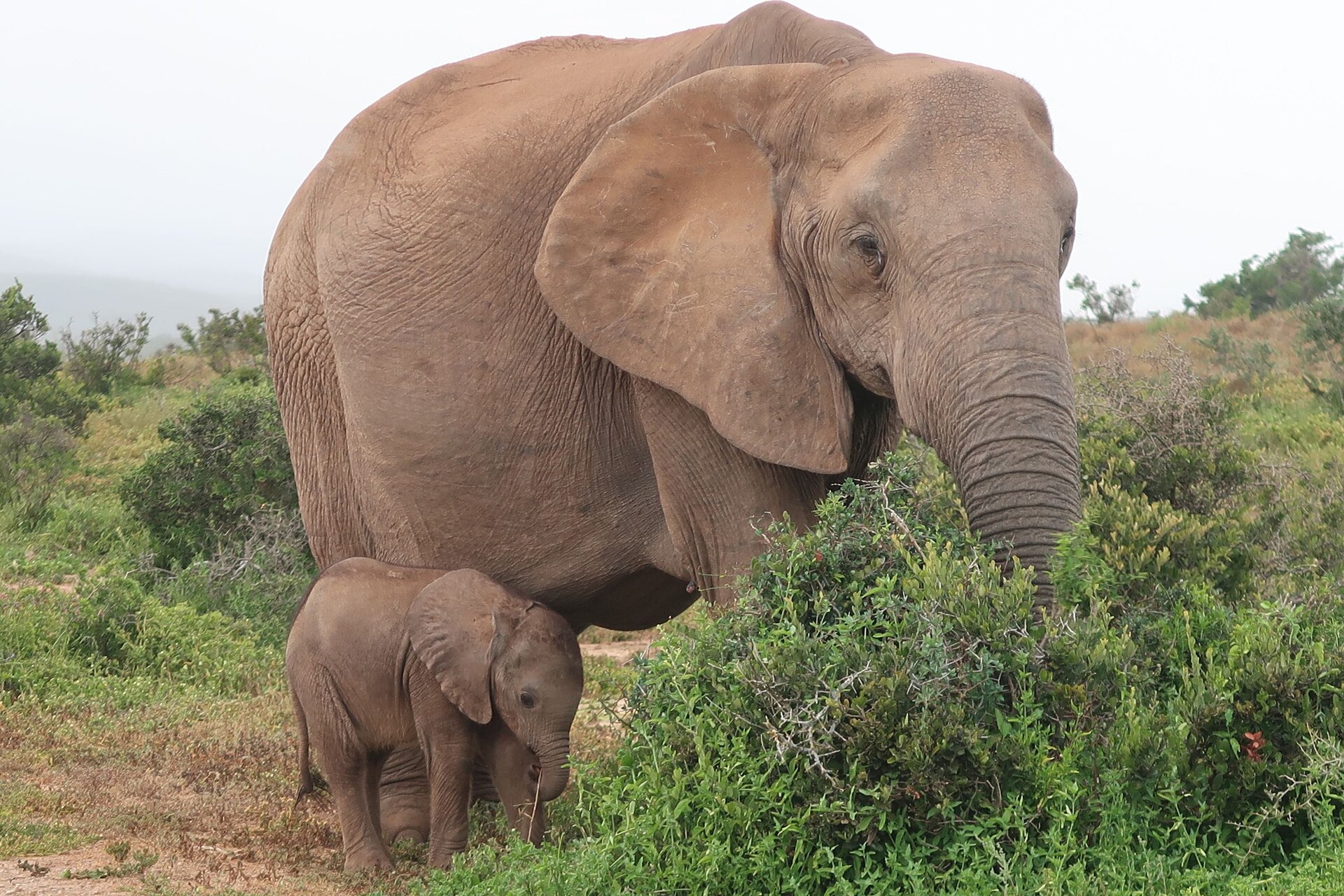 A mother African elephant and her calf in the dense spekboom thicket of Addo Elephant National Park
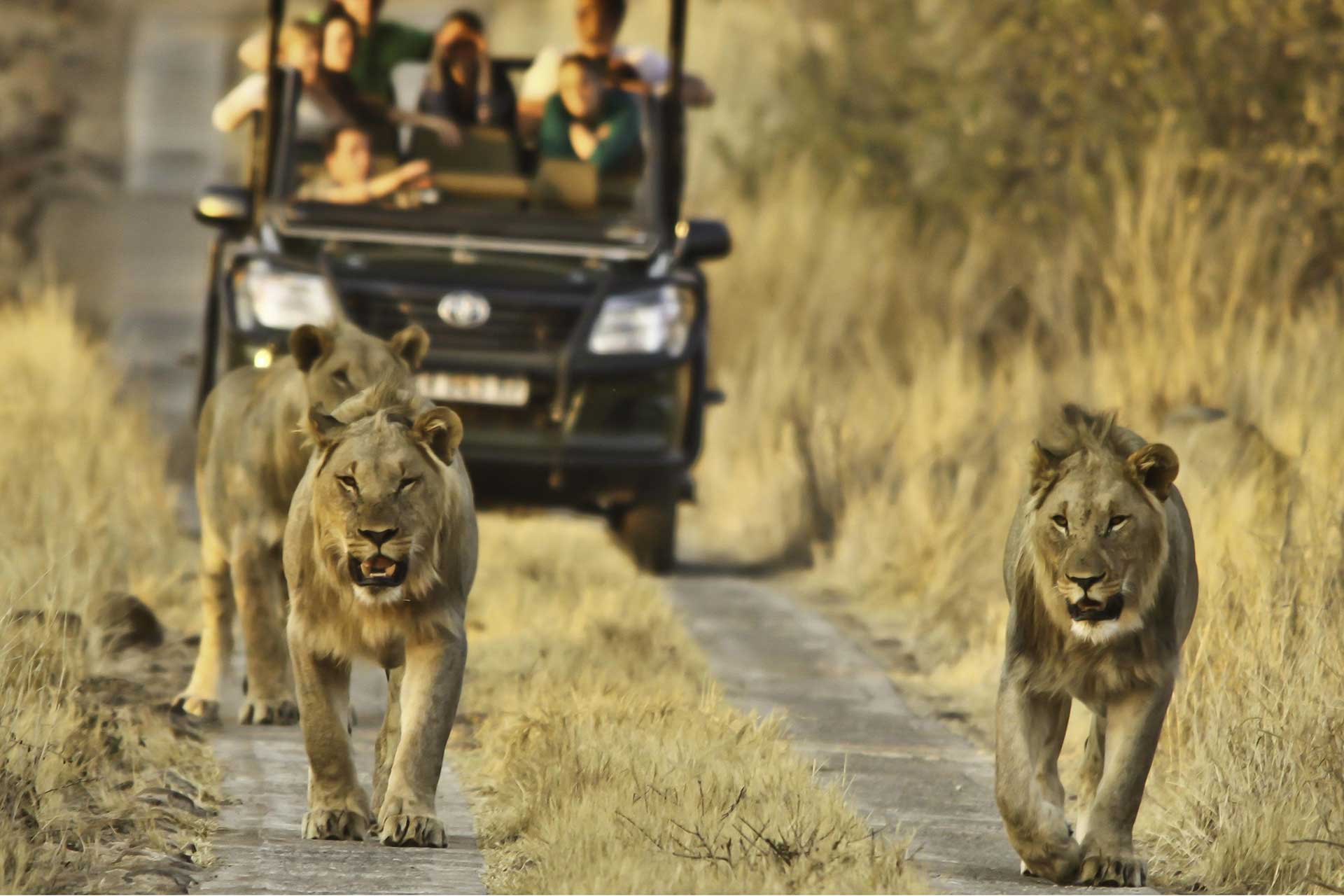
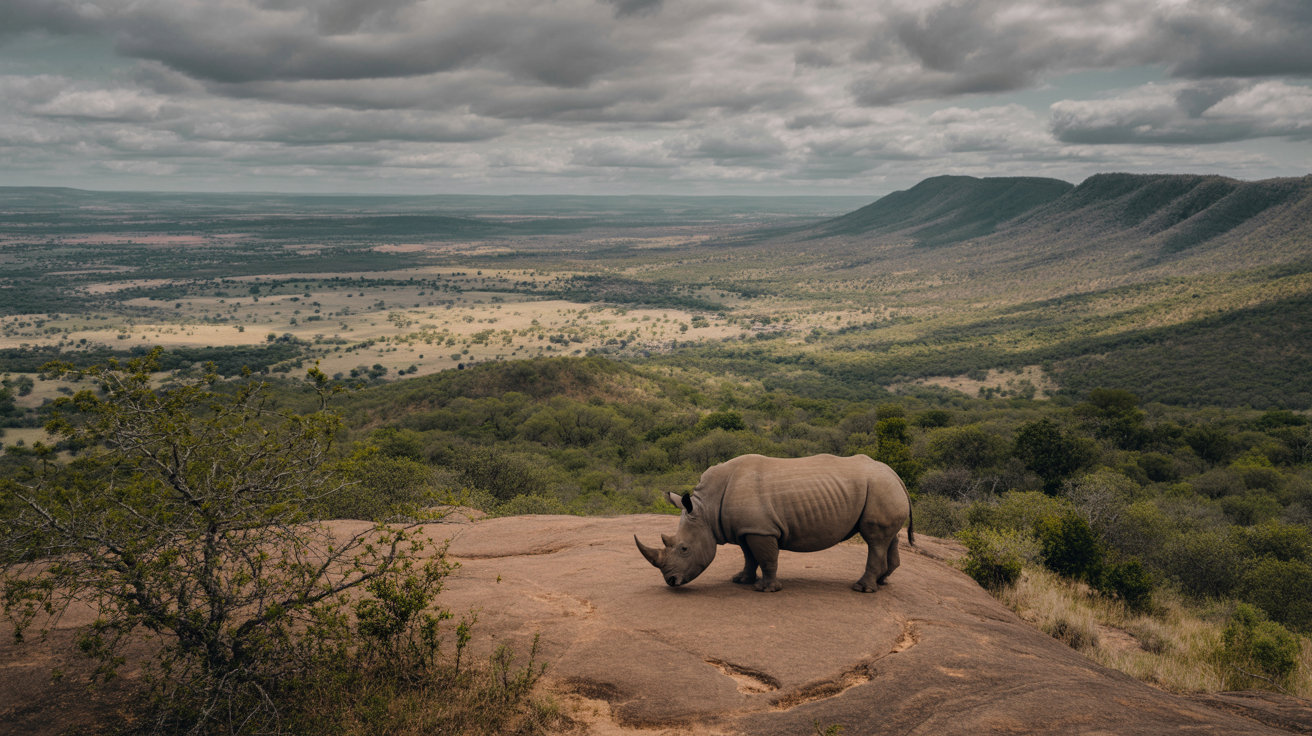
Addo is a full Big Five reserve. Lion were reintroduced in 2003 and now hunt across the main game area. Spotted hyena followed. Both black rhino (in the dense thicket they love) and buffalo — one of the few disease-free herds in the country — are here, while leopard are present but shy in the rugged terrain. Out at sea, the park’s marine reserve around Bird Island protects southern right whales (best seen June–November) and great white sharks, completing the famous Big 7.
Beyond the Big Game
Addo’s varied habitats support a wonderful supporting cast: eland, kudu, red hartebeest, warthog, zebra, bushbuck, and the endangered Cape mountain zebra in the Zuurberg section. Birders will love the 400-plus species, and Bird Island hosts the world’s largest breeding colony of Cape gannets. Keep an eye on the road, too, for the park’s beloved mascot — the rare flightless dung beetle, which has right of way (yes, really!).
Exploring the Sections of Addo
Addo has grown into a vast, varied park stretching from the coast to the mountains. The key areas are:
- Main Game Area (Addo Rest Camp) — the heart of the park and where most visitors go; excellent elephant and Big Five viewing on an accessible road network
- Colchester / Southern section — the newer southern entrance near the Sundays River, quieter with its own game loops
- Nyathi — a wilderness area north of the main camp, accessed on guided drives
- Darlington / Kabouga / Zuurberg — rugged mountain and Karoo wilderness for 4x4 trails, hiking and mountain zebra
- Marine section (Bird Island & Woody Cape) — the coastal reserve protecting whales, sharks, gannets and pristine dunes
Where to Stay in Addo
Addo suits every budget, from SANParks self-catering to ultra-luxury private lodges:
SANParks (Inside the Park)
- Addo Main Rest Camp — chalets, cottages, safari tents and camping, plus a floodlit waterhole, restaurant, pool and shop. Superb value and unbeatable location.
- Matyholweni (Colchester) — chalets at the quieter southern gate.
- Spekboom & Narina bush camps — small, more remote self-catering options.
Luxury & Private Lodges
- Gorah Elephant Camp (HdV) — an exclusive private concession inside the park; classic colonial elegance overlooking a waterhole.
- Kuzuko Lodge — dramatic clifftop lodge in the malaria-free northern (Kuzuko) section, with its own Big Five contractual area.
- Nguni River Lodge & Woodbury Lodge — stylish private reserves bordering Addo.
Just Outside the Park
- Chrislin African Lodge, Avoca River Cabins, and numerous guesthouses around Addo village and Colchester offer great-value beds for self-drive visitors.
Best Time to Visit Addo
| Season | Months | Conditions | Wildlife |
|---|---|---|---|
| Autumn/Winter (dry) | May–Sep | Mild, dry, sunny days, cool nights | ⭐ Best — game gathers at waterholes; whales offshore |
| Spring | Oct–Nov | Warming, greening up | Excellent — newborns, whales until Nov |
| Summer | Dec–Feb | Warm to hot, occasional rain | Good, lush, busy holiday season |
| Early autumn | Mar–Apr | Warm, settling | Very good, fewer crowds |
Unlike the far north, Addo is a genuine year-round destination thanks to the Eastern Cape’s temperate climate. The dry winter months (May–September) give the best land game viewing as bush thins and animals concentrate at water — and they coincide with whale season (June–November) along the coast. Summer is warm, green and busy with local holidaymakers.
Addo Safari Pricing from South Africa (ZAR)
| Package | Duration | Price From (ZAR pp) | Includes |
|---|---|---|---|
| Addo Day Safari | 1 day | R1,299 | Park entry, guided game drive |
| Self-Drive Weekend | 2 nights | R3,499 | SANParks chalet, park fees (self-catering) |
| Classic Addo | 2 nights | R9,999 | Lodge, meals, guided drives |
| Addo + Garden Route | 4 nights | R18,999 | Safari + Garden Route road trip, transfers |
| Luxury Addo | 3 nights | R39,999 | Private concession lodge, all-inclusive |
| Ultimate Big 7 | 4 nights | R59,999 | Luxury lodge, game drives + marine excursion |
All prices per person sharing, 2026 rates. SANParks accommodation is self-catering and superb value; private lodges are fully inclusive of meals and game drives. A daily conservation fee applies to all visitors. Flights from Johannesburg to Gqeberha (PE) start from around R1,200 one-way. Contact us for exact quotes and seasonal specials.
Getting to Addo from Johannesburg
- By air: the easiest route — fly from Johannesburg to Gqeberha (Port Elizabeth) in about 1h45; the main gate is a 45-minute drive from the airport. Cape Town flights are similar.
- By road (Garden Route): Addo is the eastern anchor of the classic Garden Route road trip — many travellers drive from Cape Town over several days, ending at Addo.
- By road from Johannesburg: a long ~10–11 hour drive (around 1,050 km); most Gauteng visitors prefer to fly.
- Self-drive inside the park: any sedan can handle the main game area’s good roads; a higher-clearance or 4x4 vehicle is needed only for the northern 4x4 trails.
Practical Tips for Your Addo Safari
- It’s malaria-free — no anti-malarials needed, one of the biggest reasons families choose Addo
- Give dung beetles right of way — the flightless dung beetle is protected; watch for them (and their dung balls) on the roads and never drive over them
- Bring your own car or hire one — self-drive is the classic, affordable way to see Addo; download the park map and start early
- Pack layers — winter mornings are cool for early game drives even though days are mild
- Add a marine trip — book a whale-watching or Bird Island excursion from Gqeberha to tick off the Big 7
- Two nights minimum — gives you time for the main game area plus a marine or Garden Route add-on
- Book SANParks accommodation early — the Main Rest Camp fills up fast in school holidays
Frequently Asked Questions
Is Addo Elephant National Park really malaria-free? Yes. Addo lies well outside South Africa’s malaria zone, so no prophylaxis is required. This makes it one of the safest and most convenient Big Five destinations for families with young children, pregnant travellers, and anyone who prefers to avoid anti-malarial medication.
What is the “Big 7” and can I really see them all at Addo? The Big 7 is the Big Five (elephant, lion, leopard, rhino, buffalo) plus the southern right whale and great white shark. Addo is the only park that protects all seven, though the whales and sharks are in the marine section off the coast — you’ll see the land animals in the game area and add a marine excursion from Gqeberha to complete the set.
Can I self-drive in Addo? Yes — and it’s one of the best self-drive parks in South Africa. The main game area has good roads suitable for any car, clear signage and a floodlit waterhole at the rest camp. Guided drives and night drives are also available if you prefer.
How does Addo compare to Kruger? Kruger is far larger with higher predator numbers, but it’s partly in a malaria area and far from the coast. Addo is malaria-free, has denser and more reliable elephant viewing, is easily combined with the Garden Route and coast, and offers the unique Big 7. Many travellers do both.
Is Addo good for a first safari? Excellent choice. Malaria-free, easy to reach, affordable self-drive or lodge options, near-guaranteed elephants and a full Big Five make it one of the best first-safari destinations in the country — especially for families.
Is Addo safe and welcoming for LGBTQ+ travellers? Absolutely. South Africa has full legal equality for LGBTQ+ people, and the Eastern Cape’s lodges and camps are warm and inclusive. Read our LGBTQ+ friendly safari guide and visit our LGBTQ+ safaris page for more.
Ready to Discover Addo?
Over 600 elephants, malaria-free Big Five, the world’s only Big 7, affordable self-drive freedom, and an easy pairing with the Garden Route and coast — Addo Elephant National Park is one of the smartest and most rewarding safari choices in South Africa, whether it’s your first safari or your fiftieth.
Bakubung Safaris & Tours — Born in Johannesburg, made for Africa.