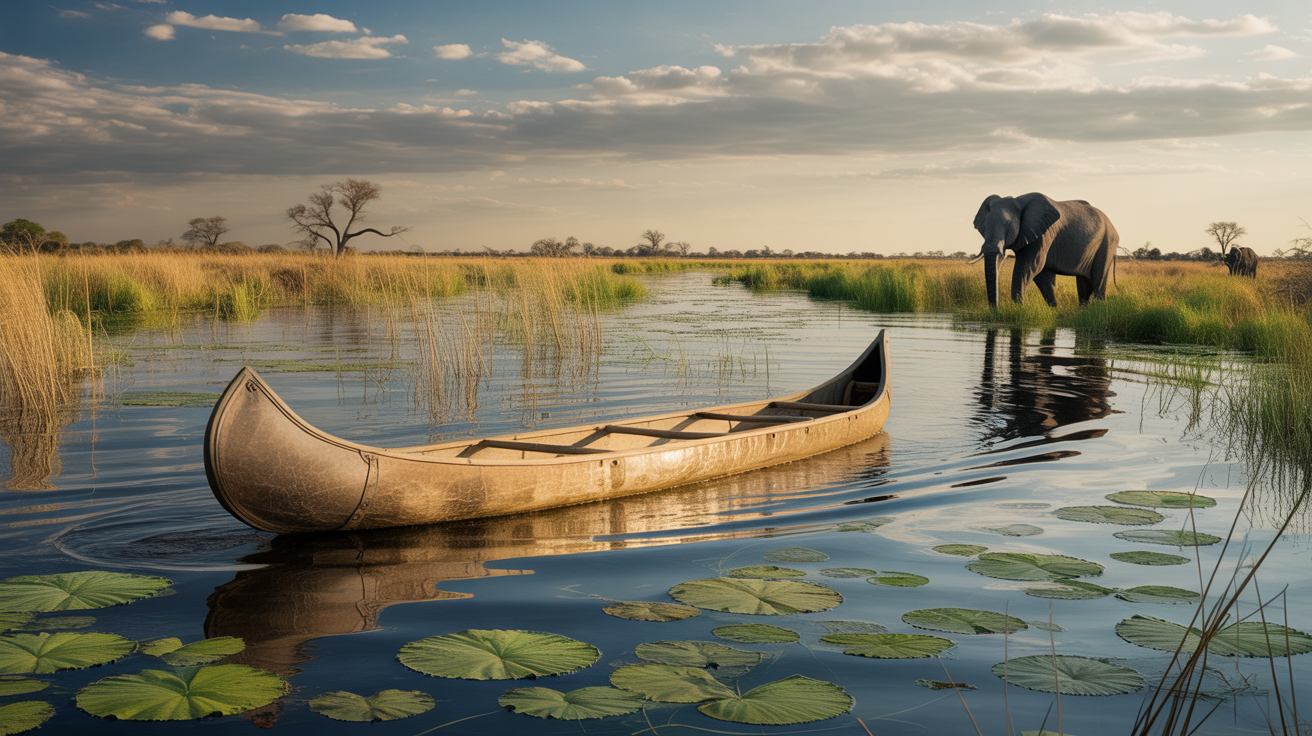
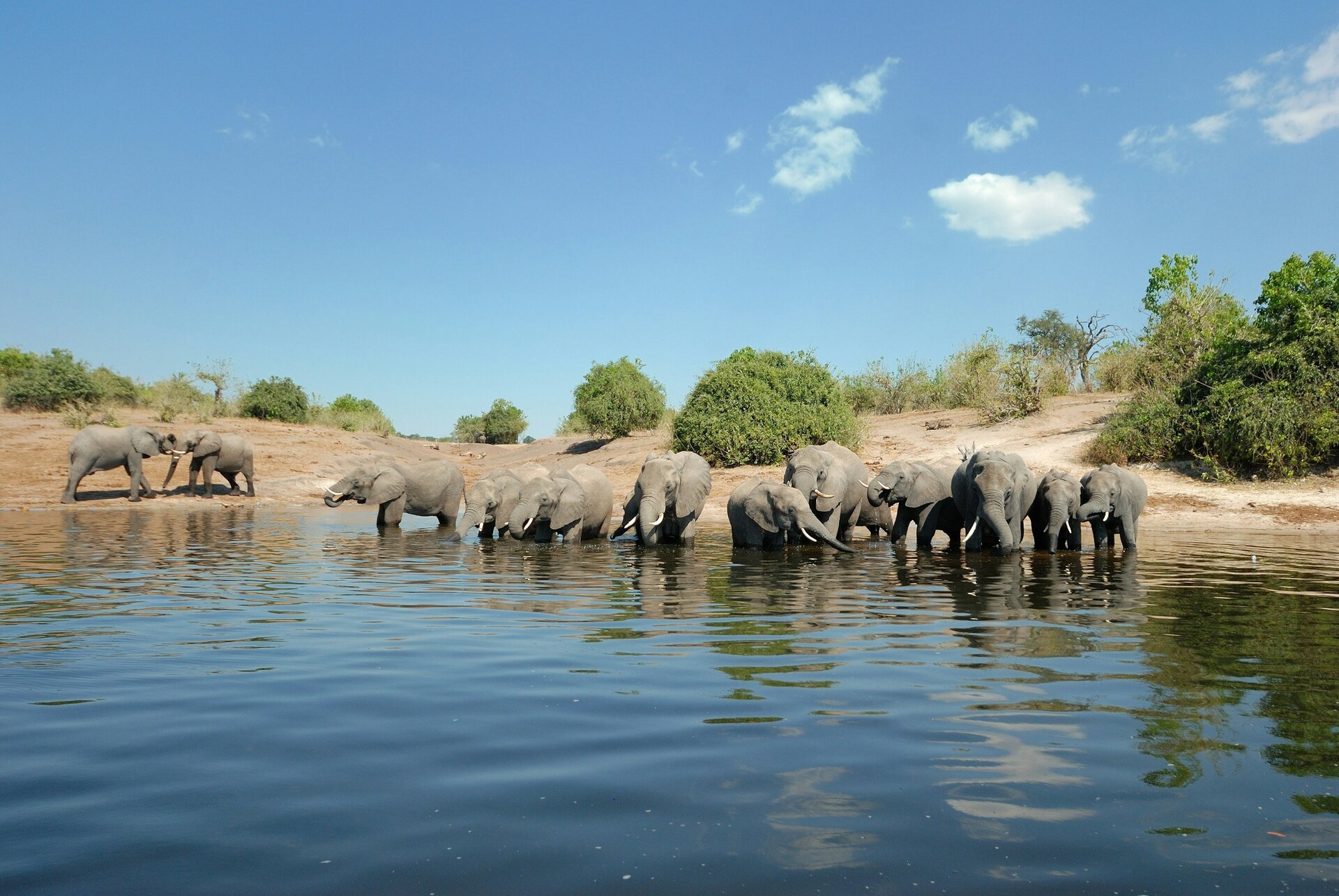
 A large herd of elephants drinking and bathing at the Chobe River — Chobe National Park holds the greatest concentration of elephants in Africa
When people ask us which single park best captures the raw power of African wildlife, our answer is often Chobe. Imagine drifting along a wide, sun-drenched river in a small boat while a breeding herd of fifty elephants wades in to drink, spray, and play just metres away. That is a Tuesday in Chobe National Park — home to an estimated 120,000 elephants, the largest concentration of any single species on the continent, and one of the most extraordinary safari destinations on Earth.
Located in Botswana’s far north where four countries meet (Botswana, Namibia, Zambia, Zimbabwe), Chobe covers 10,566 km² of riverine forest, floodplain, marshland, and dry savanna. The Chobe River forms the park’s northern boundary and is the reason for everything: it draws colossal herds of elephant, buffalo, hippo, and crocodile, while the surrounding woodland shelters lion, leopard, wild dog, sable antelope, and roan — two of Africa’s rarest large antelope.
As a Johannesburg-based operator with trusted Botswana partners, Bakubung Safaris arranges Chobe journeys year-round. This is our honest, insider guide to planning your 2026 Chobe safari.
Why Choose Chobe National Park?
Chobe delivers experiences that no other park can match:
- The elephant capital of Africa — 120,000 elephants in breeding herds of 50–200 at the riverfront, especially May–October
- Boat safaris on the Chobe River — the only major park where water-based game viewing rivals (and often surpasses) land-based drives
- Four distinct ecosystems — Chobe Riverfront, Savuti Marsh, Linyanti, and the dry hinterland each offer completely different safari experiences
- Africa’s rarest antelope — sable and roan antelope, puku, and red lechwe along the floodplains
- Predator spectacle — the Savuti lion prides are famous for hunting elephants; wild dog packs roam the woodland
- Easy to combine — a natural partner with the Okavango Delta and Victoria Falls on Botswana’s classic northern circuit
- Day-trip accessible — you can visit the Chobe Riverfront as a day trip from Victoria Falls (Livingstone or the Zim side)
Understanding Chobe’s Four Regions
1. Chobe Riverfront (Kasane Area)
The most accessible and most visited section. The town of Kasane sits at the park’s northeast corner where the Chobe River meets the Zambezi. From Kasane you can do both morning game drives along the riverfront track and afternoon boat safaris on the river — the classic Chobe combination.
What to expect: Massive elephant herds at the water’s edge (dry season can see 500+ in a single afternoon), hippo pods, Nile crocodile, buffalo herds, giraffe, waterbuck, impala, and spectacular birdlife including African fish eagle, carmine bee-eater (Aug–Oct), and African skimmer.
Best for: First-time Chobe visitors, families, anyone combining with Victoria Falls.
2. Savuti (Savute) Marsh
Deep in the park’s west, Savuti is a wild, remote channel system that mysteriously fills and dries over decades. When the Savuti Channel flows, the marsh attracts vast herds of zebra and wildebeest — and the predators that follow.
What to expect: Large lion prides (the famous Savuti lions are documented hunting young elephants), leopard, cheetah, wild dog, spotted hyena, and enormous bull elephants. The landscape is dramatic — rocky outcrops, dead tree "graveyards", and ancient San rock art at Gubatsa Hills.
Best for: Serious safari enthusiasts, predator lovers, photographers.
3. Linyanti Marshes
The park’s northwest corner borders the Linyanti River and adjacent private concessions (Selinda, Kwando, Linyanti). This is one of Africa’s last true wilderness areas — remote, exclusive, and teeming with game.
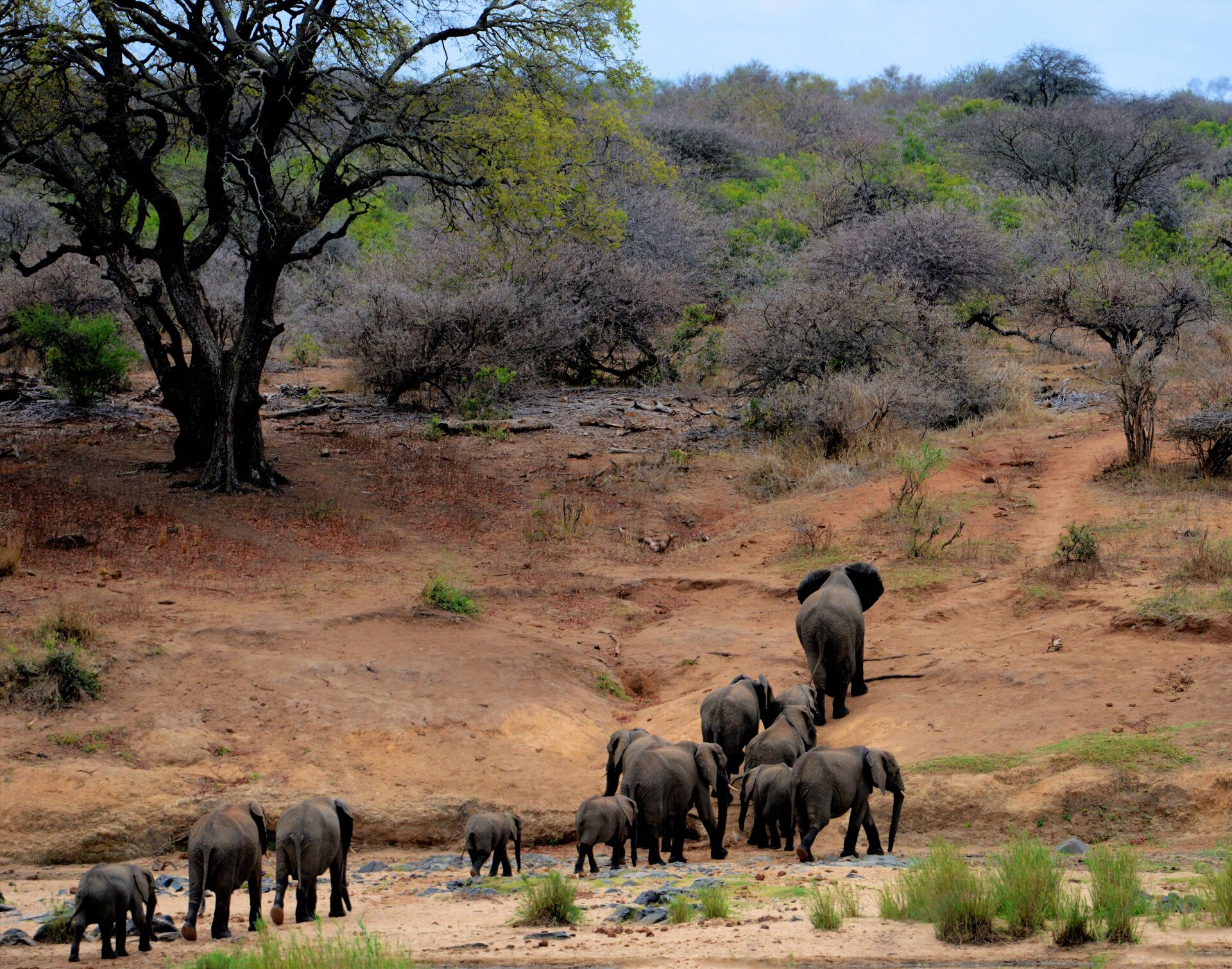 An elephant family ascending from an African river crossing through woodland — scenes like this play out daily along Chobe’s waterways
What to expect: Large elephant herds, wild dog (one of the best populations in Africa), lion, leopard, sitatunga antelope in the marshes, and birding to rival the Okavango.
Best for: Luxury travellers, honeymooners, those seeking exclusivity and wilderness.
4. Nogatsaa & the Dry Interior
The park’s interior woodland is less visited but rewards the adventurous. Nogatsaa offers a couple of waterholes that attract big herds during the dry season without the crowds of the riverfront.
Best for: Self-drivers wanting solitude, birders (raptors, rollers, hornbills in the mopane woodland).
The Chobe Boat Safari Experience
This is what sets Chobe apart from every other park in Africa. A Chobe River boat safari puts you at eye-level with hippos, drifting past elephant herds splashing in the shallows, watching fish eagles swoop, and photographing crocodiles basking on the banks — all from a completely different perspective than a game vehicle.
| Feature | Boat Safari | Game Drive |
|---|---|---|
| Perspective | Water-level, unique angles | Elevated, traditional |
| Elephants | Metres away at waterfront | Good, but further from water |
| Hippos & crocs | Excellent — right in their habitat | Rarely seen |
| Birdlife | Outstanding (waterbirds, fish eagles) | Good (woodland species) |
| Photography | Low-angle reflections, golden hour | Classic safari shots |
| Best time | Afternoon (3–6 PM golden light) | Morning (6–9 AM) |
| Season | Year-round (water levels vary) | Dry season best |
Pro tip: Book both a morning game drive AND an afternoon boat cruise — this is the signature Chobe day and you’ll see completely different wildlife on each.
Best Time to Visit Chobe
| Season | Months | Conditions | Wildlife |
|---|---|---|---|
| Peak dry | Jul–Oct | Warm days, cool nights, no rain | ⭐ Best — massive herds at river |
| Late dry | Sep–Oct | Hot, very dry, concentrated game | Excellent predator action |
| Green season | Nov–Mar | Hot, afternoon rains, lush | Birding, babies, fewer crowds |
| Shoulder | Apr–Jun | Cooling, drying, herds building | Very good, great value |
The dry season (May–October) is prime time: as water sources inland dry up, wildlife concentrates along the Chobe River in staggering numbers. September–October offers the most dramatic concentrations but is also the hottest.
The green season (November–March) transforms the landscape into a lush paradise with migratory birds, newborn animals, and significantly lower prices — a photographer’s dream for dramatic skies and green backdrops.
Where to Stay
Kasane & Chobe Riverfront
- Chobe Game Lodge — The only lodge inside the park on the riverfront. All-inclusive luxury, river-facing rooms, private boat safaris. The gold standard.
- Chobe Safari Lodge — Large, well-run lodge just outside the park gate in Kasane. Good value with both hotel rooms and safari tents.
- Muchenje Safari Lodge — Boutique lodge on a quiet stretch of the Chobe River west of Kasane. Stunning views, intimate atmosphere, community-owned.
- Chobe Bakwena Lodge — Affordable luxury on the riverbank. Excellent for families.
Savuti
- Savuti Safari Lodge (Desert & Delta) — Comfortable lodge overlooking the Savuti Channel. Elephant hide nearby.
- Savute Elephant Lodge (Belmond) — Ultra-luxury with a legendary elephant waterhole right in camp.
Linyanti
- Kings Pool Camp (Wilderness) — Premium camp on the Linyanti River. Boat safaris, walking, and drives.
- DumaTau Camp — Recently rebuilt, stunning design on a lagoon. One of Botswana’s finest.
Chobe Safari Pricing from South Africa (ZAR)
| Package | Duration | Price From (ZAR pp) | Includes |
|---|---|---|---|
| Chobe Day Trip (ex Vic Falls) | 1 day | R3,499 | Border transfer, game drive, boat cruise, lunch |
| Chobe Riverfront | 2 nights | R19,999 | Flights ex Joburg, lodge, all meals, activities |
| Chobe + Victoria Falls | 4 nights | R34,999 | Both destinations, flights, all-inclusive |
| Chobe + Okavango Delta | 5 nights | R54,999 | Light aircraft transfers, two iconic destinations |
| Ultimate Botswana | 7 nights | R89,999 | Chobe + Okavango + Makgadikgadi Pans, fly-in |
| Chobe + Okavango + Vic Falls | 8 nights | R109,999 | The Grand Botswana, all three highlights |
All prices per person sharing, 2026 rates. Includes return flights from Johannesburg, accommodation, meals, park fees, and safari activities. International flights to Victoria Falls available from R5,999. Contact us for exact quotes and seasonal specials.
Getting to Chobe from South Africa
- By air: Fly Johannesburg → Kasane (Airlink, ~2.5 hours direct or via Maun/Livingstone). Some itineraries fly Johannesburg → Livingstone (Zambia) or Victoria Falls (Zimbabwe), then road-transfer to Kasane (1.5–2 hours)
- By road: Drive from Victoria Falls to Kasane (80 km, ~2 hours including border). The Kazungula Bridge connects Botswana and Zambia directly
- Combining: Most travellers pair Chobe with Victoria Falls (1.5 hours away) and/or the Okavango Delta (light aircraft from Kasane to Maun/delta airstrips)
Practical Tips for Your Chobe Safari
- Bring binoculars for the boat — Chobe’s birdlife is extraordinary and you’ll want to spot fish eagles, bee-eaters, and kingfishers from the water
- Pack layers — Mornings on the boat in winter (Jun–Aug) are genuinely cold; afternoons are warm
- Waterproof your camera gear — River spray from hippos and boat wake can catch you off guard
- Don’t skip the game drive — The riverfront track at dawn delivers lion, leopard, hyena, and different elephant behaviour (mud-bathing, tree-pushing)
- Chobe is malaria-risk — Take prophylaxis, use repellent, and cover up at dusk. Consult your travel clinic at least 4 weeks before departure
- Book dry-season early — Jul–Oct fills fast, especially at premium lodges. We recommend booking 6–12 months ahead for peak season
- Consider green season — Nov–Mar offers 30–40% lower prices, superb birding, dramatic skies, and far fewer vehicles
Frequently Asked Questions
Can I visit Chobe as a day trip from Victoria Falls? Yes! This is one of Chobe’s unique advantages. We arrange day trips from both the Zambian (Livingstone) and Zimbabwean (Victoria Falls town) sides. You’ll cross the border at Kazungula, enjoy a game drive and boat cruise, have lunch, and return by evening. It’s a full day (typically 6 AM–6 PM) and well worth it.
Is Chobe good for families? Excellent. The boat safaris are naturally child-friendly (no bumpy roads, animals come to you), Kasane has good medical facilities, and several lodges welcome children of all ages. We recommend the riverfront section for families.
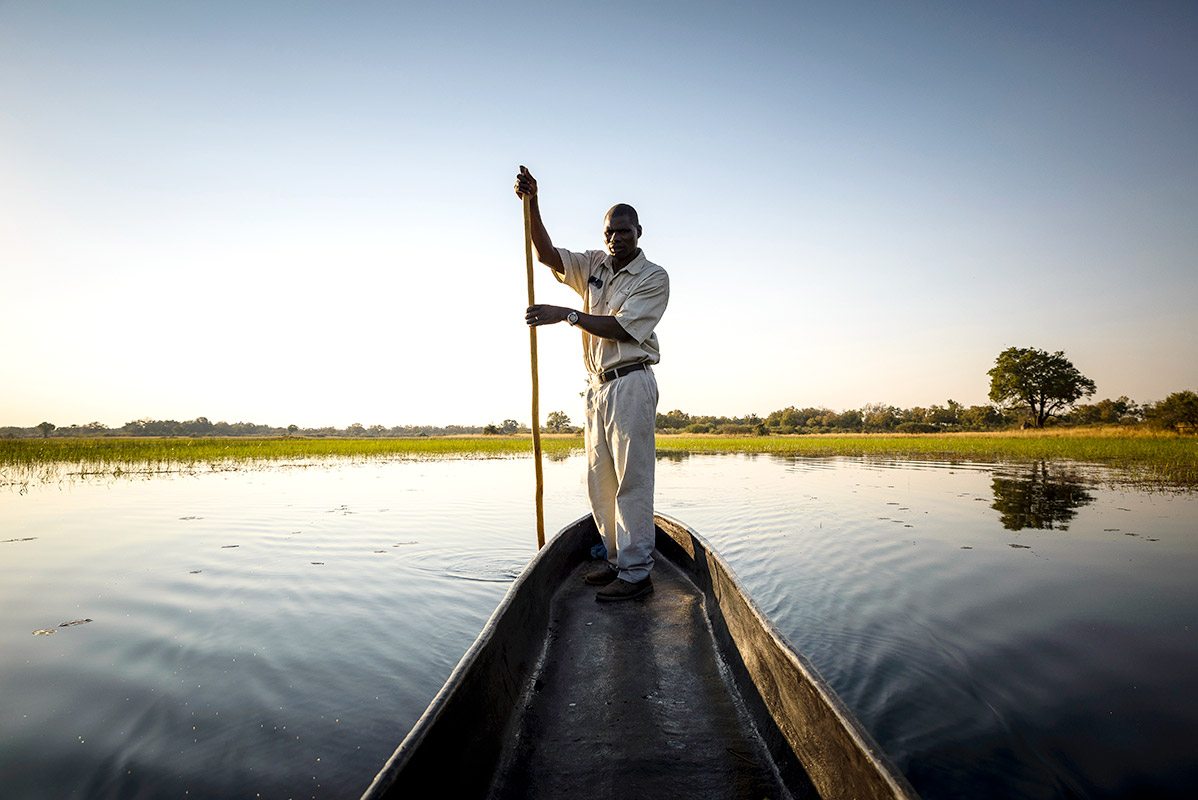
How does Chobe compare to the Okavango Delta? They’re complementary, not competing. Chobe is about massive concentrations (elephants, buffalo) along a permanent river, with both boat and land safaris. The Okavango is a seasonal inland delta with mokoro (dugout canoe) safaris, island-hopping, and a more intimate, water-wilderness experience. The best Botswana itinerary includes both.
Is Chobe safe for LGBTQ+ travellers? Botswana decriminalised same-sex relationships in 2019 and is one of the most progressive countries in Africa on LGBTQ+ rights. Safari lodges in Chobe are welcoming and inclusive. Read our LGBTQ+ friendly safari guide and visit our LGBTQ+ safaris page for more.
What about the KAZA UniVisa? The KAZA UniVisa (US$50) covers both Zimbabwe and Zambia and allows day trips into Botswana from Victoria Falls. If you’re spending multiple nights in Botswana, you’ll need a separate Botswana entry (free for most nationalities on arrival). Check current requirements before travel.
Ready to Experience Chobe?
Chobe National Park is nature at its most generous — 120,000 elephants, a river teeming with hippos and crocodiles, lion prides that hunt by moonlight, and sunsets that stop you mid-sentence. Whether you’re adding a day trip from Victoria Falls or spending a week exploring all four regions, Chobe belongs on every safari wishlist.
Book your Chobe safari today →
Bakubung Safaris & Tours — Born in Johannesburg, made for Africa.