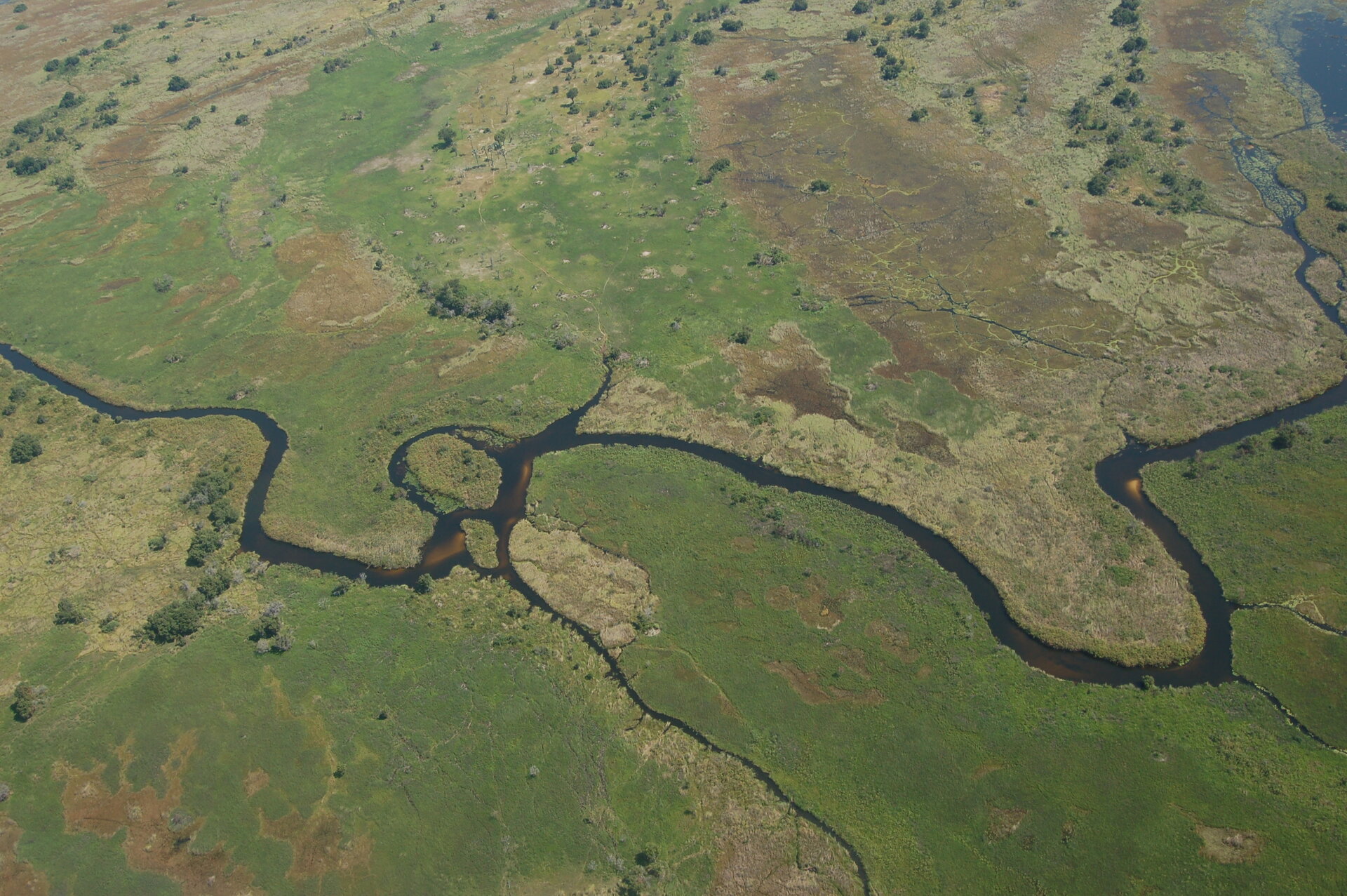
 Aerial view of the Okavango Delta’s labyrinth of channels, islands, and floodplains — Botswana’s UNESCO World Heritage water wilderness
There is no place on Earth quite like the Okavango Delta. In the middle of the Kalahari Desert, the Okavango River fans out into a vast inland delta — roughly 22,000 km² of shimmering channels, papyrus-fringed lagoons, palm-studded islands, and floodplains that pulse with life. It is a UNESCO World Heritage Site, one of the Seven Natural Wonders of Africa, and the most extraordinary water-based safari destination on the planet.
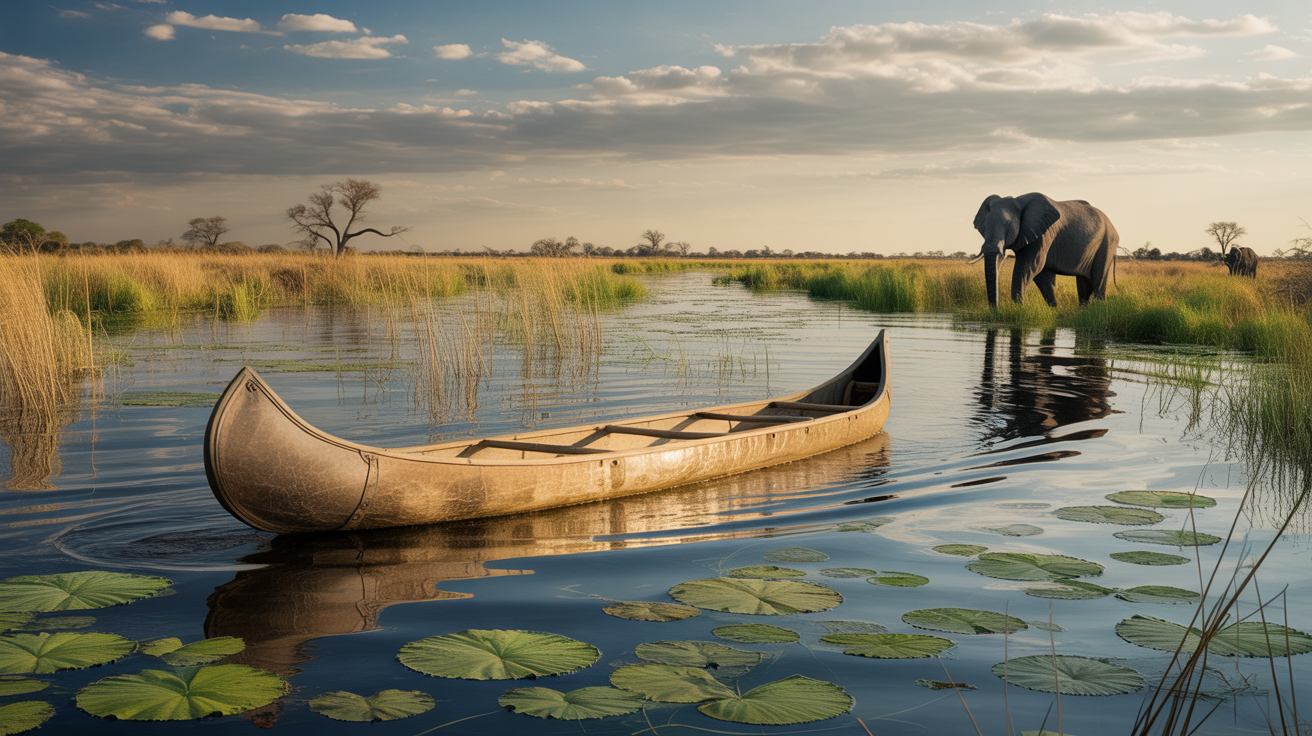
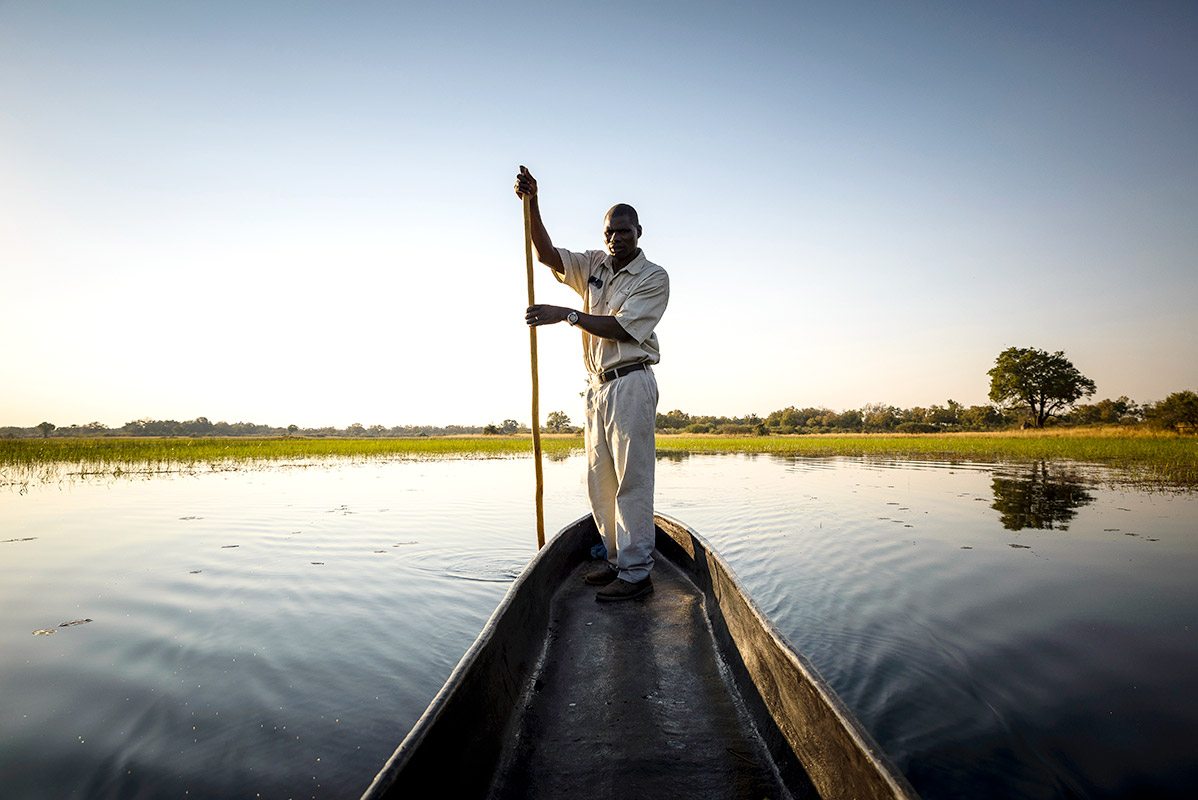
What makes the Delta magical is the contrast. The floodwaters arrive from Angola’s highlands during Botswana’s dry winter (June–August), transforming the landscape just when the surrounding Kalahari is at its driest. Wildlife concentrates on the islands, predators patrol the edges, and the channels fill with hippos, crocodiles, and birdlife beyond imagination. Gliding through the Delta in a traditional mokoro (dugout canoe), with an elephant herd drinking on the opposite bank and a fish eagle calling overhead, is the single most iconic safari experience in all of Southern Africa.
As a Johannesburg-based operator with trusted Botswana partners, Bakubung Safaris arranges Okavango journeys year-round. This is our honest, insider guide to planning your 2026 Delta safari.
Why Choose the Okavango Delta?
The Delta stands apart from every other safari destination:
- Water-based safari — mokoro rides, motorboat cruises, and island walks combine for a multi-dimensional experience found nowhere else
- Extraordinary wildlife — the Big Five plus wild dog, cheetah, hippo, crocodile, sitatunga, red lechwe, and 400+ bird species
- The annual flood pulse — floodwaters from Angola arrive in the dry season, creating a dramatic seasonal transformation
- UNESCO World Heritage Site — recognised as one of the most important and unique ecosystems on Earth
- Exclusivity — Botswana’s low-volume, high-value tourism model means small camps, few tourists, and pristine wilderness
- Stunning camps — from rustic island bush camps to ultra-luxury tented lodges on stilts
- Walking safaris — guided island walks bring you face-to-face with the bush at ground level
- Easy to combine — pairs perfectly with Chobe (elephants), Makgadikgadi (meerkats), and the Central Kalahari
Understanding the Okavango: Regions & Where to Stay
The Delta is vast and varied. Where you stay shapes your experience dramatically.
The Inner Delta — Water, Water Everywhere
The permanently flooded core of the Delta. Camps here are built on islands surrounded by deep channels and lagoons. This is the heart of the mokoro experience — gliding through papyrus channels, listening to reed frogs, and spotting malachite kingfishers. Game viewing is excellent on the islands, but the water experience is the star.
Best for: Mokoro safaris, birdwatching, the classic Delta water experience, romantic getaways
The Outer Delta & Moremi Game Reserve
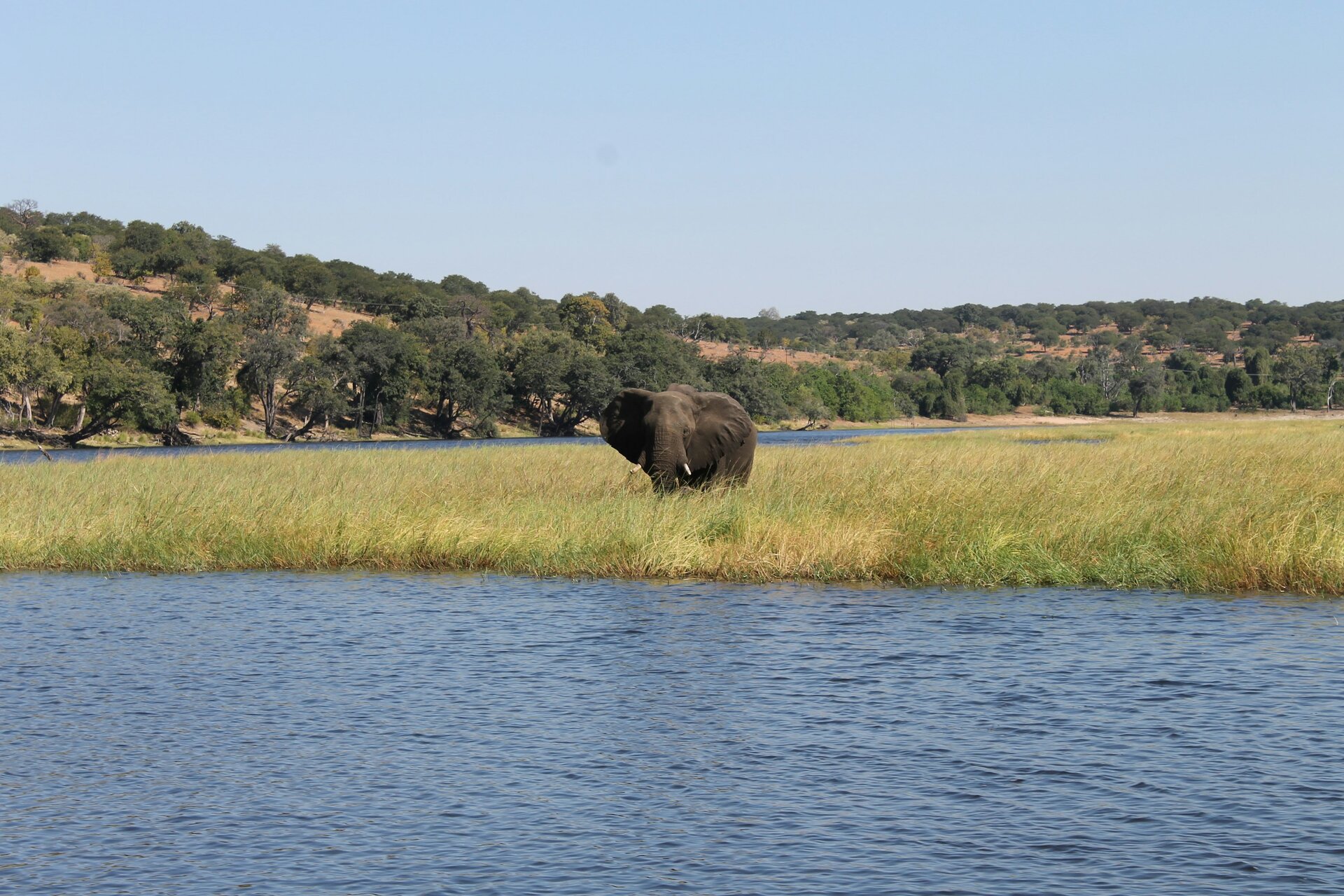 An elephant near the waterways of the Okavango Delta — the delta’s islands and floodplains support one of Africa’s densest wildlife populations
Moremi Game Reserve occupies the eastern portion of the Delta and offers the best land-based game viewing. Chief’s Island — the largest island in the Delta — is legendary for big cats, wild dogs, and the Big Five. The outer Delta and private concessions surrounding Moremi combine water and land activities, giving you the best of both worlds.
Best for: Big Five, wild dogs, predator viewing, combination water + land safaris
Private Concessions
Around the edges of the Delta, private concessions (Abu, Jao, Duba Plains, Vumbura, Kwetsani, and others) offer exclusive-use traversing rights — meaning fewer vehicles, off-road driving, and night drives. These tend to be the most luxurious and intimate Delta experiences.
Best for: Ultimate luxury, exclusivity, wild dogs, night drives, off-road game drives
Best Time to Visit the Okavango Delta
| Season | Months | What to Expect |
|---|---|---|
| Flood season (water at its peak) | June – August | Peak floodwaters, best mokoro experience, wildlife on islands, dry Kalahari drives contrast, cool & dry |
| Dry season (best game viewing) | September – October | Floodwaters receding, animals concentrated at remaining water, outstanding predator viewing, hot |
| Green season (value & birding) | November – March | Lush landscapes, migratory birds, baby animals, afternoon storms, lower rates, some camps close |
| Shoulder | April – May | Floods beginning to arrive, pleasant weather, good game viewing, better rates |
Our recommendation: For the quintessential Okavango experience — mokoro rides on full floodwaters plus superb game viewing — visit June to August. For the absolute best big-game and predator viewing, September–October is unbeatable. The green season offers dramatically lower rates and superb birding.
What Does an Okavango Delta Safari Cost?
The Okavango is a premium destination — Botswana’s deliberate high-value model keeps visitor numbers low and wilderness quality high. Here’s what to budget in South African Rands:
| Package | Duration | Price (ZAR) | Includes |
|---|---|---|---|
| Delta Explorer | 3 nights | From R39,999/pp | Island bush camp, mokoro excursions, guided walks, all meals, light-aircraft transfers |
| Moremi Safari | 4 nights | From R54,999/pp | Moremi lodge, game drives, mokoro, boat cruises, all meals, flights |
| Delta & Chobe Combo | 6 nights | From R79,999/pp | Okavango camp + Chobe lodge, all activities, flights, transfers |
| Ultimate Okavango | 5 nights | From R109,999/pp | Luxury private-concession camp, all-inclusive, helicopter scenic flight, mokoro, game drives |
| Botswana Grand Safari | 9 nights | From R149,999/pp | Okavango + Chobe + Makgadikgadi, luxury camps, private guide, all flights |
All prices per person sharing. Fully inclusive of accommodation, meals, drinks, activities, park fees, and internal light-aircraft flights as specified. International flights excluded. Prices valid for the 2026 season.
Getting to the Okavango Delta from South Africa
- By air (the only practical way in): Fly from Johannesburg to Maun (the Delta’s gateway town) — direct flights with Airlink (≈2 hours). From Maun, a light-aircraft transfer takes you to your camp’s airstrip (20–60 minutes)
- Via Kasane: If combining with Chobe, fly to Kasane and transfer between parks by light aircraft
- Self-drive: Possible to Maun (via Gaborone or Nata), but you’ll still need a charter flight into the Delta itself — there are no roads to the island camps
Visa: South African passport holders and most nationalities enter Botswana visa-free for 90 days.
Insider Tips for Your Okavango Delta Safari
- Fly in, don’t drive — the scenic flight over the Delta is an experience in itself and the only way to reach most camps
- Pack soft bags only — light-aircraft luggage limits are strict (typically 20 kg in a soft-sided bag, no hard cases)
- Bring a waterproof camera bag — mokoro trips mean water splashes; protect your gear
- Combine water and land — the best Delta safaris mix mokoro/boat experiences with land-based game drives
- Layer your clothing — winter mornings on the water are cold (near freezing in June–July); days warm up quickly
- Book 12 months ahead — the best Delta camps are small (6–12 tents) and peak flood-season dates sell fast
- Add Chobe — the world’s largest elephant population is a short flight away and pairs perfectly
Frequently Asked Questions
What is a mokoro? A mokoro is a traditional dugout canoe (now often made from fibreglass) poled through the shallow channels by an expert guide. It’s the signature Okavango experience — silent, intimate, and completely immersive.
Is the Okavango Delta malaria-free? No. The Delta is in a malaria zone year-round, with higher risk in the wet summer (November–April). Take prophylactics and use repellent. If you need a malaria-free option, ask us about Pilanesberg or Madikwe in South Africa.
Can I see the Big Five in the Okavango? Yes — Moremi and the surrounding concessions hold lion, leopard, elephant, buffalo, and (limited) rhino. The Delta is also one of the best places in Africa for wild dog and cheetah.
How does the Okavango compare to Kruger or the Serengeti? The Delta offers a completely different experience — water-based safaris, mokoro rides, and island walks alongside traditional game drives. Kruger and the Serengeti are savanna-based parks; the Delta is a wetland wonderland. Many of our clients do the Delta and a South African reserve for the ultimate contrast.
How many nights should I spend in the Okavango? Three nights gives you a wonderful taste; four to five nights lets you explore different parts of the ecosystem. If combining with Chobe, budget six to seven nights total for Botswana.
Is Botswana welcoming to LGBTQ+ travellers? Botswana decriminalised homosexuality in 2019 in a landmark court ruling, and the premium lodges and camps we work with are warm and welcoming. As a proudly LGBTQ+-owned operator, we’ve sent many same-sex couples to Botswana with excellent feedback — read our honest LGBTQ+ safari guide for more.
The Okavango Delta is Africa at its most magical — a place where water meets wilderness in a way found nowhere else on Earth. Whether you’re gliding silently through lily-covered channels, watching elephants swim between islands, or falling asleep in a luxury tented suite to the chorus of reed frogs, the Delta will stay with you long after you’ve left.
Ready to experience the Okavango? Get in touch with our team and let’s build your dream Delta safari.
Bakubung Safaris & Tours — Born in Johannesburg, made for Africa.