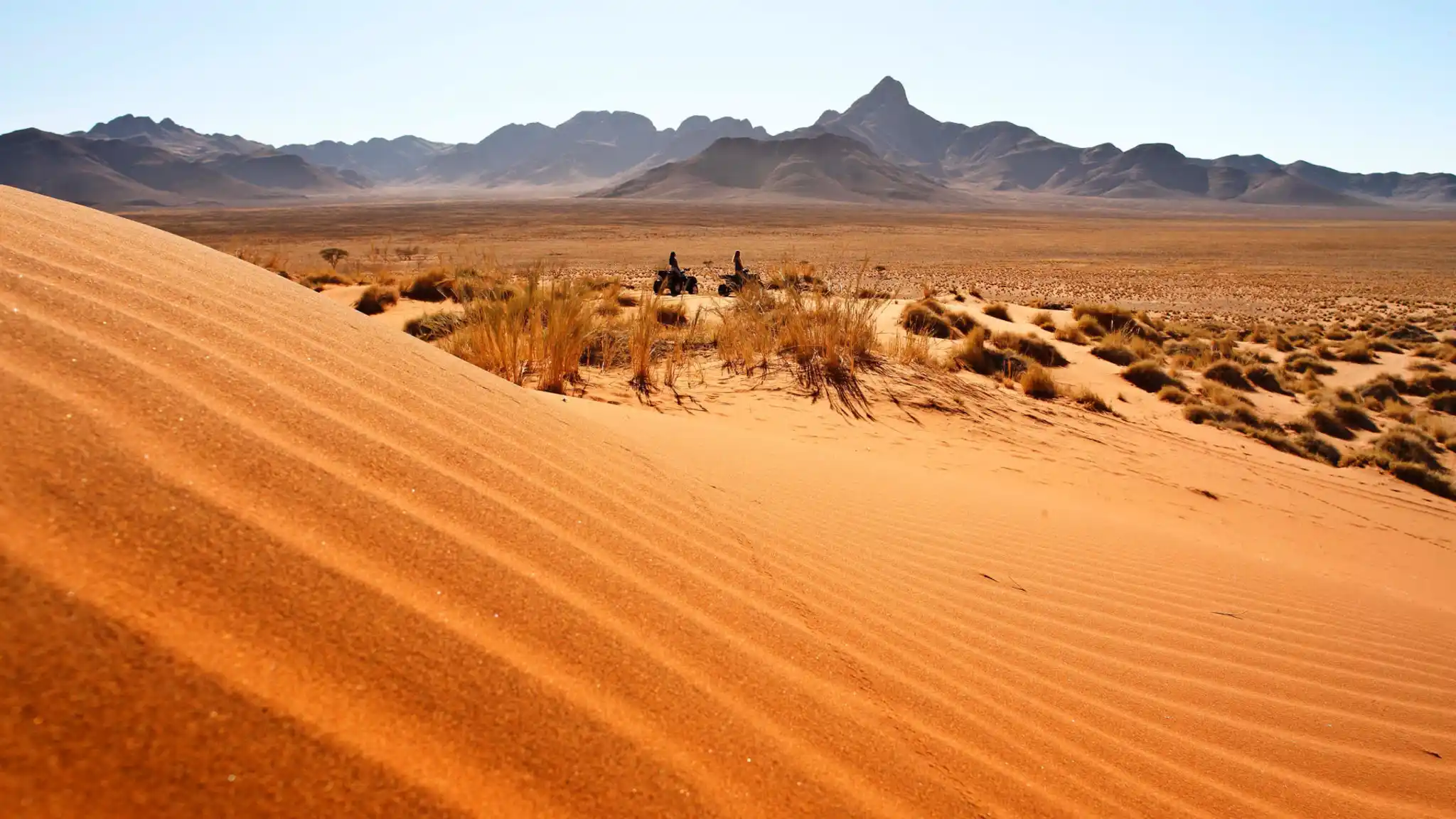
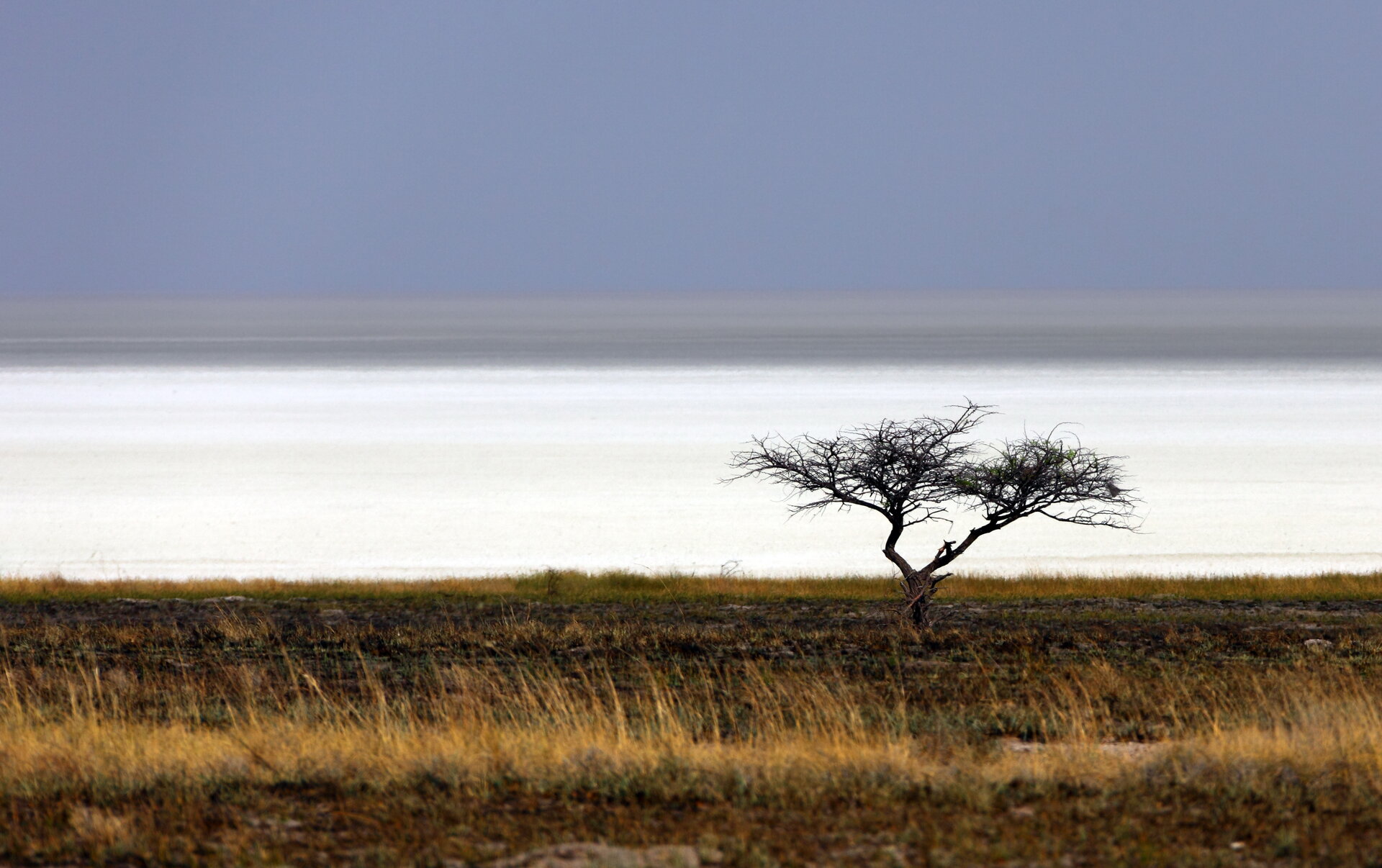
 The vast white Etosha Pan stretching to the horizon — Namibia’s iconic salt flat is one of the most surreal landscapes in Africa
Etosha is unlike any other safari destination in Africa. Instead of lush green bush or golden savanna, you’ll find a vast, shimmering white salt pan — so large it’s visible from space — surrounded by grassland, mopane woodland, and some of the most productive waterholes on the continent. This stark, otherworldly landscape is home to an extraordinary density of wildlife, and the waterholes that dot the pan’s southern edge create a front-row seat for game viewing that is almost absurdly easy.
Etosha National Park covers 22,270 km² of northern Namibia, and the pan itself — a dry, mineral-crusted lakebed — accounts for roughly a quarter of that. In the dry season, animals converge on the permanent and semi-permanent waterholes in staggering numbers: elephant herds, lion prides, black and white rhino, giraffe, zebra, springbok, gemsbok (oryx), wildebeest, kudu, and endangered black-faced impala all come to drink, often within metres of your vehicle.
As a Johannesburg-based operator with trusted Namibian partners, Bakubung Safaris arranges Etosha journeys year-round. This is our honest, insider guide to planning your 2026 Etosha safari.
Why Choose Etosha National Park?
Etosha delivers a safari experience found nowhere else:
- Legendary waterholes — park at a waterhole, switch off the engine, and watch a procession of species come to drink; some camps have floodlit waterholes for 24-hour viewing
- Self-drive paradise — Etosha’s excellent roads make it one of the best self-drive safari parks in Africa
- The Big Five — lion, leopard, elephant, and both black and white rhino (Etosha is one of the best places in Africa for rhino)
- Surreal landscapes — the white pan, fairy-tale quiver trees, and Namibian sunsets create photography that looks like another planet
- Endangered species — black-faced impala (found only here and in southern Angola), black rhino, and Hartmann’s mountain zebra
- Malaria-free in the dry season — very low malaria risk during the peak game-viewing months (May–October)
- Easy to combine — pairs naturally with Sossusvlei (red dunes), the Skeleton Coast, and Damaraland (desert elephants)
Understanding Etosha: Where to Stay
Etosha’s camps and lodges cluster around the southern edge of the pan, each with its own character and nearby waterholes.
Inside the Park (NWR Rest Camps)
- Okaukuejo — the park’s “capital” and home to the famous floodlit waterhole — arguably the best waterhole in all of Africa. Black rhino visit regularly after dark. This alone is worth a night’s stay
- Halali — mid-park camp with its own floodlit waterhole and excellent game drives in both directions
- Namutoni — east-gate camp built around a historic German colonial fort, with a waterhole and good birding
- Onkoshi & Dolomite — exclusive, upmarket camps within the park offering a more intimate experience
Outside the Park (Private Lodges)
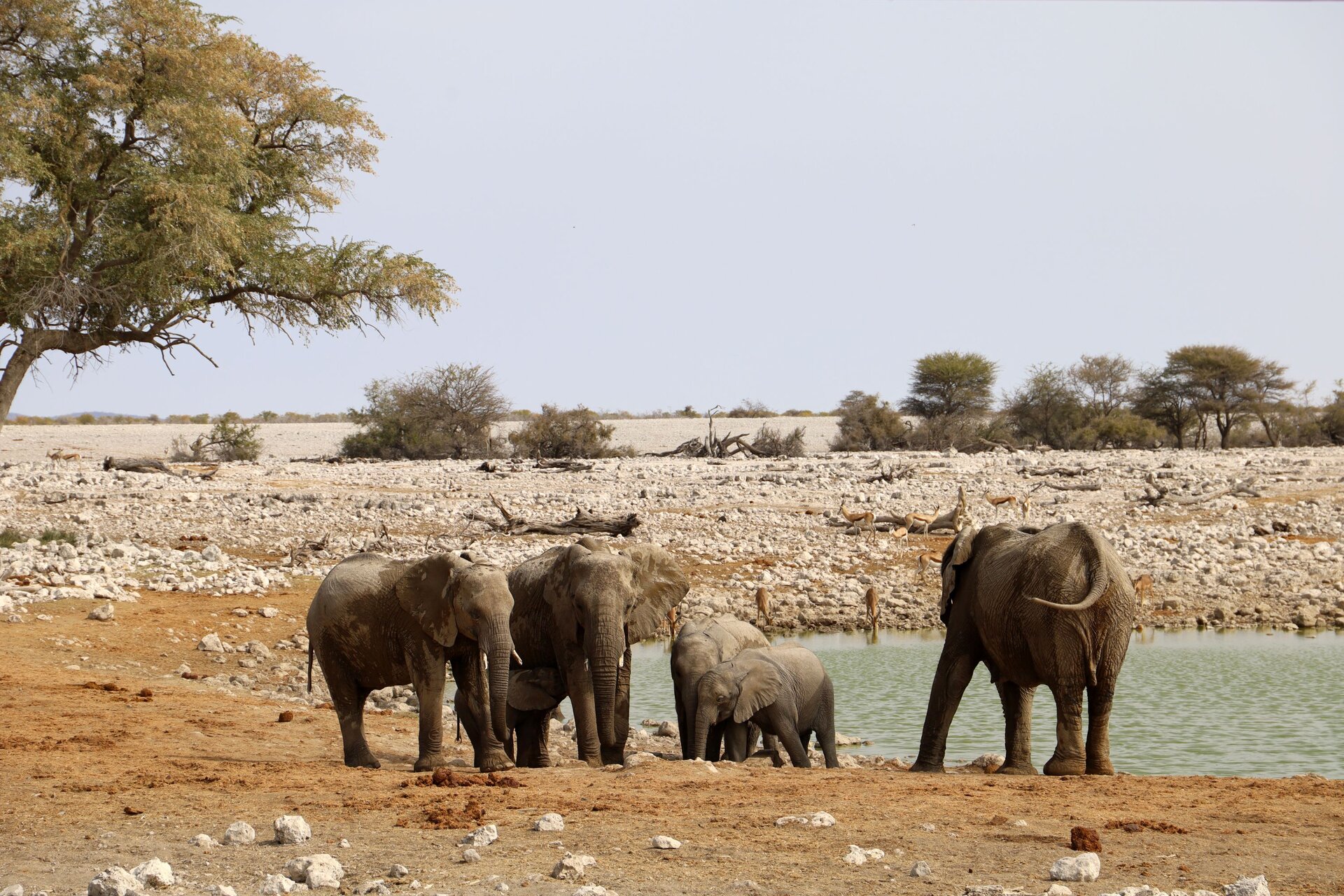 Elephants gathered at a waterhole in Etosha National Park — dry-season waterholes create some of the most spectacular and easy game viewing in Africa
Private lodges just outside the park gates (Ongava, Mushara, Etosha Safari Lodge, Taleni Etosha Village) offer a more luxurious experience with guided game drives, sundowner stops, and private waterhole hides. Several have their own private reserves bordering the park with rhino tracking and walking safaris.
Best for: Budget self-drivers love the NWR camps (Okaukuejo is a must); luxury seekers and first-timers gravitate to private lodges like Ongava and Mushara; families work well in both.
The Etosha Waterhole Experience
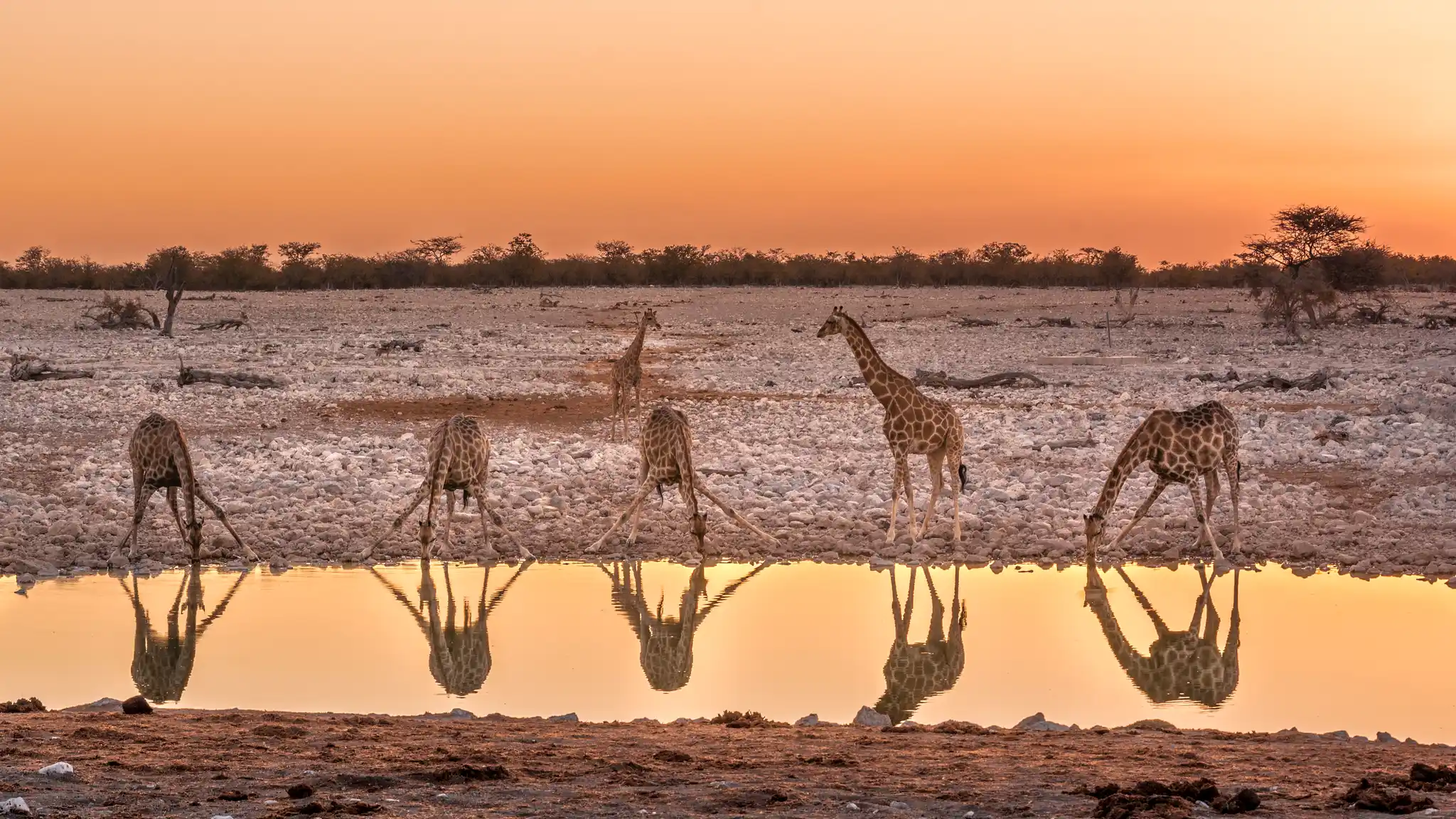
The waterholes are Etosha’s magic. During the dry season, the bush dries out and the waterholes become the only reliable water source for hundreds of kilometres. The result is a constant procession of wildlife coming to drink — often in dramatic, competitive encounters.
The technique is simple and deeply rewarding: park at a waterhole, switch off, and wait. Within minutes, animals begin arriving. An hour at a productive waterhole can yield elephants, giraffe, zebra, springbok, gemsbok, wildebeest, and — if you’re lucky — lion and rhino. The floodlit camp waterholes (especially Okaukuejo) extend this into the night, when black rhino, hyena, and even leopard appear.
Top waterholes: Okaukuejo (floodlit, iconic), Halali (floodlit), Rietfontein, Charitsaub, Salvadora, Gemsbokvlakte, Klein Namutoni, Chudop.
Best Time to Visit Etosha
| Season | Months | What to Expect |
|---|---|---|
| Dry/Winter (best game viewing) | May – October | Animals at waterholes, sparse vegetation, easy spotting, cool to warm days, cold nights, very low malaria risk |
| Green/Summer (birding & babies) | November – April | Pan floods (some years), migratory birds (350+ species), baby animals, lush landscapes, hotter, afternoon storms |
| Peak | July – September | Highest waterhole activity, busiest period, book well ahead |
| Shoulder (great value) | May, October | Good game, fewer crowds, pleasant temperatures |
Our recommendation: The dry season (May–October) is the time for the classic Etosha waterhole experience. July to September is peak, with the highest concentration of animals at water. For birding and dramatic storm-lit landscapes, the green season (December–March) is beautiful and uncrowded.
What Does an Etosha Safari Cost?
We believe in honest, transparent pricing. Here’s what to budget in South African Rands:
| Package | Duration | Price (ZAR) | Includes |
|---|---|---|---|
| Etosha Self-Drive | 3 nights | From R9,999/pp | NWR rest camp accommodation, park fees, route planning, vehicle guidance |
| Guided Etosha Safari | 3 nights | From R24,999/pp | Private lodge, guided game drives, all meals, park fees, transfers |
| Etosha Luxury | 3 nights | From R39,999/pp | Premium private lodge, guided drives, rhino tracking, sundowners, all-inclusive |
| Etosha + Sossusvlei | 7 nights | From R49,999/pp | Etosha + red dunes, lodges, guided drives, scenic flight option, all transfers |
| Ultimate Namibia | 10 nights | From R79,999/pp | Etosha + Sossusvlei + Skeleton Coast + Damaraland, lodges, private guide |
All prices per person sharing. Include accommodation, meals and activities as specified, and park fees. Prices valid for the 2026 season and vary by lodge and season.
Getting to Etosha from South Africa
- By air: Fly from Johannesburg to Windhoek Hosea Kutako International (≈2 hours direct with Airlink or Air Namibia). From Windhoek, drive north (≈4–5 hours to the southern gates) or take a connecting flight to Mokuti/Ondangwa
- Self-drive from Windhoek: The N1/B1 north is an excellent tarred road — many visitors rent a vehicle in Windhoek and self-drive through Namibia
- Overland from South Africa: Drive from Johannesburg via Upington and the Namibian border (≈12–14 hours to Windhoek, then onward to Etosha). It’s a long haul but a popular road-trip route
Visa: South African and most Western passport holders enter Namibia visa-free for 90 days.
Insider Tips for Your Etosha Safari
- Spend at least one night at Okaukuejo — the floodlit waterhole is legendary; set an alarm for 2 AM and walk to the viewing wall for a chance to see black rhino
- Be patient at waterholes — the longer you sit, the more rewarding it gets; bring a book and a flask of coffee
- Drive slowly — Etosha’s gravel roads are good but dusty; slow driving also means you spot more
- Carry binoculars — the pan’s flat landscape means long-distance sightings; good optics are essential
- Fill up on fuel — distances between camps are significant; fill at every opportunity
- Stay hydrated — the dry heat is deceptive, especially in the late dry season (September–October) when temperatures soar
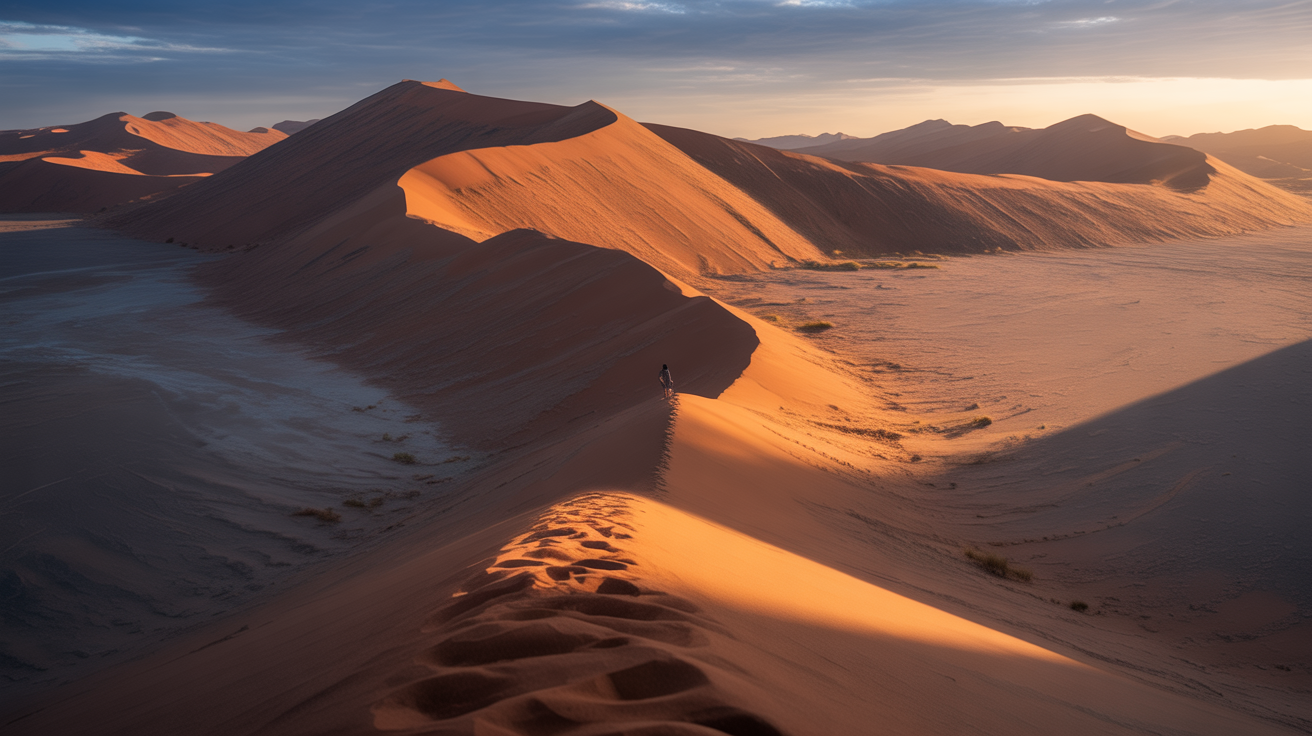
- Combine with Sossusvlei — Namibia’s iconic red dunes are a natural partner and the contrast is extraordinary
Frequently Asked Questions
Can I see the Big Five in Etosha? Yes — though Etosha doesn’t have buffalo, it has both black and white rhino, plus lion, leopard, and elephant. The rhino viewing (especially at Okaukuejo at night) is among the best in Africa. Leopard is elusive but present.
Is Etosha good for self-drive? It’s one of the best self-drive safari parks on the continent. The road network is excellent, the waterholes are well signposted, and the NWR rest camps are comfortable and affordable. A 2WD vehicle is fine for the main roads.
How does Etosha compare to Kruger? Both are excellent self-drive parks with the Big Five. Kruger has higher overall game density and more diverse vegetation. Etosha’s unique appeal is its surreal pan landscape, extraordinary waterhole game viewing, and the chance to see both black and white rhino regularly. Kruger is closer to Johannesburg; Etosha requires a flight to Windhoek.
Is Etosha malaria-free? During the dry season (May–October), malaria risk is very low and most visitors don’t take prophylactics. In the wet summer months, there is a moderate risk in northern Namibia — consult your doctor. For a completely malaria-free Big Five park near Joburg, see our Pilanesberg guide.
How many days do I need in Etosha? Three nights gives you time to explore the western, central, and eastern sections. If combining with the rest of Namibia (Sossusvlei, Skeleton Coast, Damaraland), budget 7–10 nights total for the country.
Is Namibia welcoming to LGBTQ+ travellers? Namibia’s laws are conservative (colonial-era statutes remain on the books but are not enforced), and societal attitudes are becoming more progressive. The tourism industry, particularly the lodges and operators we work with, is professional and welcoming. As a proudly LGBTQ+-owned operator, we’ve sent many clients to Namibia with excellent feedback — read our honest LGBTQ+ safari guide for more.
Etosha is a safari of contrasts — the starkest, whitest landscape in Africa, alive with the most vivid wildlife spectacles imaginable. Whether you’re watching a parade of elephants silhouetted against the pan at sunset, sitting at Okaukuejo’s waterhole as a black rhino materialises from the darkness, or driving through herds of springbok and gemsbok that stretch to the horizon, Etosha delivers a safari experience that is utterly unique and completely unforgettable.
Ready to experience Etosha? Get in touch with our team and let’s build your dream Namibian safari.
Bakubung Safaris & Tours — Born in Johannesburg, made for Africa.