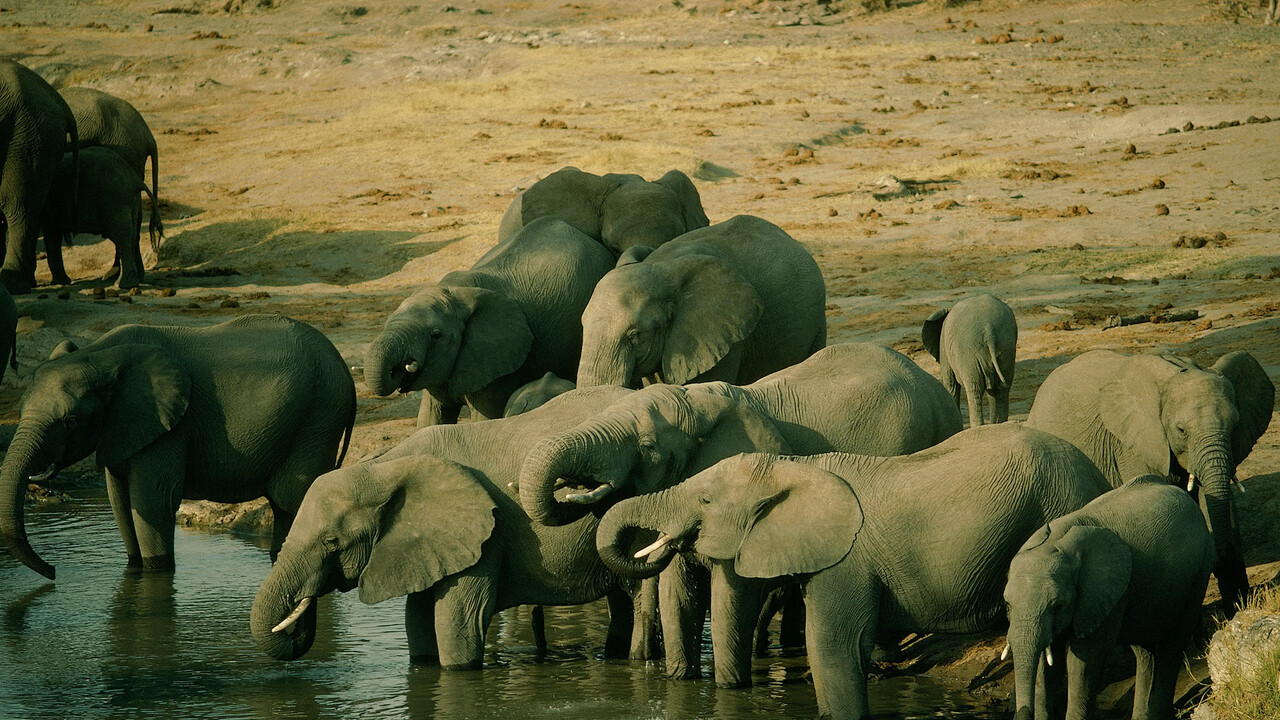
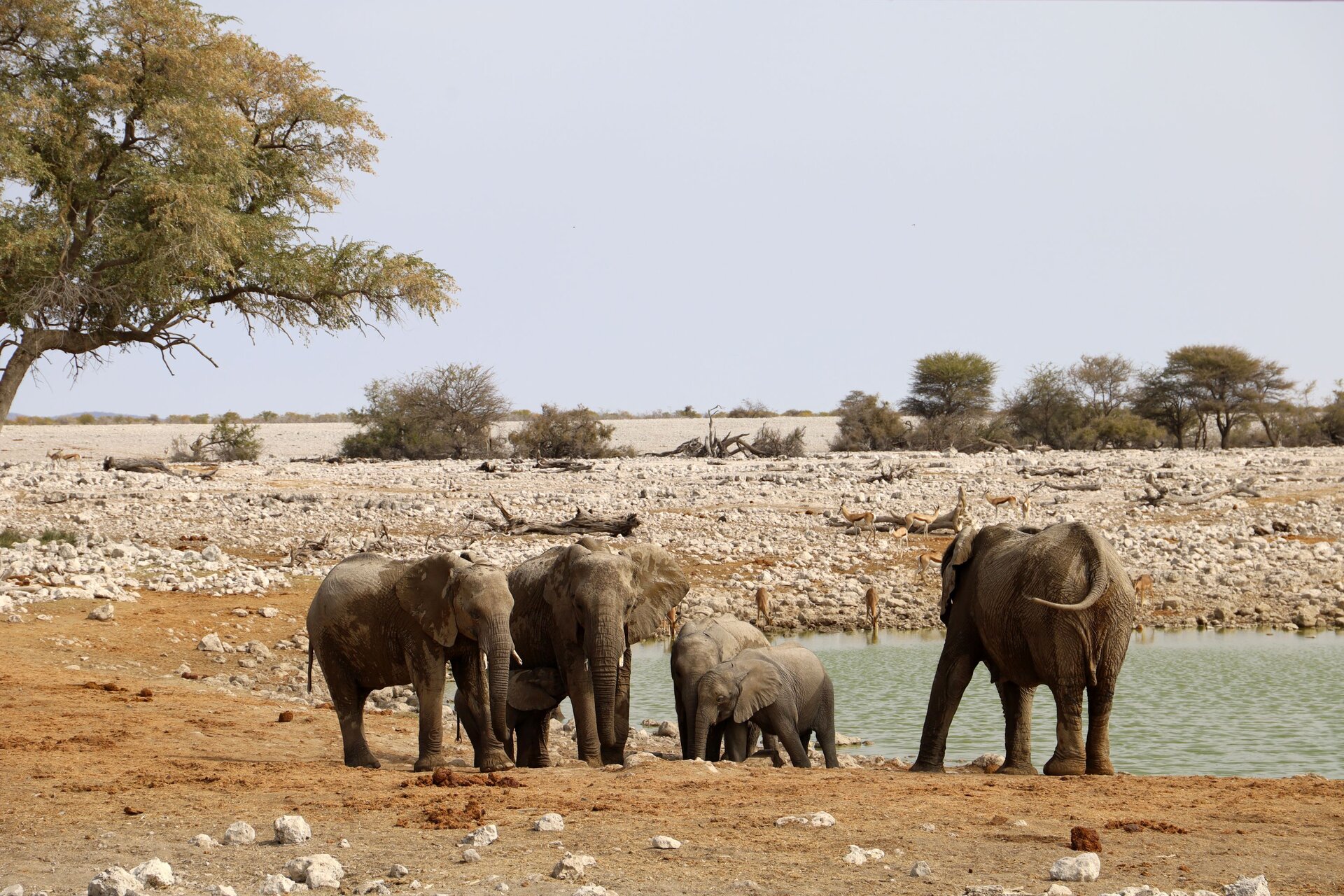
 An elephant family gathering at a waterhole in the dry African savanna — Hwange National Park is home to one of the largest elephant populations on Earth
In the far west of Zimbabwe, where the Kalahari sands meet the teak forests, lies one of Africa’s truly great wildlife sanctuaries: Hwange National Park. At 14,651 km² it is Zimbabwe’s largest national park — roughly the size of Belgium — and it protects one of the largest elephant populations on the continent, estimated at over 40,000 individuals. On a dry-season afternoon at one of Hwange’s legendary waterholes, you can watch hundreds of elephants arrive in procession, drink, splash, and coat themselves in mud — a spectacle that ranks among the most awe-inspiring sights in all of Africa.
But Hwange is far more than elephants. It is a full Big Five reserve with thriving lion prides, leopard in the teak woodlands, both black and white rhino (in conservancy areas), and large buffalo herds. It is also one of the best places on the continent to see African wild dogs (painted dogs) — Zimbabwe’s unofficial national animal and one of the world’s most endangered large carnivores.
As a Johannesburg-based operator, Bakubung Safaris runs Hwange trips year-round — often combined with Victoria Falls, just two hours to the north. This is our honest, insider guide to planning your 2026 Hwange safari.
Why Choose Hwange National Park?
Hwange stands out for reasons that matter to real travellers:
- Over 40,000 elephants — one of Africa’s densest elephant populations, with dry-season waterhole gatherings of hundreds at a time
- A full Big Five reserve — lion, leopard, elephant, rhino (in conservancies), and buffalo
- World-class painted dog viewing — Hwange’s wild dog packs are among the most studied and most frequently seen anywhere
- Legendary waterholes — many pumped by solar-powered boreholes, creating reliable gathering points and unforgettable photographic opportunities
- Vast and uncrowded — at nearly 15,000 km², Hwange absorbs visitors effortlessly; you can drive for hours without seeing another vehicle
- Excellent value — Zimbabwe offers superb safari quality at prices well below Botswana’s premium reserves
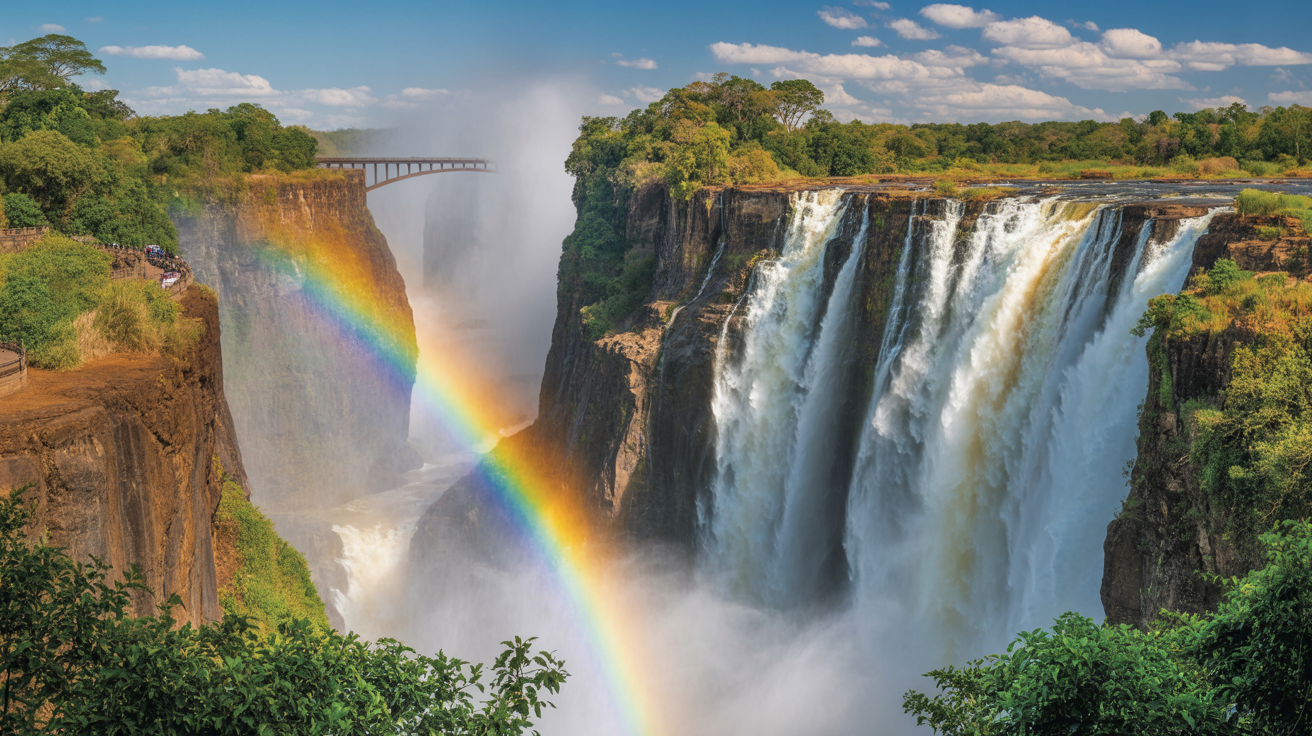
- Easy Victoria Falls combo — Hwange is just 2 hours from Victoria Falls, making it the natural safari add-on to one of the Seven Natural Wonders of the World
- Over 100 mammal and 400 bird species — extraordinary biodiversity across Kalahari sand, mopane woodland, teak forest, and open vlei
The Wildlife of Hwange
The Elephants — Hwange’s Icons
Hwange’s elephants are the park’s defining spectacle. During the dry season (May–October), herds converge on the network of pumped waterholes that sustain wildlife through the rainless months. The sight of 200, 300, even 500 elephants at a single pan at sunset — bulls jousting, mothers guiding tiny calves, teenagers splashing — is genuinely life-changing. The most famous waterholes include Nyamandhlovu Pan, Ngweshla, Dom Pan, and Kennedy Pan.
Painted Dogs — Africa’s Most Endangered Carnivore
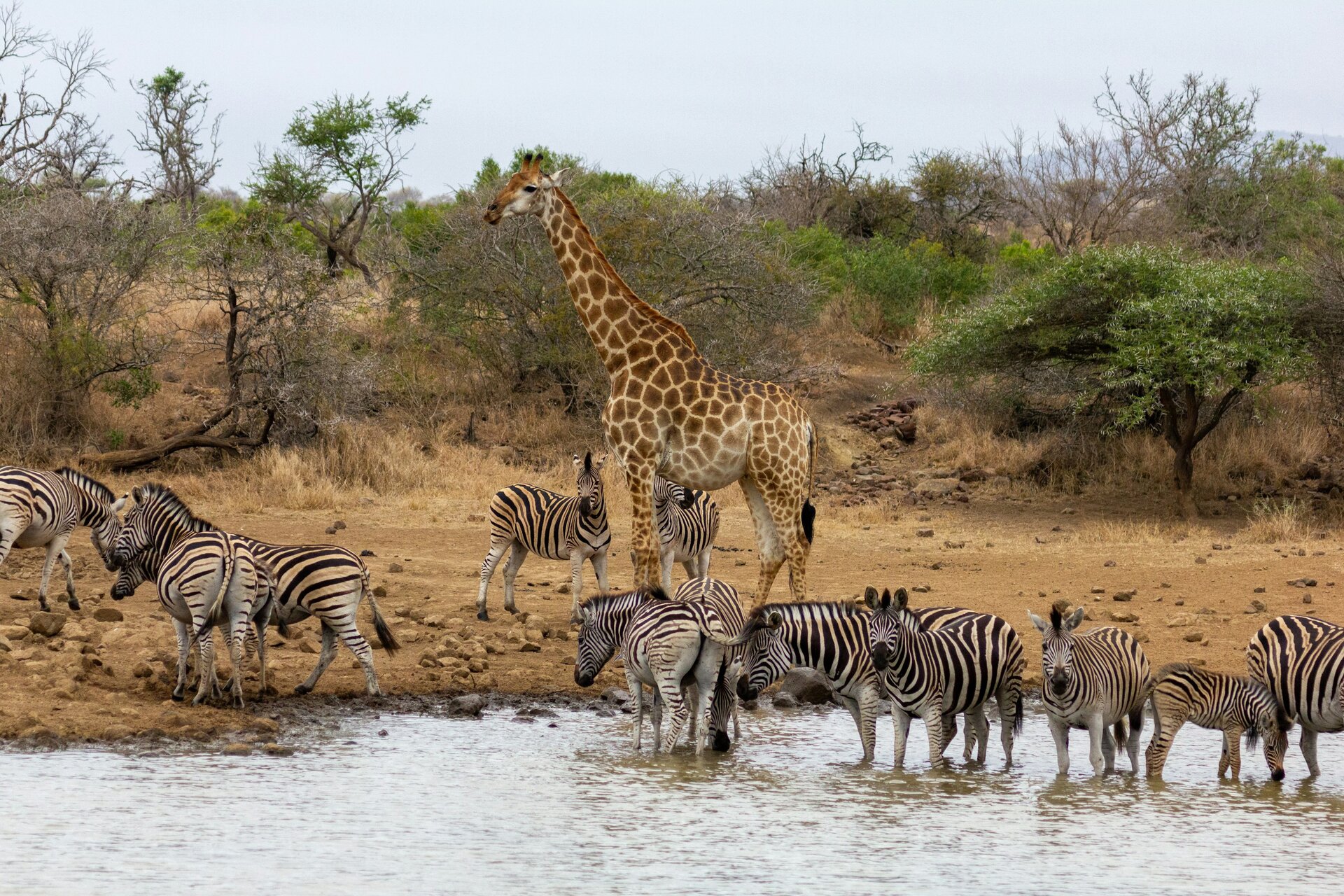 Zebras and a giraffe drinking at a waterhole in the African bush — Hwange’s waterholes draw a spectacular diversity of wildlife
Hwange is one of the best places on Earth to see African wild dogs (also called painted dogs or painted wolves). The Painted Dog Conservation project, based near the park, has studied and protected Hwange’s packs for decades. Watching a pack set off on a hunt at dawn — their extraordinary coordination, the excited chirping calls — is one of safari’s greatest privileges. With fewer than 6,500 wild dogs left in Africa, every sighting matters.
The Rest of the Big Five and Beyond
Lion prides are well established, particularly around the main waterhole circuit and in the Ngamo and Linkwasha areas. Leopard haunt the teak forests and are seen most often on night drives. Buffalo herds number in the thousands. Rhino — both black and white — have been reintroduced to private conservancies within and adjoining the park.
Beyond the Big Five, Hwange’s varied habitats support cheetah, brown and spotted hyena, sable antelope (Zimbabwe’s national animal), roan antelope, gemsbok, eland, giraffe, zebra, wildebeest, and the secretive aardwolf. The birding is exceptional, with over 400 species including Kori bustard, martial eagle, and the lilac-breasted roller.
Exploring Hwange — Key Areas
Hwange is vast, and each area offers a different character:
- Main Camp / Nyamandhlovu area — the most accessible section near the main entrance; good roads, famous waterholes (Nyamandhlovu Pan viewing platform is legendary), self-drive friendly
- Sinamatella — the northern section, perched on a cliff overlooking the Lukosi River valley; dramatic scenery, fewer visitors, good for sable and roan antelope
- Robins Camp — the remote northwest, deep Kalahari sand, excellent for wild dog and eland; 4x4 only
- Private concessions (Linkwasha, Davison’s, Somalisa, Verney’s) — exclusive traversing areas with top-tier lodges, off-road driving, walking safaris, and night drives not permitted in the national park itself
Where to Stay in Hwange
Luxury & Premium Lodges
- Linkwasha Camp (Wilderness) — arguably Hwange’s finest; a stunning tented camp on a private concession overlooking a busy pan
- Somalisa Camp & Somalisa Acacia (African Bush Camps) — intimate camps in a prime elephant corridor
- Davison’s Camp (Wilderness) — classic safari style on the famous Kennedy concession
- The Hide Safari Camp — legendary for its underground photographic hide at a waterhole
- Verney’s Camp — exclusive, remote, superb guiding
Mid-Range & Great Value
- Ivory Lodge — modern design, excellent game area
- Nehimba Lodge — intimate bush lodge near seasonal pans
- Camp Hwange — owner-run, authentic, superb value
National Parks (Zimbabwe Parks & Wildlife)
- Main Camp — chalets, cottages and camping at the main entrance; self-catering, affordable
- Sinamatella Camp — clifftop chalets with dramatic valley views
- Robins Camp — remote and rustic, for the adventurous
Best Time to Visit Hwange
| Season | Months | Conditions | Wildlife |
|---|---|---|---|
| Peak dry (winter) | Jul–Oct | Cool to warm, bone dry | ⭐ Best — massive waterhole gatherings |
| Early dry | May–Jun | Cool, drying out | Very good, bush thinning |
| Green season | Nov–Apr | Hot, afternoon rains, lush | Birding peak, newborns, lower rates |
The dry season (May–October) is prime time. As the bush dries out, animals concentrate at the pumped waterholes in ever-larger numbers. August–October is peak elephant season — hot days drive herds to water in spectacular numbers. The green season (November–April) brings rain, lush landscapes, migratory birds, baby animals, and significantly lower prices — but some roads become impassable and wildlife disperses from the waterholes.
Hwange Safari Pricing from South Africa (ZAR)
| Package | Duration | Price From (ZAR pp) | Includes |
|---|---|---|---|
| Hwange Explorer | 3 nights | R19,999 | Mid-range lodge, meals, game drives |
| Classic Hwange | 3 nights | R29,999 | Premium lodge, all-inclusive, drives |
| Hwange + Victoria Falls | 5 nights | R39,999 | Safari + Vic Falls hotel, transfers |
| Luxury Hwange | 4 nights | R59,999 | Top-tier concession camp, all-inclusive |
| Hwange + Chobe Combo | 6 nights | R74,999 | Hwange + Botswana’s Chobe, fly-in |
| Ultimate Zimbabwe | 7 nights | R99,999 | Hwange + Mana Pools + Vic Falls, fly-in |
All prices per person sharing, 2026 rates. Most lodges are fully inclusive of accommodation, all meals, drinks, game activities, and park fees. Charter flights between camps are common and priced separately unless stated. Zimbabwe charges a US$20–30 daily park fee. Contact us for exact quotes and seasonal specials.
Getting to Hwange from South Africa
- Via Victoria Falls: the most popular route — fly from Johannesburg to Victoria Falls Airport (about 1h45 direct), then drive or transfer to Hwange (about 2 hours). Many lodges offer road or charter transfers from Vic Falls.
- Via Hwange airstrip: several lodges arrange charter flights directly to bush airstrips from Victoria Falls or Harare.
- By road from South Africa: drive via Beitbridge border (Limpopo) to Bulawayo (~6 hours from the border), then another ~3 hours west to Hwange. Total from Johannesburg: roughly 12–14 hours. Most travellers prefer to fly.
- Visa: most nationalities can obtain a Zimbabwe visa on arrival (US$30 single, US$45 double-entry, or the KAZA UniVisa at US$50 covering both Zimbabwe and Zambia).
Practical Tips for Your Hwange Safari
- Combine with Victoria Falls — Hwange is just 2 hours away; a 3-night Hwange + 2-night Vic Falls combo is the classic Zimbabwe itinerary
- Malaria precautions needed — Hwange is in a malaria zone; consult your doctor about prophylaxis before travelling
- Bring binoculars and patience — settle at a waterhole and let the animals come to you; the wait is always rewarded
- Pack warm layers for winter drives — June–August mornings on an open vehicle are genuinely cold
- Consider a private concession — they allow off-road driving, walking safaris, and night drives that the national park does not
- Green season is underrated — significantly cheaper, beautiful light, baby animals, and world-class birding
- Respect the wildlife — Hwange’s animals are wild; keep distance, stay in your vehicle, and follow your guide’s instructions
- Support Painted Dog Conservation — visit their centre near the park; proceeds directly protect Hwange’s wild dogs
Frequently Asked Questions
Is Hwange National Park a Big Five reserve? Yes. Hwange has lion, leopard, elephant, buffalo, and rhino (in conservancy areas). It also has wild dog, cheetah, sable, roan, and over 100 mammal species.
How many elephants are in Hwange? Hwange supports over 40,000 elephants — one of the largest populations in Africa and arguably the densest anywhere. Dry-season waterhole gatherings of hundreds at a time are common.
Can I self-drive in Hwange? Yes. The main camp area has reasonable roads for a high-clearance 2WD or 4x4. However, most visitors stay at lodges that provide expert-guided game drives — guides know the waterholes and tracking patterns intimately. The deeper areas (Robins, Sinamatella) require 4x4.
How does Hwange compare to Kruger or Chobe? Hwange’s elephants rival Chobe’s in numbers and exceed them in waterhole drama. It is far less crowded than Kruger and offers superb painted dog viewing that neither Kruger nor Chobe can match. Kruger is easier to self-drive and has better infrastructure; Hwange offers a wilder, more exclusive experience at competitive prices.
Is Hwange safe for tourists? Absolutely. Zimbabwe’s national parks are well-managed and safe for tourists. Hwange has experienced guides, good infrastructure, and a long history of responsible tourism. The Victoria Falls / Hwange corridor is one of southern Africa’s most established safari routes.
Is Zimbabwe welcoming for LGBTQ+ travellers? Zimbabwe’s laws remain conservative, but in practice the safari and tourism industry is professional and welcoming to all guests regardless of orientation. Discretion is advisable in public settings outside tourist areas. Read our LGBTQ+ friendly safari guide and visit our LGBTQ+ safaris page for honest, detailed advice.
Ready to Witness Hwange’s Elephants?
Forty thousand elephants, legendary waterholes, painted dogs, Big Five, and the magic of the Kalahari — all just two hours from Victoria Falls. Hwange National Park is one of Africa’s great wildlife destinations, offering world-class safari at exceptional value. Whether you come for a long weekend or a week-long exploration, Hwange delivers moments you’ll carry forever.
Book your Hwange safari today →
Bakubung Safaris & Tours — Born in Johannesburg, made for Africa.