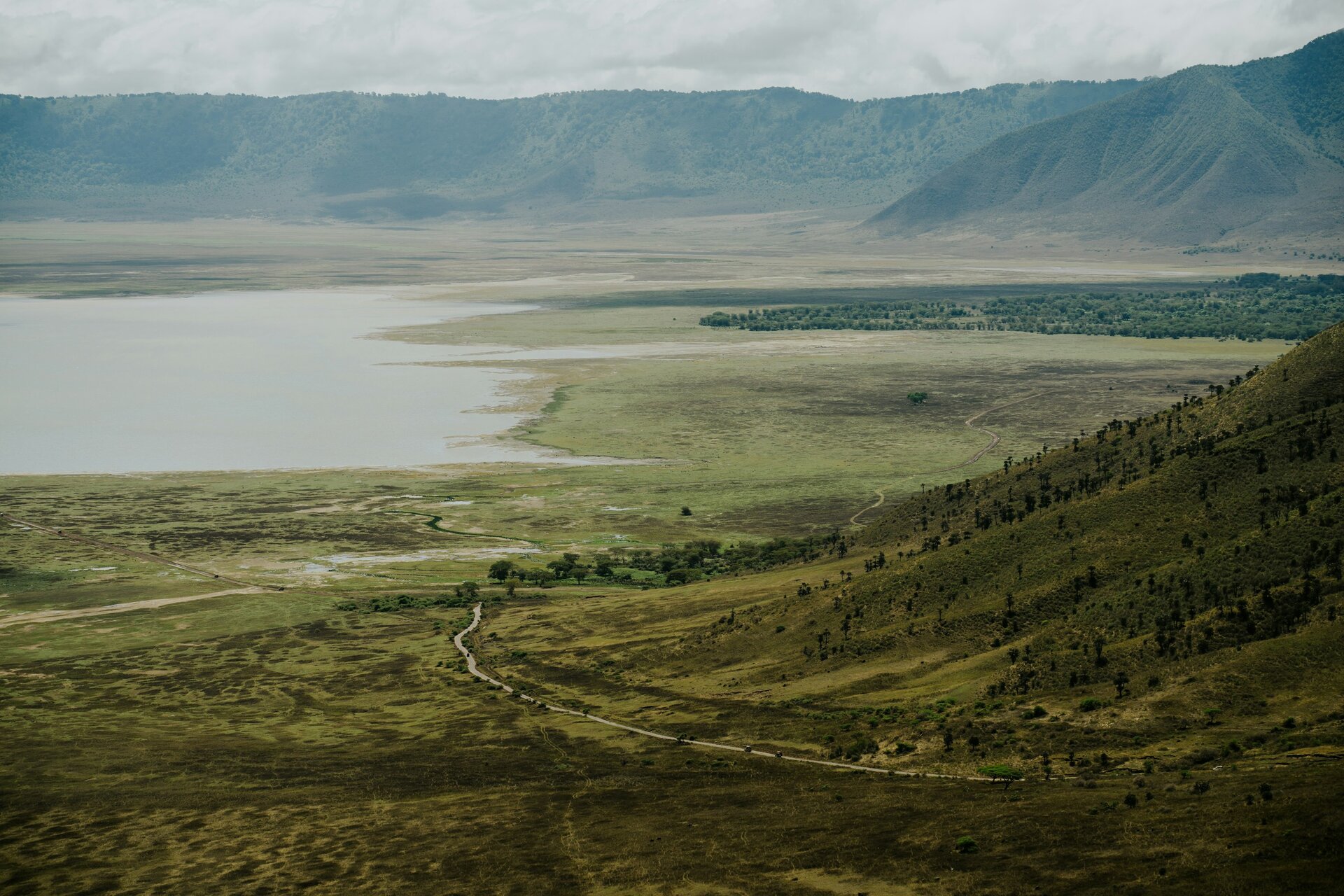
 View from the Ngorongoro Crater rim looking down into the caldera — the descent road winds toward the soda lake and grassy crater floor 600 metres below
Standing on the rim of the Ngorongoro Crater for the first time, looking down into a natural amphitheatre roughly 20 kilometres across and teeming with wildlife, is one of travel’s great “pinch me” moments. This is a place so extraordinary it earned the nickname “Africa’s Garden of Eden” — the world’s largest unbroken volcanic caldera, a UNESCO World Heritage Site, and home to one of the densest concentrations of wildlife on the planet.
The Ngorongoro Conservation Area covers 8,292 km², but it is the crater itself — a collapsed volcano roughly 260 km² on its floor — that draws the world. The 600-metre walls act as a natural enclosure, sheltering an estimated 25,000 to 30,000 large animals: huge lion prides, black rhino, buffalo herds, elephants, hippos, hyena clans, and flamingo-fringed lakes. Remarkably, Maasai herders and their cattle still share this land with the wildlife, just as they have for centuries.
As a Johannesburg-based operator with trusted Tanzanian partners, Bakubung Safaris arranges Ngorongoro journeys year-round. This is our honest, insider guide to planning your 2026 Ngorongoro safari.
Why Choose Ngorongoro Crater?
Ngorongoro is unlike anywhere else on Earth:
- The Big Five in a single morning — the crater’s compact floor means lion, leopard, elephant, buffalo, and black rhino can all be seen in one game drive
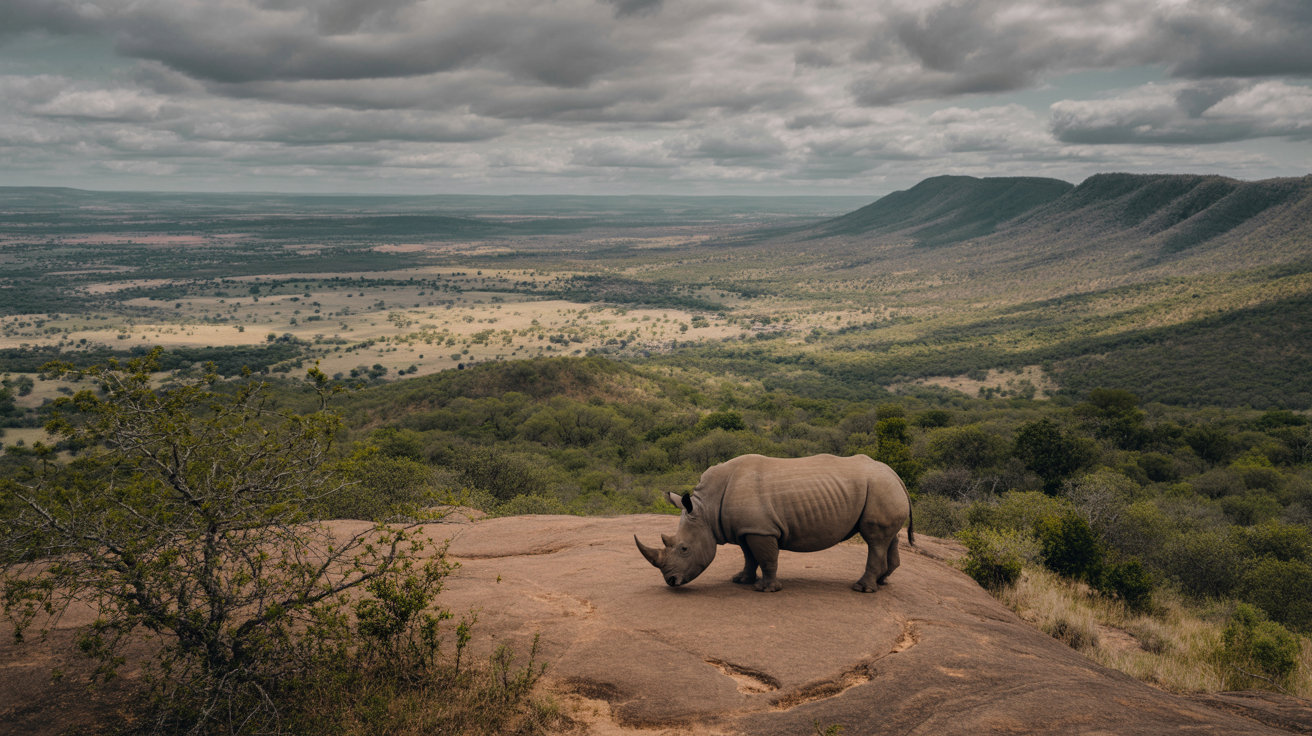
- Africa’s best black rhino viewing — a small but regularly seen population of critically endangered black rhino
- Staggering predator density — one of the highest concentrations of lions in Africa, plus hyena clans and cheetah on the crater floor
- Flamingo-fringed Lake Magadi — a soda lake on the crater floor that attracts thousands of lesser flamingos
- Maasai coexistence — one of the few places where traditional herders live alongside Africa’s greatest wildlife
- UNESCO World Heritage Site — recognised for both its natural and cultural significance
- Easy to combine — a natural partner with the Serengeti, Tarangire, and Lake Manyara on Tanzania’s northern circuit
Understanding the Ngorongoro Conservation Area
The Crater Floor
The star of the show. The 260 km² crater floor is a mosaic of open grassland, acacia woodland, freshwater springs, swamps, and the central Lake Magadi. Game drives descend the steep crater walls on designated access roads and spend the day on the floor. The density of wildlife is remarkable — you are rarely more than a few hundred metres from your next sighting.
Key species: Lion (large prides), black rhino, elephant, buffalo, hippo, hyena, wildebeest, zebra, Thomson’s and Grant’s gazelle, eland, flamingo, crowned crane, secretary bird.
The Crater Rim
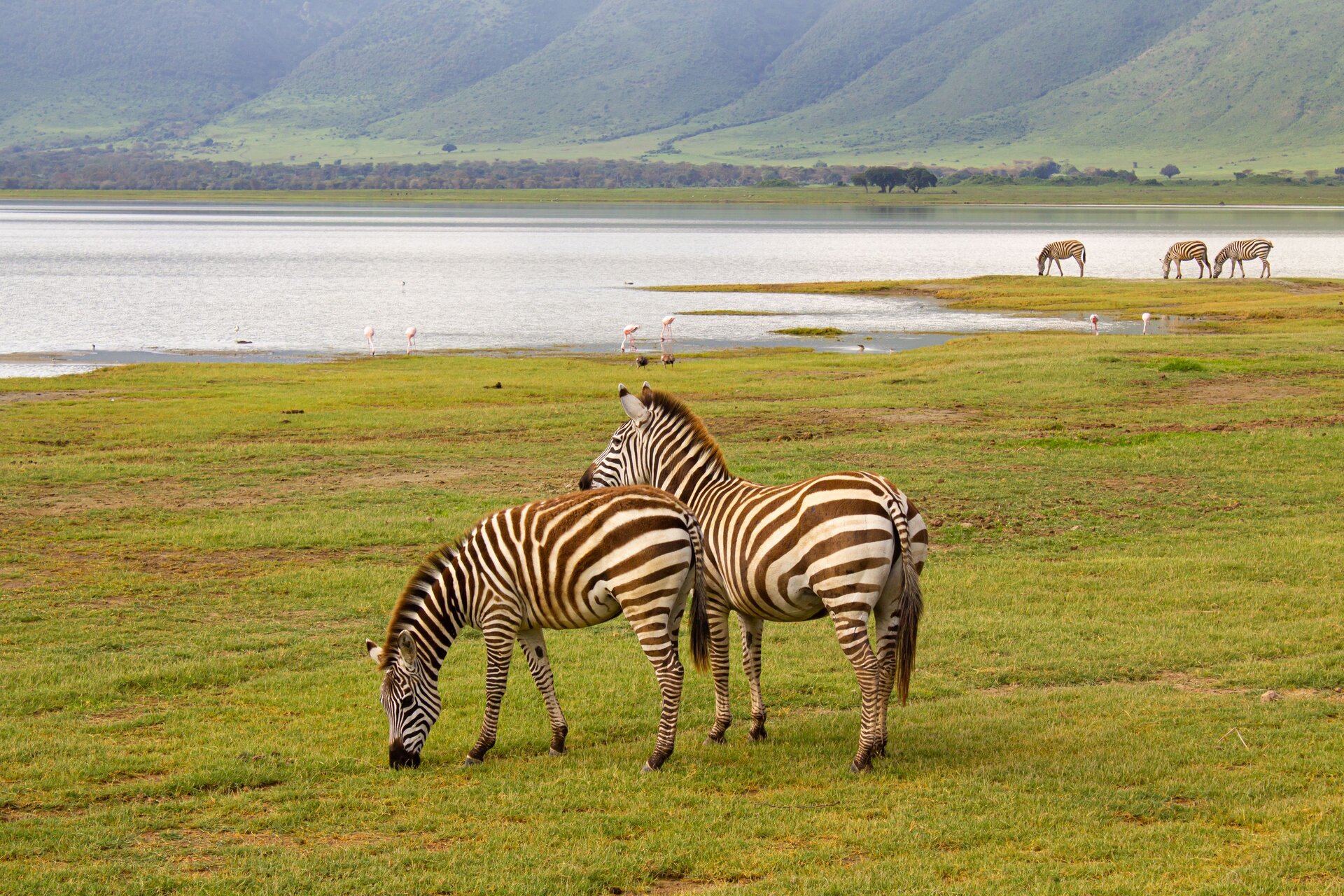 Zebra grazing on the Ngorongoro Crater floor beside Lake Magadi, with flamingos on the soda lake and the crater walls rising behind — one of the densest wildlife populations in Africa
All lodges and camps sit on the crater rim, at around 2,200 metres above sea level. The rim is covered in montane forest — misty, lush, and cool — with elephant, buffalo, and leopard in the forest. The views from the rim down into the crater are breathtaking, especially at sunrise.
Beyond the Crater
The broader Ngorongoro Conservation Area includes the Ndutu Plains (southern Serengeti calving grounds, December–March), Olduvai Gorge (one of the most important paleoanthropological sites in the world), and the Empakaai Crater (a smaller, forested crater with a deep lake and flamingos). These are excellent additions to a crater-focused trip.
Best Time to Visit Ngorongoro Crater
| Season | Months | What to Expect |
|---|---|---|
| Dry (best game viewing) | June – October | Clear skies, sparse vegetation on the floor, animals easy to spot, cool rim temperatures (layers essential), peak season |
| Green / Calving | December – March | Lush crater floor, Ndutu calving nearby, baby animals, flamingo numbers peak, pleasant weather, good value |
| Long rains | March – May | Some muddy tracks, dramatic skies, quietest period, lowest rates |
| Short rains | November | Brief afternoon showers, green flush, good game viewing, fewer crowds |
Our recommendation: Ngorongoro is superb year-round. For the clearest views and easiest spotting, visit in the dry season (June–October). For lush green landscapes, flamingos, and the nearby Ndutu calving season, December–February is magical.
What Does a Ngorongoro Crater Safari Cost?
We believe in honest, transparent pricing. Here’s what to budget in South African Rands:
| Package | Duration | Price (ZAR) | Includes |
|---|---|---|---|
| Crater Day Excursion | 1 day (from Arusha) | From R9,999/pp | Transfer, crater descent, full-day game drive, picnic lunch, all fees |
| Ngorongoro Explorer | 2 nights | From R29,999/pp | Crater rim lodge, crater game drive, Maasai village visit, all meals |
| Ngorongoro + Serengeti | 5 nights | From R69,999/pp | Crater rim + Serengeti camp, game drives, Olduvai Gorge, flights/transfers |
| Northern Circuit Classic | 7 nights | From R89,999/pp | Ngorongoro + Serengeti + Tarangire/Manyara, lodges, all drives, flights |
| Ultimate Tanzania | 10 nights | From R139,999/pp | Full northern circuit + Zanzibar beach, luxury lodges, private guide, all flights |
All prices per person sharing. Include accommodation, meals, game drives, park and crater fees, and transfers/flights as specified. International flights excluded. Prices valid for the 2026 season.
Note on crater fees: Ngorongoro Conservation Area charges separate crater service fees (currently US$295 per vehicle descent) on top of the standard conservation fees. These are significant but reflect the crater’s unique status. All our packages include these fees — watch out for operators who list them as extras.
Getting to Ngorongoro from South Africa
- By air: Fly from Johannesburg to Kilimanjaro International Airport (JRO) (≈4–6 hours with connection via Nairobi or Addis Ababa). From Kilimanjaro, a scenic 3–4 hour road transfer reaches the crater rim
- Light aircraft: Fly from Arusha to the Ngorongoro Crater airstrip (Lake Manyara) and transfer by road (≈1 hour)
- By road from the Serengeti: If combining parks, the drive from Seronera to the crater rim is around 3 hours through spectacular scenery
Visa: Tanzania e-visa or visa on arrival (US$50–100 depending on nationality).
Insider Tips for Your Ngorongoro Safari
- Descend early — the crater floor is at its best in the first couple of hours after dawn; aim for the earliest descent slot
- Pack warm layers — the rim sits at 2,200 m and mornings are genuinely cold (5–10°C); the crater floor warms up quickly
- Bring binoculars — black rhino can be distant; good optics make the difference between a dot and a once-in-a-lifetime sighting
- Don’t skip Olduvai Gorge — a short detour between the Serengeti and the crater, this is where the Leakeys discovered some of humanity’s oldest ancestors
- Combine with the Serengeti — the two parks are a natural pairing and together form the ultimate Tanzanian safari
- Stay on the rim for sunrise — watching the sun rise over the crater from your lodge is unforgettable
- Respect the Maasai — this is their ancestral land; a village visit is a genuine cultural exchange and a highlight for many visitors
Frequently Asked Questions
Can I see the Big Five in the Ngorongoro Crater? Yes. Lion, elephant, buffalo, and black rhino are regularly seen on the crater floor. Leopard is present but elusive — look in the forested areas and along the Lerai Forest edge. The crater is one of the best places in East Africa for black rhino.
How long should I spend at Ngorongoro? One full day on the crater floor is sufficient to see the highlights. Two nights on the rim lets you do an early-morning descent and enjoy the spectacular rim views and forest. Most visitors combine Ngorongoro with the Serengeti for a 5–7 night trip.
Is the crater crowded? During peak season (July–September), the crater floor can have many vehicles, especially around lion and rhino sightings. An early descent helps. The private conservancies around the Maasai Mara or Sabi Sands offer more exclusive experiences if crowds concern you.
How does Ngorongoro compare to Kruger or the Serengeti? Ngorongoro is unique — it’s a compact, enclosed caldera, not an open savanna. You’ll see more large wildlife per square kilometre than almost anywhere, but the experience is a one-day crater descent rather than multi-day exploration. It pairs perfectly with the Serengeti for a complete Tanzanian safari.
Is Tanzania welcoming to LGBTQ+ travellers? Tanzania’s laws are conservative, so discretion is advised. However, the premium lodges and camps we work with operate to international standards. We’ve sent many LGBTQ+ clients to Tanzania with excellent feedback — read our honest LGBTQ+ safari guide for candid advice.
The Ngorongoro Crater is one of those rare places that genuinely lives up to the hype. Standing on the rim as the morning mist lifts to reveal the caldera floor stretching out below you — dotted with elephants, buffalo, flamingos, and perhaps a distant black rhino — is a moment that stays with you forever. This is Africa’s natural amphitheatre, and the show it stages every single day is simply extraordinary.
Ready to experience Ngorongoro? Get in touch with our team and let’s build your dream Tanzanian safari.
Bakubung Safaris & Tours — Born in Johannesburg, made for Africa.