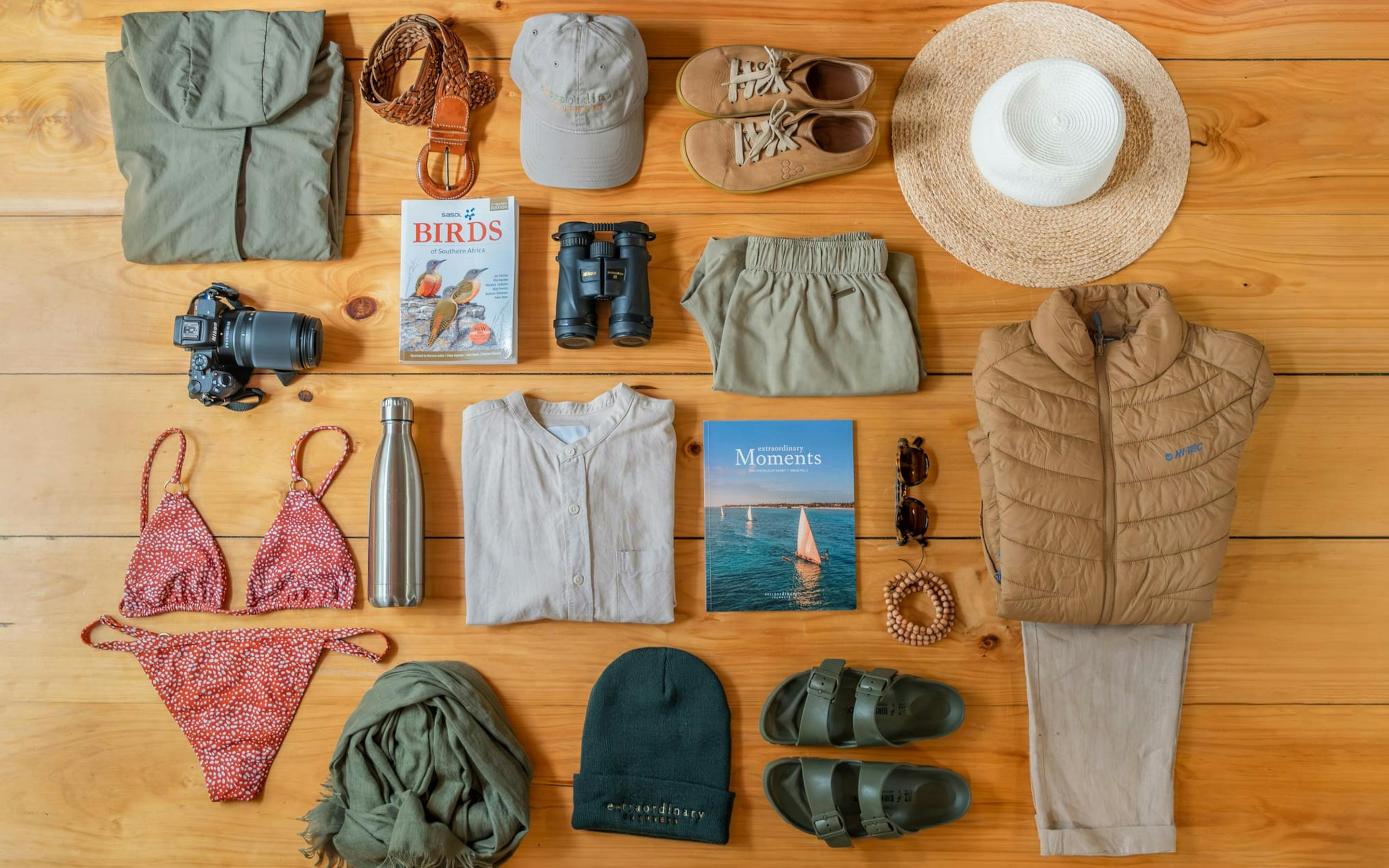
 A flat-lay of essential safari gear — binoculars, camera, hat, sunscreen, neutral clothing, water bottle, and field guide — beautifully arranged on a wooden surface
Packing for a safari should be simple. You are going into the African bush, not trekking to Everest base camp. But every single week, I watch guests arrive at our pickup point in Johannesburg with massive suitcases stuffed with things they will never use — and missing the three things they actually need.
After years of guiding safaris across Kruger National Park, Pilanesberg, and the Greater Kruger private reserves, I have a pretty good handle on what you actually need. And more importantly, what you do NOT need.
Here is the definitive list — the one I send to every guest before their trip.
The Golden Rule: Pack Light, Then Remove Half
If you are doing a day trip from Johannesburg, you need almost nothing — we provide snacks, water, and binoculars. A small daypack is more than enough.
If you are doing a multi-day Kruger safari, you still do not need a massive suitcase. Most rest camps and lodges have laundry facilities. Pack for 3 days, wash and repeat.
The vehicle has limited space (especially open safari vehicles), and there is nothing more annoying for everyone than trying to fit seven oversized bags into a Land Cruiser designed for six people and a cooler box.
Clothing — What to Wear on Safari
The Essentials
| Item | Quantity | Why |
|---|---|---|
| Neutral-coloured shirts (khaki, olive, tan) | 3-4 | Animals notice bright colours. Cotton breathes best. |
| Long trousers (convertible zip-off are ideal) | 2 | Protect legs from sun, branches, and mosquitoes. |
| Shorts | 1-2 | For midday heat at camp. |
| Warm fleece or softshell jacket | 1 | Mornings in open vehicles are COLD (5-10°C in winter). |
| Windbreaker / light rain jacket | 1 | Summer storms come fast. Open vehicles have no roof. |
| Wide-brimmed hat | 1 | Non-negotiable. The sun is brutal. |
| Comfortable walking shoes | 1 pair | Closed-toe, neutral colour. Not white trainers. |
| Sandals or flip-flops | 1 pair | For camp evenings. |
| Warm socks | 3 pairs | Cold feet = miserable dawn drive. |
| Swimsuit | 1 | Many lodges have pools. Bliss after a hot afternoon drive. |
What NOT to Wear
- Bright colours (red, orange, neon anything) — Animals can react negatively, and you stand out like a traffic light.
- Full camouflage — You are not in the army. In some reserves, camo is actually associated with poachers and can attract unwanted attention from rangers.
- White clothing — Gets filthy in 5 minutes, reflects too much light (bad for photography), and attracts tsetse flies in some areas.
- Strong perfume or cologne — Animals have extraordinary senses of smell. You do not want to be the reason an elephant gets agitated.
- New shoes — Break them in before the trip. Blisters on a bush walk are miserable.
Gear — The Stuff That Actually Matters
Must-Have
| Item | Notes |
|---|---|
| Binoculars (8x42 or 10x42) | The single most important piece of safari gear after your eyes. R800-R3,000 for a great pair. |
| Camera with zoom lens (200mm+) | Phone cameras are decent but useless beyond 30 metres. A 200-400mm zoom is the sweet spot. |
| Spare camera batteries + memory cards | You WILL take 500+ photos per day. Bring at least 64GB of storage. |
| Portable power bank (10,000mAh+) | Phone, camera, everything needs charging. Camp sockets are limited. |
| Headlamp or small torch | Essential for early morning wake-ups and walking around camp at night (no streetlights in the bush). |
| Reusable water bottle (1 litre) | Stay hydrated. The bushveld air is dry and you dehydrate faster than you realise. |
| Daypack / small backpack | For day drives: water, camera, snacks, sunscreen, binoculars. That is all you need on the vehicle. |
Nice to Have
| Item | Notes |
|---|---|
| Bean bag or window mount | Steadies your camera on the vehicle door. Massive improvement in photo sharpness. Costs R200-R500. |
| Field guide book | Sasol Birds of Southern Africa or Stuarts' Field Guide to Mammals. Paper books beat apps in the bush — no battery, no glare. |
| Notebook and pen | Log your sightings. Trust me, after 3 days you will not remember which waterhole had the breeding herd of 40 elephants. |
| Packing cubes | Keep your bag organised in a small space. |
| Dry bag / zip-lock bags | Protect electronics from dust and rain. Safari vehicles generate CLOUDS of dust on gravel roads. |
Health & Protection
| Item | Notes |
|---|---|
| SPF 50 sunscreen | Reapply every 2 hours. Even in winter. The African sun at altitude does not play. |
| Lip balm with SPF | Your lips will crack in the dry bushveld air. |
| Insect repellent (DEET-based) | For malaria-risk areas like Kruger. Apply to exposed skin at dusk. |
| Antihistamines | For insect bites or allergic reactions. |
| Basic first aid | Plasters, painkillers, anti-diarrhoea medication, rehydration sachets. |
| Prescription medication | Bring enough for the full trip plus 2 extra days. Nearest pharmacy is hours away. |
| Malaria prophylaxis | Required for Kruger and Lowveld reserves (Oct–May especially). Consult your doctor at least 2 weeks before travel. Pilanesberg is malaria-free. |
The Malaria Question
First-timers always ask: is malaria a real risk?
Honest answer: in Kruger (Lowveld), yes, there is a low-to-moderate risk, especially in the wet summer months (October–May). Take prophylaxis, use repellent, and wear long sleeves at dusk. It is manageable and should not put you off — millions of visitors go to Kruger every year.
If you prefer zero malaria risk, Pilanesberg Game Reserve is completely malaria-free and offers genuine Big Five game viewing just 2 hours from Johannesburg. It is why our Pilanesberg Day Safari is so popular with families and first-timers.
Electronics & Documents
| Item | Notes |
|---|---|
| Phone + charger | Obviously. Download offline maps (Google Maps lets you save areas for offline use). |
| Adapter plug | South Africa uses Type M (large 3-prong) and Type C (2-prong Euro) plugs. International travellers need an adapter. |
| ID / passport | Required for SANParks gate entry. Keep a photocopy separately. |
| Booking confirmations | Printed or screenshot. Camp reception needs your reference number. |
| Travel insurance details | Printed. Medical evacuation from a remote bush camp is expensive without cover. |
| Cash (ZAR) | R500-R1,000 for camp shops, curios, and tips. Card machines exist but are unreliable in remote areas. |
The 7 Things First-Timers Always Overpack
- Too many clothes — You need 3-4 days' worth, max. Laundry exists.
- Formal wear — No lodge in South Africa expects anything fancier than clean safari casuals at dinner.
- Hiking boots — Unless you are doing a proper bush walk (guided, booked in advance), trail running shoes or sturdy sandals are fine.
- A massive zoom lens (600mm+) — Unless you are a professional wildlife photographer, a 600mm lens is heavy, expensive, and overkill. 200-400mm covers 95% of safari situations.
- Drone — Illegal in all South African national parks and most private reserves. Leave it at home.
- Laptop — You are on safari. You do not need to check emails. (If you must, your phone works.)
- Multiple bags — One medium bag + one daypack. That is it. Your safari vehicle is not a luggage carousel.
Day Trip vs Multi-Day: What Changes?
Day Trip from Johannesburg (Pilanesberg)
You need almost nothing:
- Small daypack
- Camera + phone + power bank
- Sunscreen + hat + sunglasses
- Light jacket (for early morning)
- Water bottle
- Comfortable closed shoes
We provide everything else — transport, binoculars, snacks, water, lunch. Just show up at the pickup point with your daypack and your excitement.
Multi-Day Safari (Kruger / Sabi Sands)
Add:
- 3-4 days' clothing (neutral tones)
- Warm layers (fleece + windbreaker)
- Toiletries + medication + insect repellent
- Headlamp
- All the gear items from the list above
- One medium duffel bag or soft-sided suitcase (NOT a rigid hard-shell — they do not fit in safari vehicles)
My Personal Safari Kit
After thousands of game drives, here is exactly what I carry:
- Leatherman multi-tool (you would be amazed how often this saves the day)
- 8x42 Nikon binoculars (11 years and counting)
- Canon R7 with 100-400mm lens
- 2x spare batteries, 3x 64GB SD cards
- Buff neck gaiter (sun protection, dust filter, warmth — one piece of fabric, three jobs)
- 1L Nalgene water bottle
- Small first-aid kit
- SPF 50 + lip balm
- Headlamp (Petzl Tikkina — R500, lasts forever)
- Notebook and pen
That is it. Everything fits in a 25-litre daypack.
Pack Smart, Safari Better
The bush does not care about your outfit. It does not care about your gear brand. What it cares about — what makes the difference between a good safari and a great one — is whether you are comfortable, prepared, and free to focus on the experience instead of fussing with luggage.
Pack light. Wear neutral. Bring binoculars. And leave room in your bag for the memories — they are heavier than you think.
Ready to book your safari?
- Pilanesberg Day Safari — From R1,800/person. Just bring a daypack.
- 3-Day Kruger Safari — From R6,649/person, everything included.
- Read: First Safari? 15 Tips — What nobody tells you.
- Read: How Much Does a Safari Cost? — Every budget tier, honestly.
📱 WhatsApp Thabo — Ask me anything about your trip.
🎒 Pack light. See big.
— Thabo Makate, Bakubung Safaris & Tours