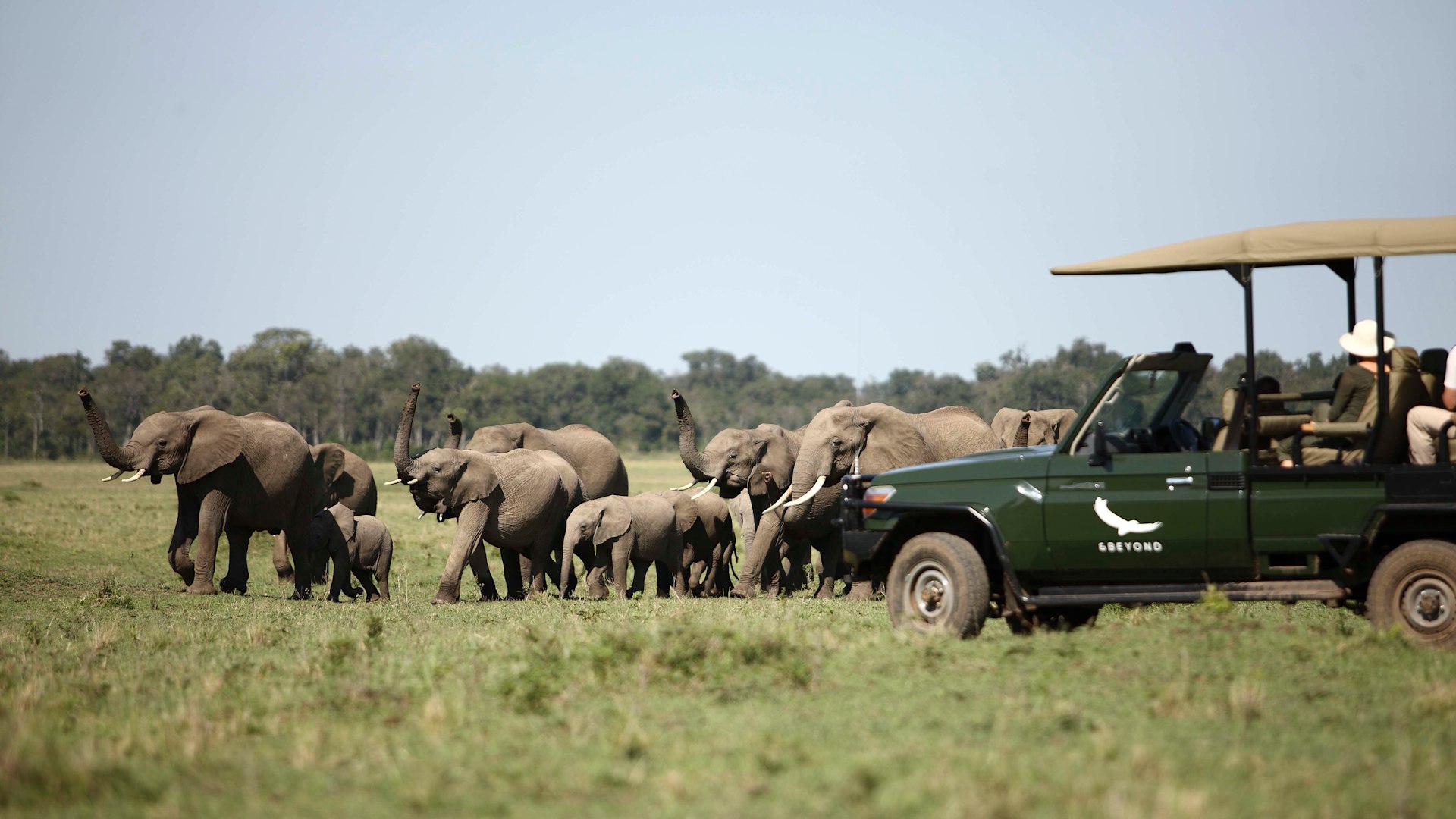
 Game-drive vehicle watching an elephant herd cross the Maasai Mara grasslands — Kenya's premier safari destination
Kenya is where the modern safari was invented. From the golden plains of the Maasai Mara to the snow-dusted backdrop of Mount Kenya, from Amboseli's elephant herds silhouetted against Kilimanjaro to the pink shores of Lake Nakuru, Kenya delivers a safari experience so rich and diverse that it has been inspiring travellers for over a century.
As a Johannesburg-based operator with trusted East African partnerships, Bakubung Safaris has been sending clients to Kenya for years — and the feedback is always electric. This guide covers everything you need to plan your 2026 Kenya safari, from destinations and timing to honest ZAR pricing.
Why Choose Kenya for Your Safari?
Kenya protects approximately 8% of its total land area in national parks and reserves, with an additional 5% in community conservancies — creating a vast network of wildlife corridors that sustain some of Africa's most spectacular ecosystems:
- The Great Migration's northern chapter — from July to October, over a million wildebeest pour across the Mara River in the most dramatic wildlife event on the planet
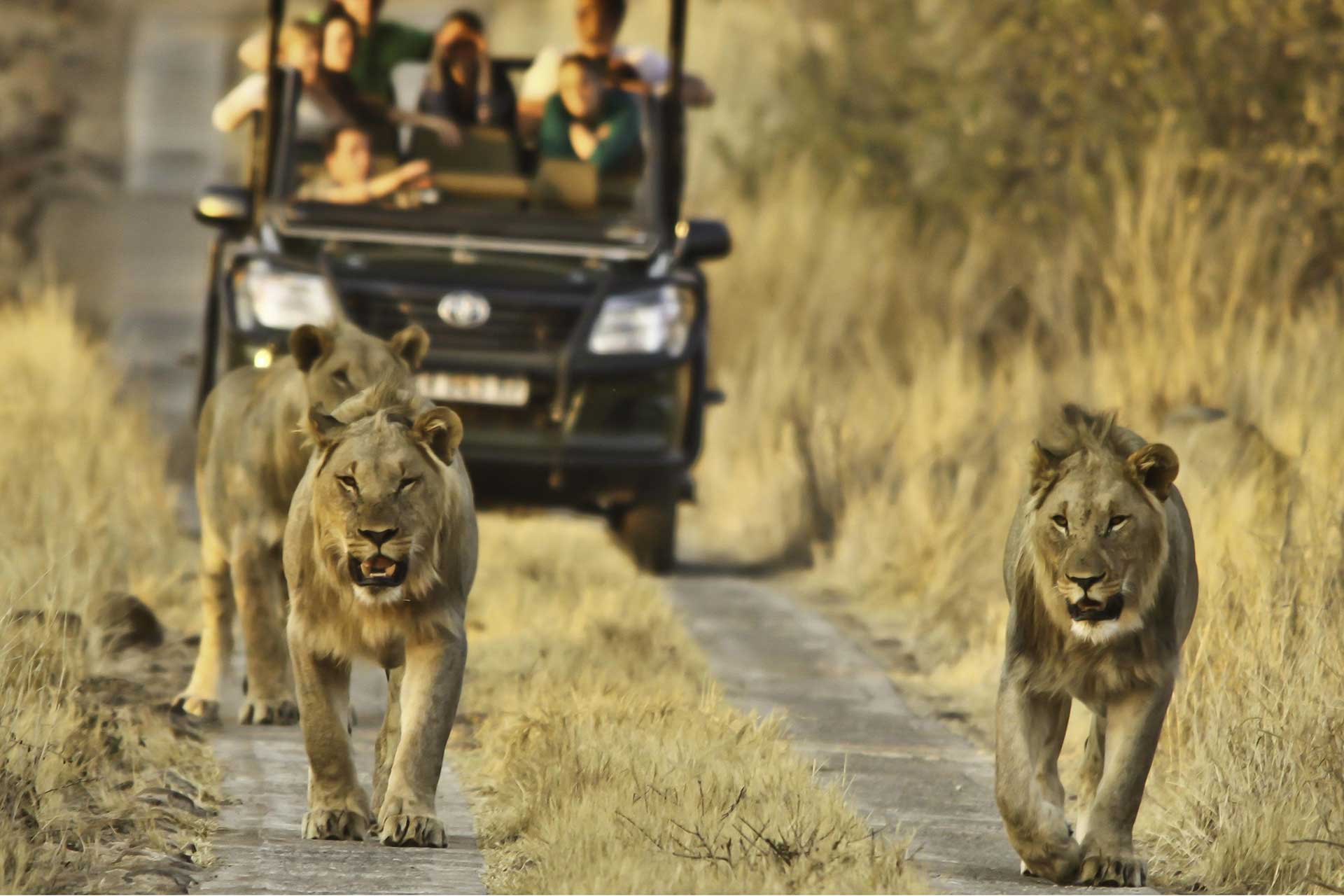
- Big cat capital of Africa — the Mara is legendary for lion prides, leopard sightings, and the world's best cheetah viewing
- Amboseli's iconic backdrop — elephants with Africa's tallest peak framed behind them is the quintessential safari photograph
- Great Rift Valley lakes — flamingo-lined shores, hot springs, and birdlife that rival anywhere on Earth
- Conservancy model — community-owned conservancies around the Mara offer exclusive, low-density safari experiences with night drives and walking safaris
- Swahili coast — combine bush with beach along Kenya's Indian Ocean coastline (Diani, Lamu, Watamu)
Kenya's Top Safari Destinations
1. Maasai Mara National Reserve — Africa's Big Cat Paradise
The Maasai Mara is Kenya's crown jewel and arguably the most famous wildlife reserve in the world. Covering 1,510 km² of rolling savannah grassland, the Mara delivers year-round big cat action — but during the Great Migration (July–October), it becomes the stage for the most photographed wildlife spectacle on Earth: hundreds of thousands of wildebeest leaping into the crocodile-infested Mara River.
Best for: Great Migration river crossings (Jul–Oct), big cat photography (lion, leopard, cheetah), hot-air balloon flights, Maasai cultural visits, year-round game drives.
Key wildlife: Lion (the Mara has one of Africa's highest densities), leopard, cheetah, elephant, buffalo, hippo, wildebeest, zebra, crocodile, hyena.
2. Amboseli National Park — Kilimanjaro's Front Row Seat
Amboseli sits at the foot of Mount Kilimanjaro, and on a clear morning, the sight of massive bull elephants crossing the dusty lakebed with Africa's tallest peak rising behind them is unforgettable. The park is relatively small (392 km²) but incredibly photogenic, with permanent swamps that attract dense wildlife year-round.
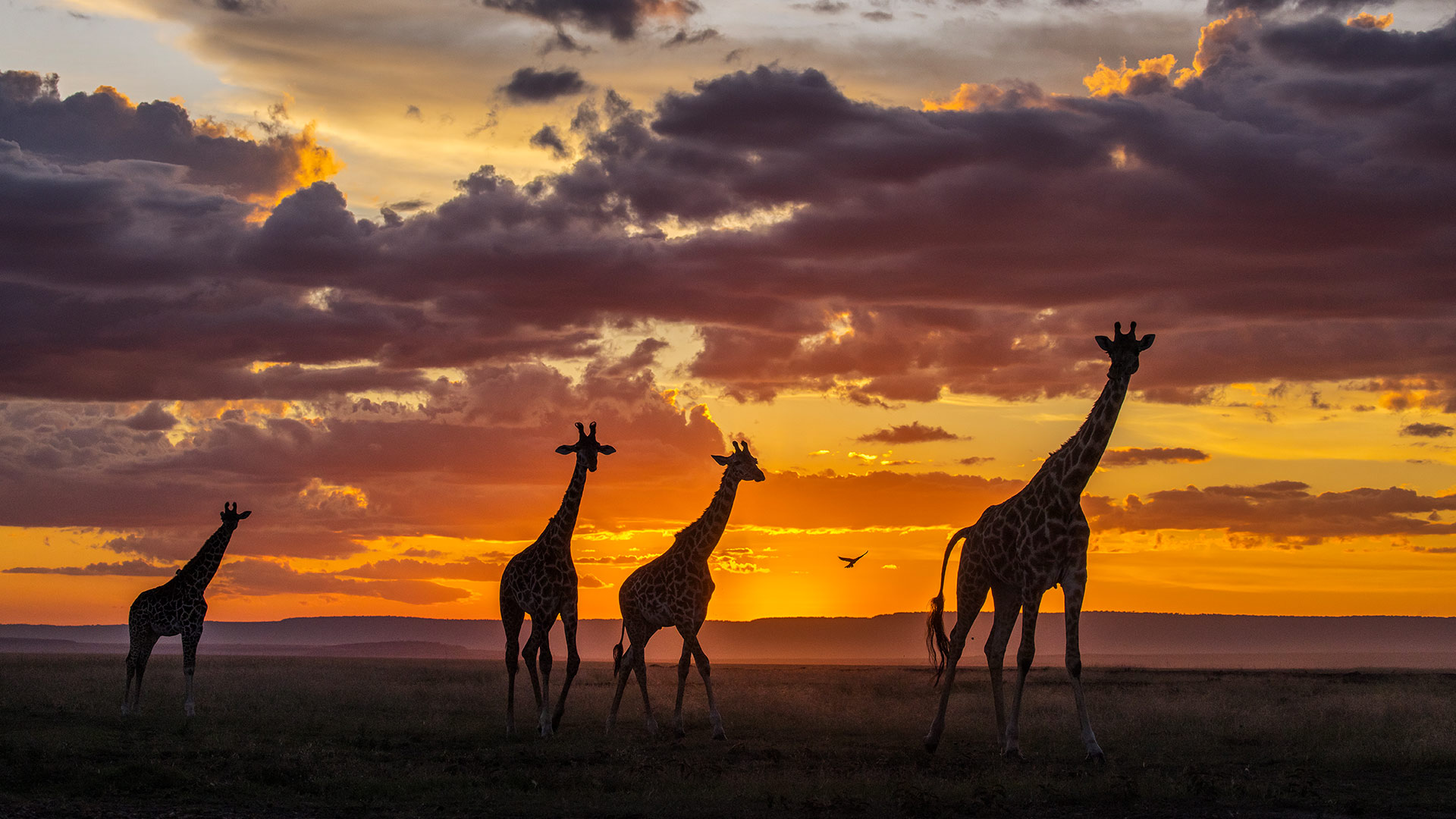 Giraffe family silhouetted against a dramatic Kenyan sunset — the magic of an East African safari
Best for: Elephant photography with Kilimanjaro backdrop, large tusker bulls, birdwatching in the swamps, scenic landscape photography.
Key wildlife: Elephant (famous big-tusker population), lion, cheetah, hippo, buffalo, over 400 bird species including African fish eagle and martial eagle.
3. Lake Nakuru National Park — The Flamingo Lake
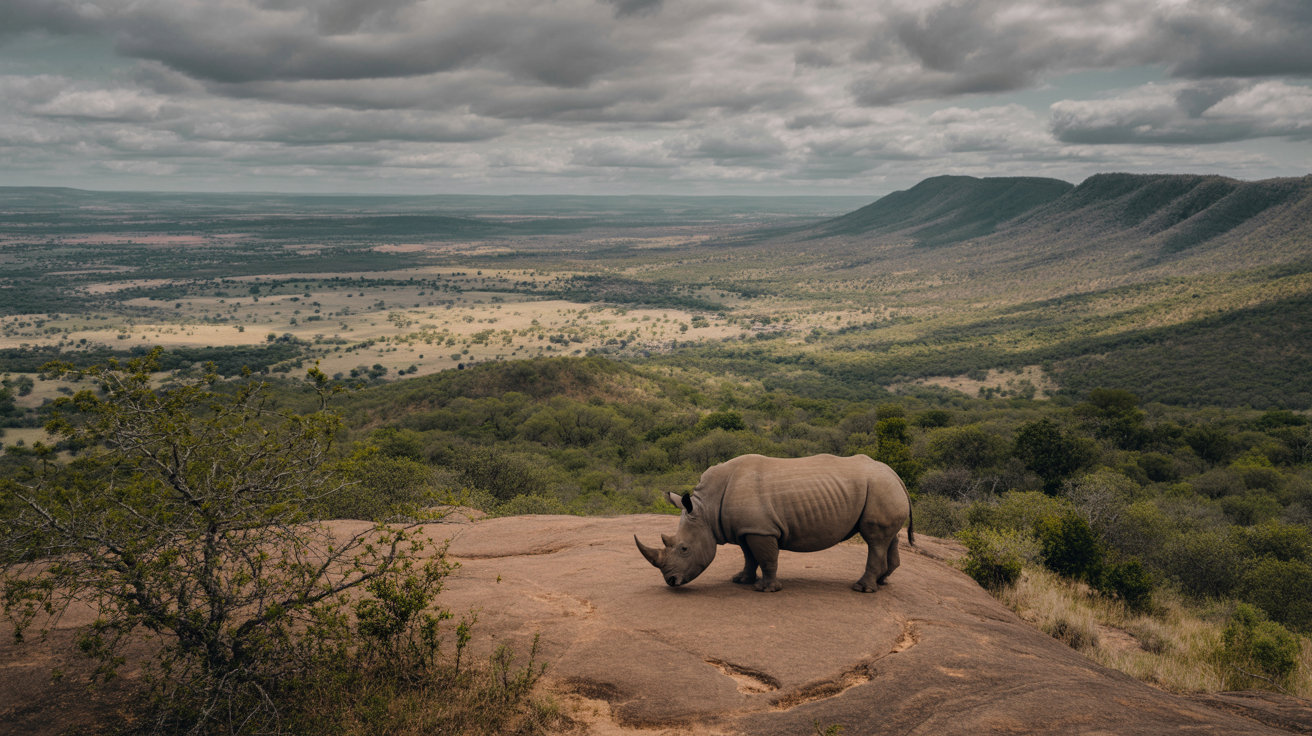
Lake Nakuru is one of Kenya's most picturesque parks, set in the Great Rift Valley with a shallow alkaline lake that can host up to two million flamingos. Beyond the pink shores, the park is a rhino sanctuary with healthy populations of both black and white rhino.
Best for: Flamingo spectacles, rhino viewing (both species), compact Big Five park, scenic Rift Valley landscapes, easy add-on to a Mara safari.
Key wildlife: Greater and lesser flamingo, black rhino, white rhino, lion, leopard, Rothschild's giraffe, buffalo.
4. Samburu National Reserve — The Wild North
Samburu offers a completely different Kenya experience — arid, rugged, and home to species you won't find in the south. The Samburu Special Five (Grevy's zebra, Somali ostrich, reticulated giraffe, gerenuk, and Beisa oryx) are unique to this northern region. The Ewaso Ng'iro River cuts through the reserve, drawing elephants, leopards, and massive crocodiles.
Best for: Unique northern species (Samburu Special Five), excellent leopard sightings, Samburu warrior culture, fewer crowds, real off-the-beaten-path feel.
Key wildlife: Grevy's zebra, reticulated giraffe, gerenuk, Beisa oryx, elephant, lion, leopard, wild dog (occasional).
5. Laikipia Plateau — The Conservation Frontier
Laikipia is Kenya's conservation success story — a patchwork of private ranches and community conservancies that together protect more wildlife than any single national park. This is where you'll find the best walking safaris, horseback rides, camel treks, and night drives in Kenya, plus excellent chances of seeing endangered wild dogs and black rhinos.
Best for: Walking safaris, horseback safaris, wild dog tracking, black rhino conservation, exclusive low-density experiences, family-friendly ranches.
6. Tsavo East & West — The Wilderness Giants
Combined, Tsavo East and West form one of the world's largest protected ecosystems at over 20,000 km². Tsavo East is famous for its red-dusted elephants (stained by the park's laterite soil) and vast open plains. Tsavo West offers more dramatic scenery with volcanic hills, the underwater Mzima Springs, and the Shetani lava flows.
Best for: Red elephants, vast wilderness, fewer tourists, Mzima Springs underwater viewing, Shetani lava flows, affordable entry point to Kenyan safari.
When Is the Best Time to Visit Kenya?
| Season | Months | Highlights | Considerations |
|---|---|---|---|
| Dry/Peak | July–October | Great Migration river crossings; best Mara game viewing; dry and sunny | Peak pricing; Mara can be busy; book 6–12 months ahead |
| Dry/Warm | January–February | Excellent game viewing; dry and warm; fewer tourists than Jul–Oct | High season pricing but better value; calving in Tanzania draws Migration south |
| Short Rains | November–December | Green landscapes; migratory birds arrive; good game viewing; lower prices | Afternoon showers; some roads muddy |
| Long Rains | March–May | Lowest prices; lush scenery; birdwatching peak; some camps close | Heavy rain; difficult road conditions; some areas inaccessible |
Our recommendation: For the Migration river crossings, August–September is the sweet spot. For excellent game viewing with fewer crowds, January–February is superb. Budget-savvy travellers should look at November — the short rains bring green scenery and lower prices without severe disruption.
How Much Does a Kenya Safari Cost?
Kenya's park fees are significant (US$60–80 per person per day for major reserves), but Bakubung Safaris bundles everything into transparent packages with no hidden costs:
| Experience | Duration | Price (pp) | Includes |
|---|---|---|---|
| Mara Explorer | 4 days / 3 nights | R29,999 | Maasai Mara game drives, conservancy access, all meals, park fees, Nairobi transfers |
| Classic Kenya Circuit | 7 days / 6 nights | R49,999 | Amboseli + Lake Nakuru + Maasai Mara, all-inclusive, English-speaking guide |
| Migration Spectacular | 8 days / 7 nights | R64,999 | Mara (4 nights, migration tracking) + Amboseli + Nairobi, internal flights, premium camps |
| Ultimate Kenya & Coast | 12 days / 11 nights | R89,999 | Full northern circuit + Samburu + 3 nights Diani Beach, all flights, luxury lodges |
| Kenya Luxury Private Safari | 10 days / 9 nights | R119,999 | Private vehicle & guide, fly-in camps, Mara + Laikipia + Amboseli, conservancy exclusives |
All prices in South African Rand per person sharing. Includes return flights from Johannesburg, accommodation, meals, park fees, and internal transfers. Get a free quote →
What to Expect on a Kenya Safari
Getting There
From Johannesburg, direct flights to Jomo Kenyatta International Airport (NBO) in Nairobi take approximately 4 hours. From Nairobi, the Mara is a 45-minute flight or 5-hour scenic drive. Amboseli is a 4-hour drive south. Internal flights connect all major parks and the coast.
Bakubung Safaris arranges all international and domestic flights, road transfers, and border logistics.
Types of Safari Activities
- Game drives — Morning and afternoon drives in custom Land Cruisers with pop-up roofs for unobstructed viewing
- Hot-air balloon safaris — Drift over the Mara at sunrise, watching the plains come alive (US$450–500 pp)
- Walking safaris — Guided bush walks in Laikipia conservancies and select Mara conservancies
- Night drives — Conservancy-exclusive spotlight drives for nocturnal wildlife (not permitted in national reserves)
- Horseback & camel safaris — Unique Laikipia experiences riding through wildlife-rich landscapes
- Cultural visits — Authentic Maasai boma tours, Samburu warrior experiences, local school visits
- Beach & water sports — Snorkelling, diving, kite surfing, and dhow sailing on the Swahili coast
Visa & Entry Requirements
South African passport holders need an Electronic Travel Authorization (eTA) — apply online at etakenya.go.ke at least 72 hours before travel (US$30). You'll need six months' passport validity. Yellow fever vaccination is required if arriving from an endemic country (including via transit).
Planning Tips for Your 2026 Kenya Safari
- Book Migration season early — Premium Mara camps for August–September sell out 8–12 months ahead; conservancy camps are even more limited
- Choose conservancies over the reserve — Private conservancies bordering the Mara offer the same wildlife with far fewer vehicles, plus walking safaris, night drives, and off-road driving
- Combine parks for variety — The classic Amboseli + Nakuru + Mara circuit (7 days) gives you elephants, flamingos, and big cats in three very different landscapes
- Add the coast — A 3-night Diani Beach extension is the perfect wind-down after dusty game drives
- Pack layers — Nairobi sits at 1,700m and can be cool; the Mara is similar. Coastal Kenya is tropical
- Carry US dollars — Park fees and tips are in USD; bring clean, post-2013 bills
- Consider a multi-country combo — Pair Kenya with Tanzania for the complete Migration circuit, or add a South Africa or Botswana extension
Frequently Asked Questions
Is Kenya safe for tourists? Yes. Kenya's tourism industry is well-established and safari areas are very safe. Nairobi has typical big-city risks, but your guide and hotel handle logistics. The government invests heavily in tourist security, and conservancies have their own ranger teams.
How does Kenya compare to Tanzania? Both share the Great Migration — Tanzania (Serengeti) for the southern plains and calving, Kenya (Mara) for the dramatic river crossings. Kenya's conservancy model offers more exclusive, flexible experiences (night drives, walking). Tanzania has the Ngorongoro Crater and Zanzibar. Many travellers combine both — see our Tanzania guide for details.
What's the best Kenya safari for first-timers? Our 7-day Classic Kenya Circuit (R49,999 pp) is the most popular — it covers Amboseli, Lake Nakuru, and the Maasai Mara in one seamless trip with all logistics handled.
Can I see the Great Migration without the crowds? Absolutely. Book a private conservancy bordering the Mara (like Olare Motorogi, Mara North, or Naboisho). They limit vehicle numbers, so sightings feel intimate even during peak Migration season.
Is Kenya good for family safaris? Excellent. Many Laikipia ranches and Mara camps specialise in family safaris with dedicated kids' programmes, shorter game drives, cultural activities, and interconnecting tents. We recommend kids be 6+ for game drives.
Ready to Experience Kenya?
Kenya is where safari dreams come true. The thunder of wildebeest plunging into the Mara River, the grace of a cheetah sprinting across golden plains, the warmth of a Maasai elder's welcome, and the indescribable silence of dawn over the African bush. This is the real thing.
Let Bakubung Safaris craft your perfect Kenya itinerary — from Johannesburg flights and Mara conservancy camps to coastal sunsets in Diani. Start planning your 2026 Kenya safari today →
Explore more African safari destinations: South Africa | Botswana | Tanzania | Best African Safari Tours | Budget Safaris. Based in Johannesburg, Bakubung Safaris & Tours has been crafting unforgettable African adventures for over 8 years.