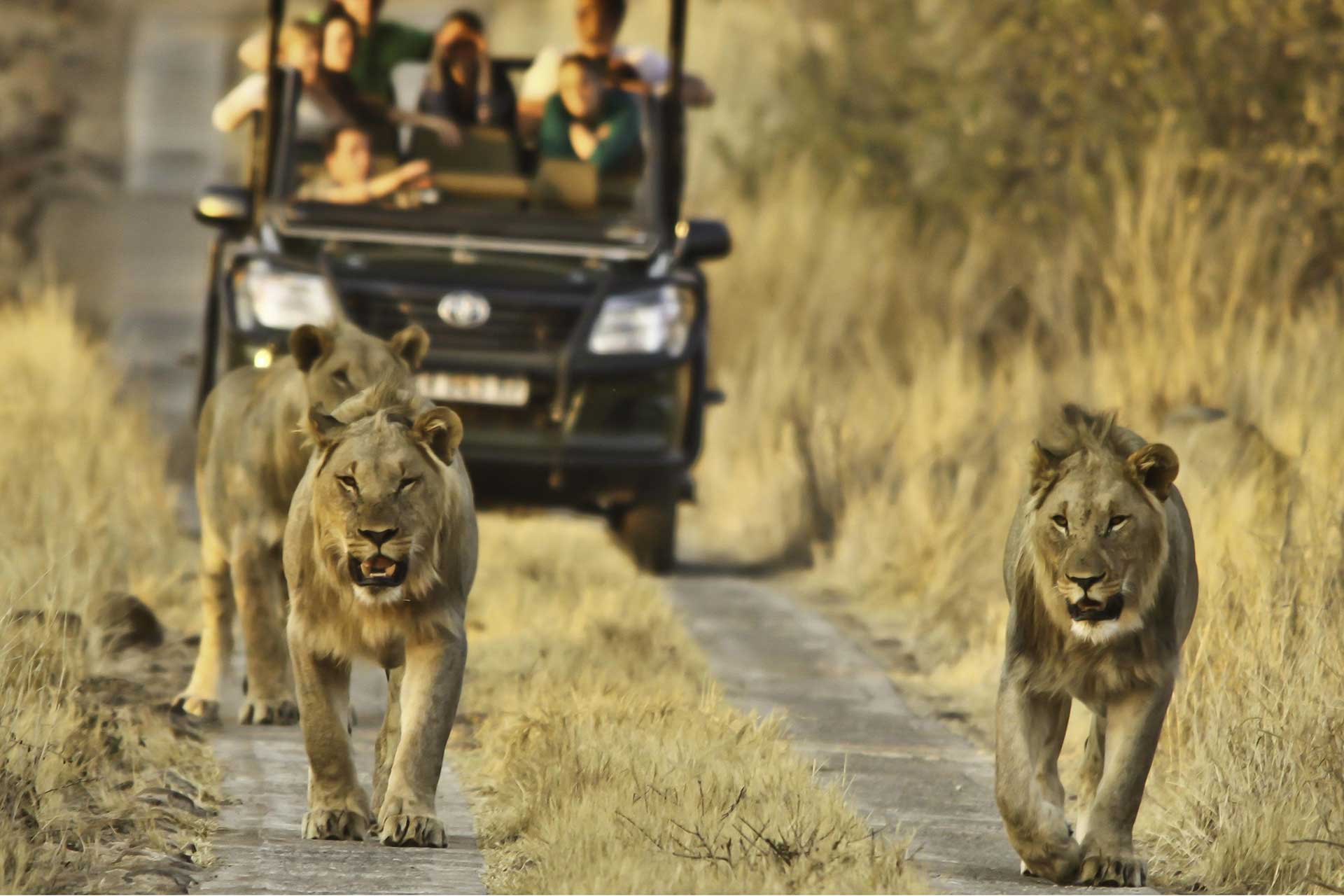
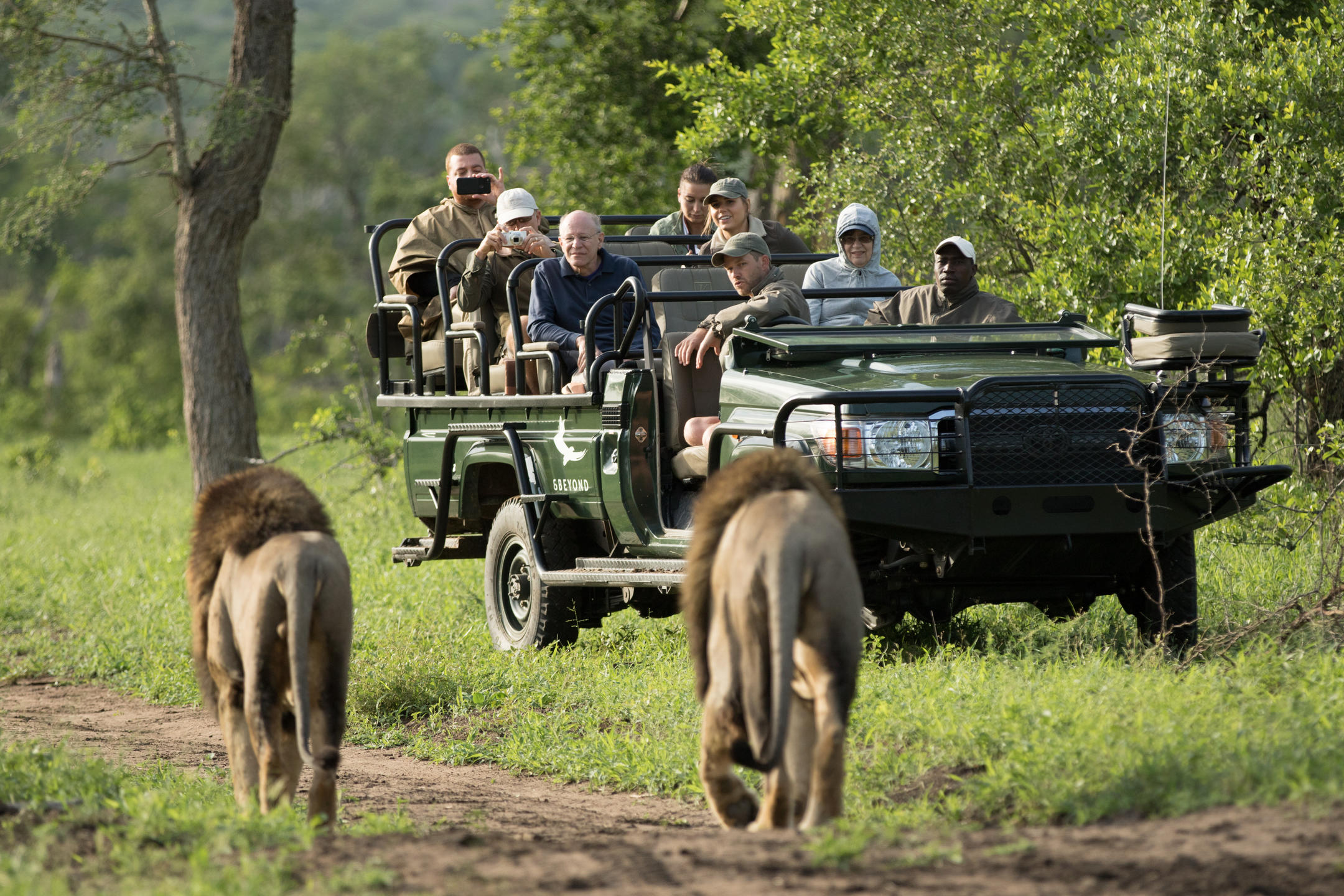
 A family on an open game drive vehicle watches as two lions walk toward them through green bushveld — the kind of moment that rewires a child's brain forever
"Can I take my kids on safari?"
I get this question at least three times a week. Usually from a parent who is desperate to do it, but terrified of doing it wrong — wrong age, wrong reserve, wrong time of year, wrong everything.
So let me start with the answer: yes. Absolutely yes. A safari is one of the most extraordinary gifts you can give a child. I say that as a guide, but I also say it as a father. Watching your child see a wild elephant for the first time — not on a screen, not behind a fence, but right there, breathing and rumbling and flapping those enormous ears — is something you do not forget. Ever.
But I will also be honest: not every safari experience is designed for kids. Some lodges have strict age limits. Some reserves carry malaria risk that makes parents uncomfortable. Some game drives are 4 hours of sitting still, which is a recipe for disaster with a 5-year-old.
The trick is knowing which options work for families. And that is exactly what this guide is for.
The Best Age for a First Safari
Here is my honest take, based on thousands of family safaris:
- Under 3: Too young for a full game drive. They will not remember it, and you will spend the whole time trying to keep them quiet. If you are travelling with a toddler, choose a lodge with a family program (childcare while parents do game drives).
- 3–5 years: Can handle a shorter game drive (2-3 hours max). Choose a private vehicle so you can stop when they need to. They will love elephants, giraffes, and zebras but lose interest during slow stretches.
- 6–8 years: The sweet spot starts here. They are old enough to sit still, use binoculars, and get genuinely excited about tracking and identifying animals.
- 9–12 years: Golden age. They absorb everything — animal behaviour, ecology, conservation — and many lodges have junior ranger programs.
- 13+ years: Treat them as adults on safari. They can handle dawn drives, long sits, and the patience required for big sightings.
My honest recommendation: 6+ is the ideal age for a first proper game drive. Below that, it is still wonderful, but you need to choose the right experience.
Malaria-Free vs Malaria-Risk Reserves
This is the #1 concern for parents, and rightly so. Here is the clear picture:
Malaria-Free (No Prophylaxis Needed)
These reserves have zero malaria risk — no tablets, no worry:
- Pilanesberg Game Reserve — 2 hours from Johannesburg. Big Five. Our most popular family safari. From R1,800/person.
- Madikwe Game Reserve — 4 hours from JHB. Malaria-free, Big Five, excellent family lodges.
- Shamwari Game Reserve — Eastern Cape. Malaria-free, Big Five, award-winning family programs.
- Addo Elephant National Park — Eastern Cape. Malaria-free, elephant-focused, great for younger kids.
- Welgevonden Game Reserve — Limpopo Waterberg. Malaria-free, Big Five, close to JHB.
Low-to-Moderate Malaria Risk
- Kruger National Park — Malaria risk exists, primarily October–May (wet season). Prophylaxis recommended. Risk is manageable and millions of families visit safely every year.
- Sabi Sands / Greater Kruger — Same malaria profile as Kruger.
My advice for nervous parents: Start with Pilanesberg. It is malaria-free, it is a genuine Big Five reserve, it is close to Johannesburg (no long drives with bored kids), and it is affordable. If your kids love it — and they will — graduate to Kruger on the next trip.
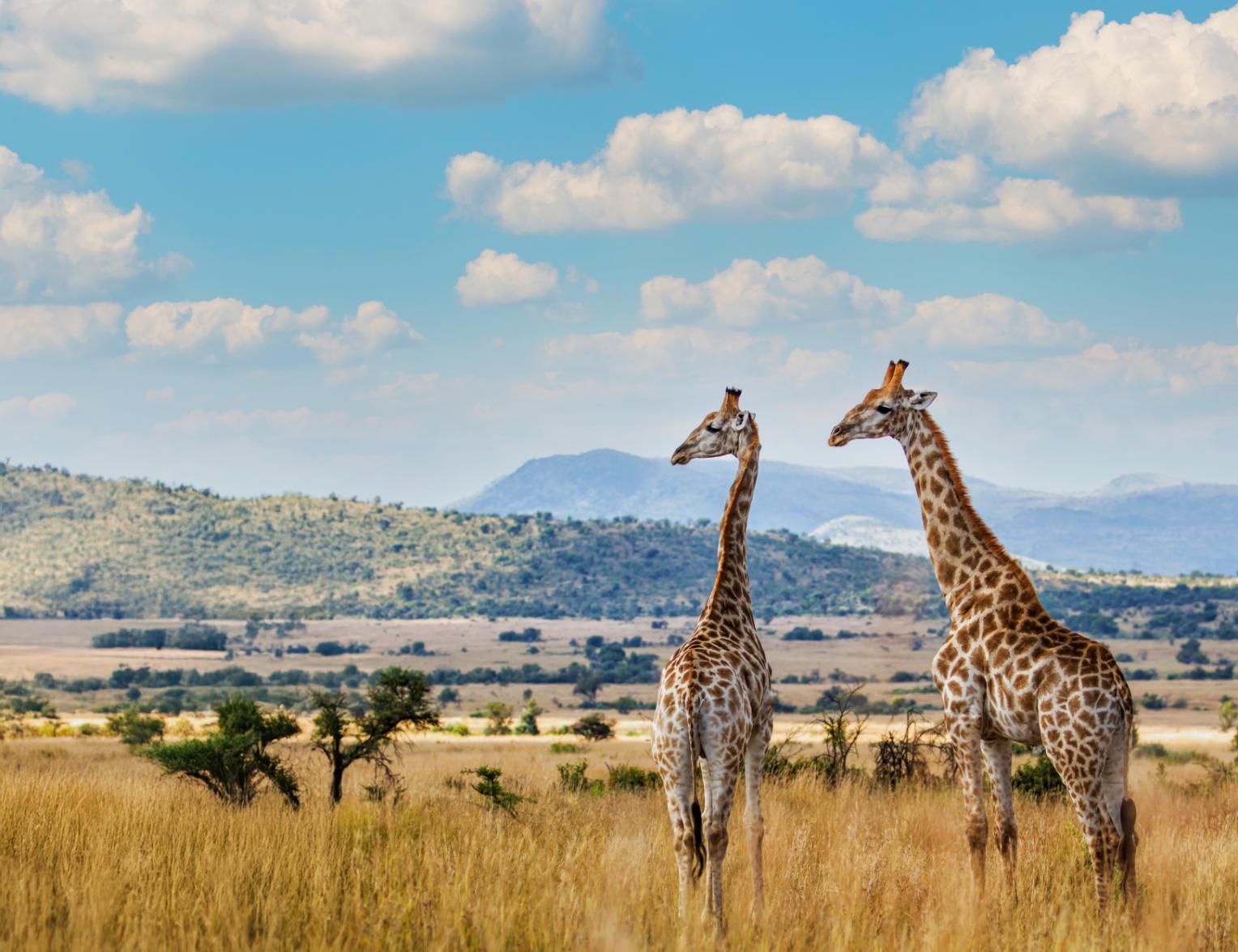 Two giraffes stand tall against the Pilanesberg volcanic hills and blue sky — Pilanesberg is malaria-free and just 2 hours from Johannesburg
Best Family Safari Options from Johannesburg
Option 1: Pilanesberg Day Safari (Best for First-Timers)
- Duration: Full day (leave JHB ~6 AM, return ~6 PM)
- Age suitability: All ages (we adjust the drive for families)
- Malaria: None
- Price: From R1,800/person (kids under 12 from R1,200)
- What is included: JHB pickup/drop-off, guided game drive, park fees, lunch, snacks, water, binoculars
- Why families love it: No overnight logistics, no packing stress, no "are we there yet" on a 5-hour drive. Just a magical day in the bush and back to your hotel.
This is the safari I recommend most for families with children under 8. It is the right length, the right price, and the right reserve.
Option 2: Kruger 3-Day Safari (Best for Families Ready to Commit)
- Duration: 3 days / 2 nights
- Age suitability: 6+ recommended
- Malaria: Low-moderate risk (take prophylaxis)
- Price: From R6,649/person (family rates available)
- What is included: Everything — transport, accommodation, meals, game drives, park fees
Kruger is the full immersion. Six game drives over 3 days, rest camps with pools and playgrounds, and a concentration of wildlife that Pilanesberg simply cannot match. If your kids are old enough and you are comfortable with malaria prophylaxis, this is the ultimate family safari. See our complete 3-day Kruger itinerary.
Option 3: Private Lodge (Best for Luxury Family Trips)
Private lodges in Madikwe, Sabi Sands, or Timbavati offer dedicated family suites, private vehicles, flexible schedules, and kid-focused programs. Prices range from R5,000 to R40,000+ per night, but the experience is tailored entirely to your family. See our romantic lodges guide — many of these lodges also have exceptional family offerings.
How to Keep Kids Engaged on a Game Drive
This is where most family safaris succeed or fail. Here are my tested strategies:
1. The Animal Bingo Card
Before the drive, give each child a printed card with 20 animals (with pictures for younger kids). They tick off each one they spot. The first to get 5 in a row wins a small prize. This single trick has saved more family game drives than I can count.
2. Binoculars Are Magic
Give a child a pair of binoculars and they become a different person. Suddenly they are scanning, searching, discovering. It turns passive passengers into active participants. We provide binoculars on all our tours, but if your child has their own pair, even better.
3. Let Them Be the Spotter
Assign each child a "direction" — "You watch left, you watch right." When THEY spot the animal first, they feel ownership of the sighting. The pride on a 7-year-old's face when they spot a rhino before the adults is priceless.
4. The Poop Game
I am not joking. Children are fascinated by animal dung. Teach them to identify it: round pellets = impala, flat patties = buffalo, massive boulders = elephant. They will spend the entire drive looking for poop, and they will learn more about animal behaviour than they would from any textbook.
5. Snacks. Many Snacks.
A hungry child is an unhappy child. Pack double what you think you need. Sandwiches, biltong, fruit, rusks, juice boxes. Feed them before they get grumpy and the drive stays magical.
6. The Quiet Challenge
When you are approaching an animal, challenge the kids: "Let's see who can be the quietest for 2 minutes." Frame it as a game, not a rule. The animal stays calm, the sighting is better, and the kids feel like they are part of the experience.
What to Pack for Kids on Safari
Everything from our complete packing list, plus:
- Sun hat that actually stays on (with a chin strap for younger kids)
- Their own binoculars (cheap ones are fine — R200 at any outdoor shop)
- Activity book / colouring pencils for quiet time at camp
- Favourite stuffed animal (non-negotiable for under-8s)
- Layers, layers, layers — kids feel cold faster than adults on morning drives
- Wet wipes — more than you think you need
- A camera or tablet for photos — kids love documenting their sightings
Lodge Age Restrictions: The Honest Guide
Many private lodges in South Africa have age restrictions for open-vehicle game drives. This is for safety and to protect the experience for all guests. Here is the typical breakdown:
| Lodge Type | Typical Age Limit | Notes |
|---|---|---|
| SANParks rest camps (Kruger) | No limit | Self-drive, so your vehicle, your rules |
| Pilanesberg (guided day tour) | No strict limit | We accommodate all ages |
| Budget private lodges | 6+ for game drives | Some offer babysitting |
| Mid-range private lodges | 6-8+ for game drives | Many have family suites |
| Luxury lodges (Sabi Sands etc.) | 6-12+ for shared drives | Private vehicles often from age 2+ |
| Ultra-luxury (Singita etc.) | 10+ for shared drives | Private family villas available |
The workaround for younger kids: Book a private vehicle. Most lodges that restrict ages on shared vehicles will allow children of any age on a private booking, because your family is the only one affected if the 4-year-old starts crying when they see a buffalo.
Safety: The Honest Conversation
Parents worry. That is the job. So let me address the real concerns:
"Is it safe?" — Yes. South African game reserves have decades of safety protocols. You are in a vehicle at all times during game drives (no walking with kids). Rest camps are fenced. The statistical risk of a wildlife incident is extraordinarily low.
"What about malaria?" — Covered above. Choose a malaria-free reserve for peace of mind, or take prophylaxis for Kruger. Consult your paediatrician at least 2 weeks before travel.
"What if my child is scared?" — Some children get nervous when a large animal is close. This is normal and healthy. Good guides (like ours) read the situation and keep a safe distance. Most children go from nervous to awestruck in about 30 seconds.
"What about the heat/cold?" — The bushveld temperature swings dramatically. Morning drives can be 5°C; midday can hit 30°C. Layer up and bring sunscreen. See our packing guide for specifics.
The Best Time of Year for a Family Safari
Honest answer: June to September (South African winter / dry season).
- Malaria risk is lowest (even in Kruger)
- Vegetation is thin, so animals are easier to spot
- Animals congregate at waterholes (guaranteed sightings)
- Weather is dry and warm during the day, cold in the morning
- School holidays in June/July align perfectly
For detailed month-by-month guidance, see our Best Time to Visit Kruger guide.
The Budget: What Does a Family Safari Actually Cost?
| Experience | 2 Adults + 2 Kids | Per Person |
|---|---|---|
| Pilanesberg Day Safari | ~R6,000 | ~R1,500 avg |
| Kruger 3-Day Guided | ~R22,000 | ~R5,500 avg |
| Kruger 3-Day Self-Drive | ~R14,000 | ~R3,500 avg |
| Private Lodge (mid-range) | ~R30,000-R60,000 | Varies |
| Luxury Lodge (Sabi Sands) | ~R60,000-R200,000 | Varies |
For the full pricing breakdown across every tier, read How Much Does a Safari Cost?
Your Family Safari Starts Here
I have watched thousands of children fall in love with the African bush. The shy ones who hide behind their parents and end up leaning over the vehicle rail, whispering "Look, Dad, a RHINO." The teenagers who were too cool for a "nature trip" and end up taking 600 photos and asking when they can come back.
A safari does not just entertain your kids. It changes them. It shows them a world that is bigger, wilder, and more beautiful than anything on their screens. And that change lasts a lifetime.
Ready to give your family the gift of Africa?
- Pilanesberg Family Day Safari — From R1,800/person. The perfect first family safari.
- Kruger 3-Day Family Safari — From R6,649/person, everything included.
- Read: First Safari? 15 Tips — Prep the whole family.
- Read: Safari Packing List — What to bring for kids.
📱 WhatsApp Thabo — Tell me your kids' ages and I will recommend the perfect safari.
🦒 The bush is the best classroom on Earth.
— Thabo Makate, Bakubung Safaris & Tours